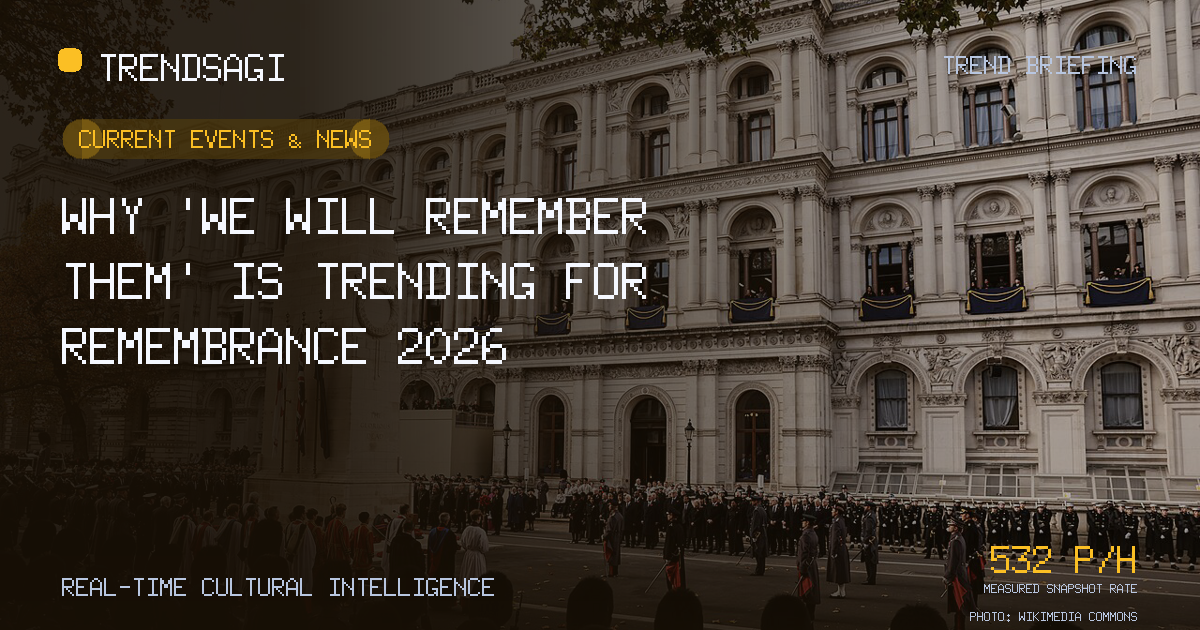
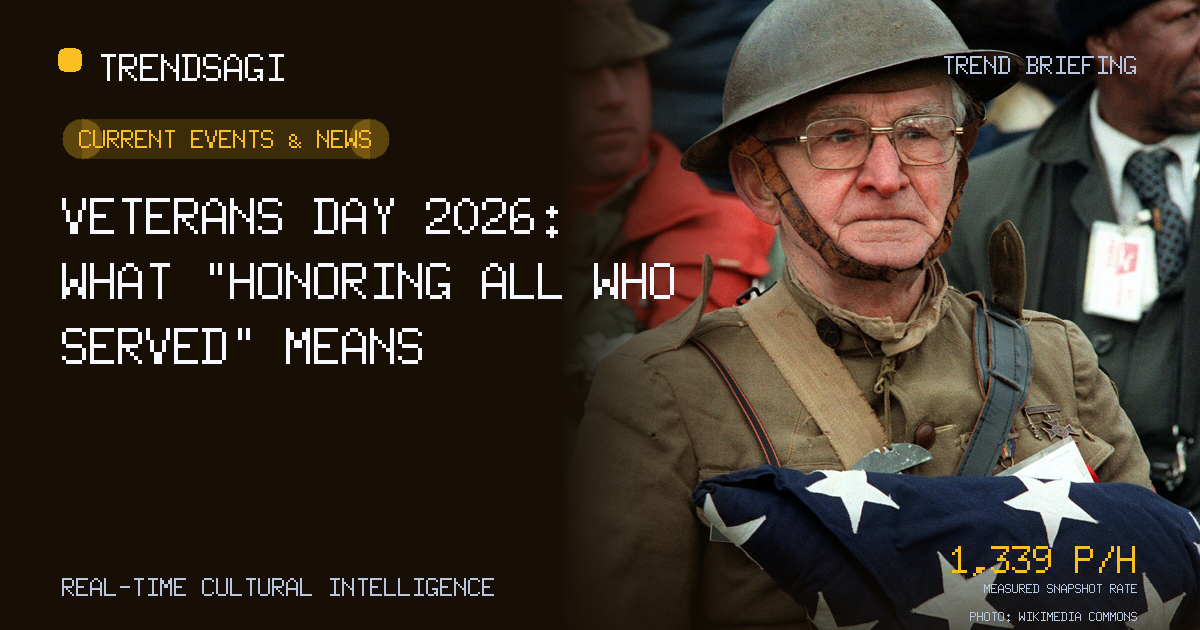
818-second window · 3 observations · Measured Nov 11, 2026, 1:58 PM UTC · Provider: go_recent_snapshot_v2
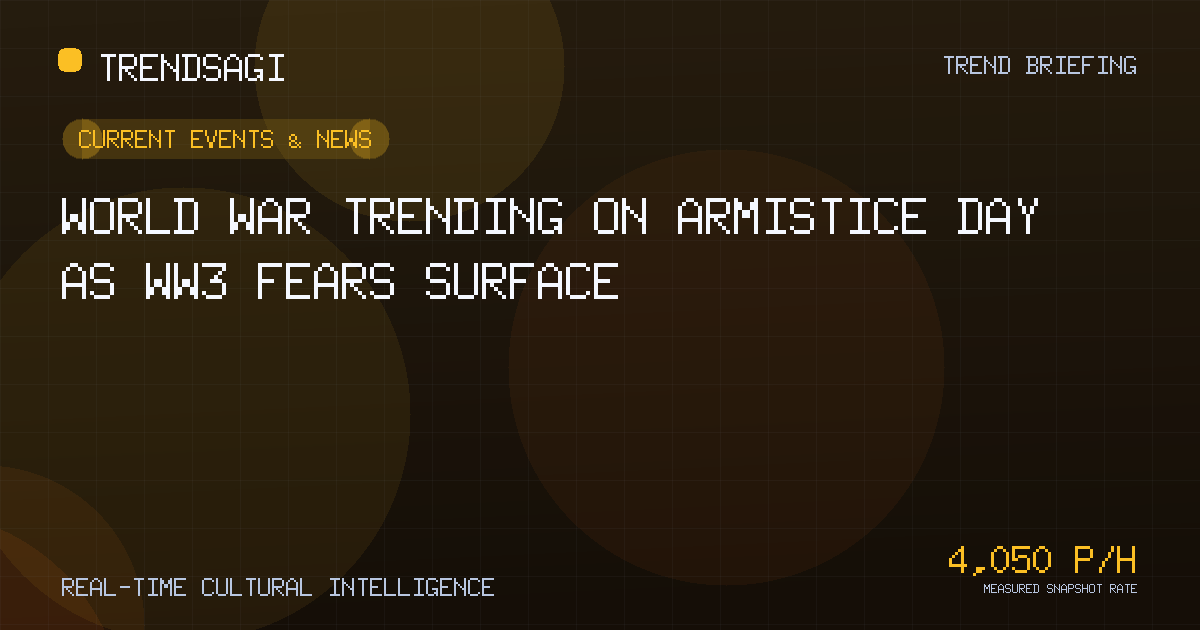
World War Trending on Armistice Day as WW3 Fears Surface
World War is trending on Armistice Day 2026. A measured 4,050.2 posts/hour snapshot separates WWI commemoration from WW3 fears.
Automated briefing. Generated from stored signal measurements and source-backed research; it is not manually reviewed. Read the methodology and limitations or the editorial standards.
Metrics in this briefing are a snapshot associated with its publication date and may not reflect current conditions.
What changed
"World War" is trending on 11 November 2026 because two different conversations are colliding on the same date: worldwide Armistice Day and Remembrance coverage marking the 108th anniversary of the 1918 armistice, and a cluster of "World War III" anxiety pieces about Ukraine and European rearmament. That explanation comes from the search-intent brief behind this briefing, which identifies the anniversary and the escalation-fear strand as the verified drivers. The label aggregates both strands rather than pointing to one specific event, so anyone searching "is World War III likely 2026" should read the chatter as a mix of commemoration and worry, not as a report of a new war.
The measured signal changed materially in a short window. TrendsAGI recorded a snapshot rate of 4,050.2 posts per hour over an exact 818-second window using three stored observations, taken at 2026-11-11T13:58:10Z, with the latest snapshot volume at 1,469 posts. That is a measured snapshot rate, not a live rate, forecast or count of people. It establishes that the topic was genuinely moving at that moment; it does not by itself prove whether commemoration or fear is the dominant driver.
| Observation time (UTC) | Measured posts/hour | Snapshot volume (posts) |
|---|---|---|
| 2026-11-11T13:58:10Z | 4,050.2 | 1,469 |
Why this topic may be moving
The verified reason for the spike is calendar plus context. Nov 11, 2026 is the 108th anniversary of the Armistice of 11 November 1918, and outlets worldwide published Armistice Day and Remembrance Day coverage that day, including The Manila Times. At the same time, a second strand of coverage about a possible third world war was circulating, including a Yahoo News piece headlined around the theme that everyone is talking about World War III while Sweden prepares for it.
What the available record does not establish is the exact cause of the measured 4,050.2 posts/hour rate, which platforms or posts drove it, or the precise split between commemoration-driven and escalation-fear-driven posting. Those questions remain unconfirmed. The honest read is that a calendar event guaranteed a baseline of historical traffic, and a separate anxiety conversation added volume on top of it.
Is it WWI, WWII or WWIII? A disambiguation
Searchers using the term "World War" on this date are often looking for three different things, and the ranking pages tend to blur them:
- WWI history and commemoration. The armistice that ended fighting on the Western Front took effect at the 11th hour of the 11th day of the 11th month of 1918. Armistice Day and Remembrance Day observances, including the two-minute silence, derive from that moment.
- WWII memory. Remembrance commemorations more broadly honour the dead of both world wars, so some traffic is general historical reflection rather than anything current.
- "WWIII" speculation. A separate set of opinion-led pieces discusses escalation risk around Ukraine and European rearmament. These are analysis and commentary, not reports of a new global conflict.
Keeping those three apart is the single most useful thing a reader can do today. A term trending does not identify which war the crowd means.
Why it matters
For most readers this is a calendar story with an anxiety overlay, and the practical value is in not misreading it. A spike in a broad label is a measurement of attention, not an intelligence assessment. Treating "World War" trending as evidence that a third world war is imminent would be a category error, and no verified source in the available record supplies a quantified risk estimate or expert probability figure.
The topic matters for three groups in particular:
- General readers who see the term trending and want to know whether something happened today.
- History and commemoration audiences looking for Armistice Day context, the meaning of the two-minute silence, and when World War I ended.
- Analysts and journalists who need to separate anniversary-driven volume from conflict-anxiety volume before drawing conclusions.
The measured rate tells you the conversation is real and moving; it does not tell you why, and today the verified why is a calendar anniversary sitting alongside separate escalation worry.
What the signal can and cannot establish
It can establish that the topic was measurably active at 2026-11-11T13:58:10Z, that volume stood at 1,469 posts in the latest snapshot, and that the rate over the measured window was 4,050.2 posts per hour on a stored-observation basis.
It cannot establish platform breakdown, the identity or intent of posters, the share of commemoration versus fear content, any live or forecast rate, or whether anything resembling a new world war has occurred. It also cannot confirm search volume for related queries such as "World War III risk 2026" or "Remembrance Sunday 2026."
Practical next checks
- Check whether volume decays after the 11am silence and the close of commemoration coverage; a sharp fall would point to a calendar-driven spike.
- Look at which specific stories are being shared, rather than the aggregate label, to see whether the fear strand or the history strand is leading.
- Watch whether the escalation-fear coverage comes with sourced data or remains opinion-led, as the ranking pieces largely are.
- Compare the next day's volume with today's to judge whether this was a one-day anniversary effect or a sustained shift.
What to watch next
The clearest watch signal is decay. If the measured rate falls back sharply after Armistice observances end, the anniversary explanation gains weight. If volume holds or climbs without a calendar anchor, the escalation-fear strand deserves closer attention. Also watch whether coverage widens beyond UK and Commonwealth framing to include the Indian and non-Western sacrifice angle, which remains thinly covered in the pages currently ranking.
Frequently asked questions
Why is "World War" spiking today?
Because 11 November 2026 is the 108th anniversary of the 1918 armistice, driving worldwide Armistice Day and Remembrance coverage, while a separate cluster of World War III anxiety pieces about Ukraine and European rearmament is circulating at the same time.
What happened on the 11th hour of the 11th day of the 11th month?
The armistice ending fighting on the Western Front in World War I took effect at 11am on 11 November 1918, and that moment is the origin of Armistice Day and the two-minute silence.
How many years since the World War I armistice?
As of 11 November 2026, it is 108 years since the 1918 armistice.
Are experts actually saying World War III is near?
The verified record here does not include quantified expert risk assessments or probability figures, so no such claim can be confirmed; the WWIII material in circulation is described in the brief as opinion-led commentary.
Why is Sweden preparing for a wider war?
Yahoo News carried coverage framed around Sweden preparing for a wider war amid the broader World War III conversation; the available brief does not verify the underlying details of Sweden's planning, so treat specifics as unconfirmed.
What does India's World War sacrifice have to do with Armistice Day?
The brief flags Indian and non-Western wartime sacrifice as a thinly covered angle in current Armistice coverage, but does not supply verified figures, so no numbers are offered here.
Methodology and limitations
The measured figure in this briefing comes from TrendsAGI stored observations: a snapshot rate of 4,050.2 posts per hour over an exact 818-second window using three stored observations, measured at 2026-11-11T13:58:10Z, with the latest snapshot volume at 1,469 posts. It is a measured snapshot rate, not a live rate, forecast, reach, engagement or unique-person count, and the snapshot volume is not itself a rate.
The explanation of why the topic is moving is drawn only from the verified facts in the search-intent brief: the Armistice anniversary coverage and the concurrent World War III anxiety coverage. External facts are attributed to their publishers, The Manila Times and Yahoo News. Claims about the exact cause of the spike, platform or post-level drivers, the commemoration-versus-fear split, expert probability figures and search volume are not verified and are treated as unconfirmed or omitted.
Sources
Included in the TrendsAGI Trend Signal Index
This briefing recorded 4,050.2 posts/hour over 818-second window from 3 observations. The index publishes the archive-wide percentiles and the gate every rate has to clear.
Trend velocity statisticsTrack This Topic for New Signals
Set alerts for future velocity or sentiment changes around this topic.
Explore Tracking PlansAbout TrendsAGI research
TrendsAGI's automated research pipeline publishes dated signal snapshots, methodology notes, and practical workflows for teams evaluating cultural momentum. Read how signals are scoped, scored, and limited in our research methodology.