907-second window · 3 observations · Measured Nov 4, 2026, 6:05 AM UTC · Provider: go_recent_snapshot_v2
Latina Trends Explained: Latina Voters, Trump Regret and the 2026 Midterms
Latina is trending on two meanings: Latina voters and Trump regret before the 2026 midterms, plus the city of Latina, Italy. Measured rate: 702.5 posts/hour.
Automated briefing. Generated from stored signal measurements and source-backed research; it is not manually reviewed. Read the methodology and limitations or the editorial standards.
Metrics in this briefing are a snapshot associated with its publication date and may not reflect current conditions.
What changed
The term "Latina" is moving on search and social lists, but not for one single verified reason. At 2026-11-04T06:05:27Z, the topic registered 1,440 posts and a measured snapshot rate of 702.5 posts per hour across an exact 907-second window built from three stored observations. The most useful direct answer is that "Latina" is an ambiguous label: most English-language coverage ties it to Latina and Latino voters ahead of the 2026 U.S. midterms, including reported regret among Latinas who backed Trump, while Italian-language coverage uses the same word for the city of Latina, Italy, which is in the middle of a municipal political crisis. Nothing in the verified material establishes which of those threads is driving the measured volume.
So if you arrived wondering why "Latina" is on a trending list, the honest answer is: the label is doing double duty. The rate above is a measured snapshot, not a live or predicted figure, and it tells you how fast stored observations accumulated — not how many unique people saw the topic or which story they clicked. What the search results do show is real demand for the voter story, framed as "Latinas Trump regret 2026 midterms," which is covered by opinion and news pages but not explained as a trend.
Snapshot measurements
| Observation time | Measured snapshot rate | Snapshot volume |
|---|---|---|
| 2026-11-04T06:05:27Z | 702.5 posts/hour (907-second window, 3 observations) | 1,440 posts |
Why this topic may be moving
The verified search-intent material points to a collision of two unrelated meanings rather than a confirmed trigger event:
- Latina voters. English-language results center on Latino and Latina voting behavior before the 2026 midterms, with a recurring "Trump regret" framing. EL PAÍS English quotes pollster Matt Barreto arguing that what is happening with the Latino vote is "a repudiation of Trump" rather than a simple reversal. La Estrella de Panamá examines so-called "No Sabo Kids" and their growing weight in U.S. elections.
- The city of Latina, Italy. LatinaCorriere.it reports a governing majority in crisis there, with fractures between parties and opposition groups waiting in the wings.
- Cultural-noise results. Indiatimes covers KATSEYE's Daniela responding to "whitewashed" accusations and denying being a Trump supporter as fans questioned her Latina identity.
These are three different stories sharing one word. The measured rate cannot be assigned to any of them without timestamp-matched evidence, and no verified source provides one. Treat any single-cause claim as unconfirmed.
The clearest takeaway is a disambiguation one: "Latina" is trending as an ambiguous label, and the measured rate proves attention is concentrated, not what that attention is about.
Why it matters
For readers, the practical consequence is search noise. Someone typing "Latina" may want a plain-language definition, a voter-turnout story, a local Italian council update, or a celebrity item. For newsrooms, campaigns, and analysts, the risk is misreading the signal: a political-consumption surge and a hyperlocal Italian political story look identical at the label level.
The voter story is the one with the widest search framing, so it deserves the closer look — but with care. The verified brief does not supply polling numbers quantifying "Trump regret" among Latinas, does not establish methodology behind the reported early-vote totals (406,880 versus 406,303), and does not reconcile the "repudiation of Trump" framing with anecdotes about past Trump supporters expressing regret. Both can be true in different slices of the electorate, and neither is proven by the other.
What to watch next
- Split the label. Watch whether future velocity concentrates around voter queries ("Latino vote 2026 midterms," "Latina voter turnout 2026") or around "Latina Italy city council crisis." Divergence would resolve the ambiguity.
- Look for timestamp-matched triggers. A single event — a poll release, a council vote, a viral clip — would explain the window. None is verified here.
- Demand primary data. Watch for published surveys with sample sizes and field dates on Latina attitudes toward Trump, and for methodology notes on early-vote counts.
- Check the "No Sabo Kids" thread. It is an emerging framing for young Latino electoral behavior and may absorb search demand.
- Track re-measurement. A second window would show whether 702.5 posts/hour was an isolated spike or part of a sustained climb.
Frequently asked questions
Why is "Latina" trending right now?
The verified explanation is ambiguity, not a single confirmed event. Most English coverage concerns Latina and Latino voters before the 2026 midterms, while several Italian results concern the city of Latina, Italy, and its municipal political crisis. The available evidence does not establish which thread is driving the measured spike.
Are Latina voters turning against Trump in the 2026 midterms?
Several ranking pages frame it that way, including EL PAÍS English quoting pollster Matt Barreto that the Latino vote is a "repudiation of Trump" rather than a simple reversal of voting trends. That is a published characterization, not a verified polling finding in this brief.
What does "Trump regret" among Latinas mean and is there data behind it?
It refers to reported second thoughts among Latinas who previously voted for Trump. The pages ranking for the query present this largely through anecdotes and framing; no verified polling figures quantifying it were supplied, so treat specific numbers as unconfirmed unless you find the underlying survey.
How are young Latino voters turning out in 2026 compared with 2024?
The brief references early-vote totals of 406,880 versus 406,303 reported secondhand from a Univisión analysis, but does not supply the methodology or confirm which years those figures map to. Without that detail, a clean 2026-versus-2024 comparison is not verified here.
Is the trend about Latina voters or the Italian city of Latina?
Both interpretations appear in results, and neither is confirmed as the driver of the measured volume. The city-of-Latina thread is documented by LatinaCorriere.it reporting a majority in crisis; the voter thread dominates English-language results.
What polling or early-vote figures support these claims?
Only the secondhand early-vote totals noted above appear in the verified material, and their methodology is not described. No survey data quantifying "Trump regret" among Latinas was verified, so any precise percentage you see should be traced to its original poll before being repeated.
Methodology and limitations
The volume and rate come from three stored observations of this topic, with the latest at 2026-11-04T06:05:27Z showing 1,440 posts and a measured snapshot rate of 702.5 posts/hour over a 907-second window. That rate describes how fast stored observations accumulated at measurement time — it is not a live rate, a forecast, a reach estimate, or a count of unique people.
What this signal cannot establish: which subject produced the volume, whether one event triggered it, how many people were actually interested, or how the topic ranks against others. Search-intent descriptions are treated as unverified context, and publisher attributions reflect what those outlets reported, not independent confirmation. Readers should verify polling and turnout figures against primary sources before relying on them.
Sources
- Matt Barreto: 'More than a reversal or a shift in voting trends, the Latino vote is a repudiation of Trump' (EL PAÍS English) — english.elpais.com
- ¿Quiénes son los 'No Sabo Kids' y por qué cobran fuerza en las elecciones de Estados Unidos? (La Estrella de Panamá) — laestrella.com.pa
- Latina, maggioranza in crisi: strappi tra partiti e opposizioni alla finestra (LatinaCorriere.it)
- KATSEYE's Daniela responds to 'whitewashed' accusations, denies being a Trump supporter as fans question her Latina identity (Indiatimes) — indiatimes.com
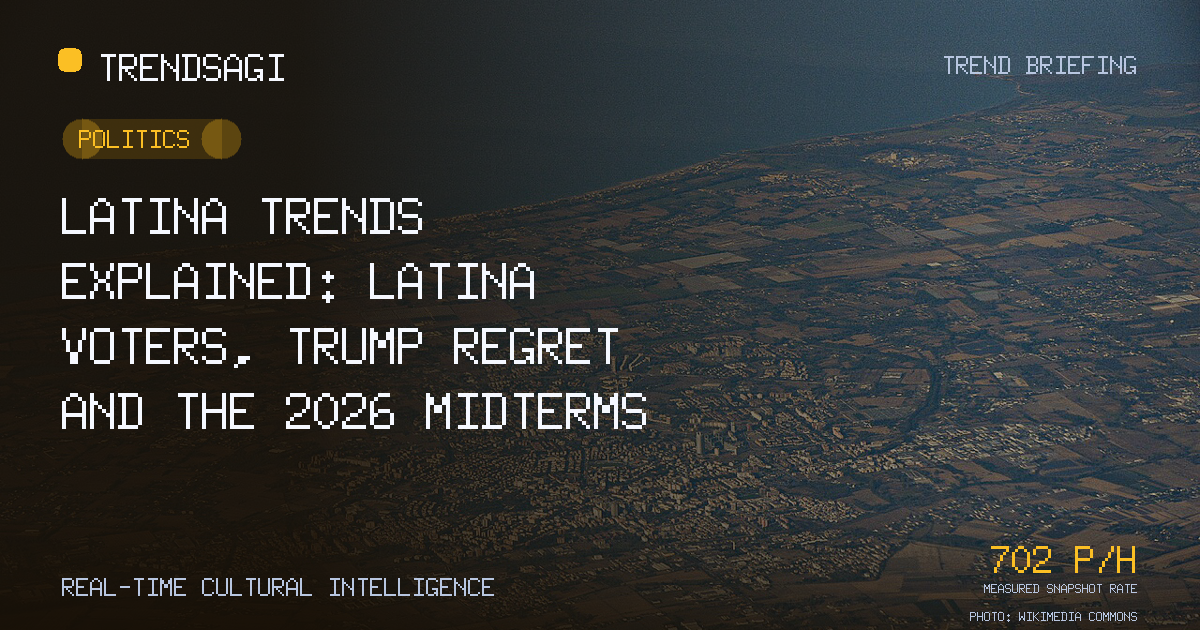
Image: Latina, Lazio by Apaleutos25, CC BY-SA 4.0, via Wikimedia Commons. The thumbnail adapts this photo with a title overlay and is shared under the same licence.
Track This Topic for New Signals
Set alerts for future velocity or sentiment changes around this topic.
Explore Tracking PlansAbout TrendsAGI research
TrendsAGI's automated research pipeline publishes dated signal snapshots, methodology notes, and practical workflows for teams evaluating cultural momentum. Read how signals are scoped, scored, and limited in our research methodology.