902-second window · 3 observations · Measured Nov 2, 2026, 5:46 PM UTC · Provider: go_recent_snapshot_v2
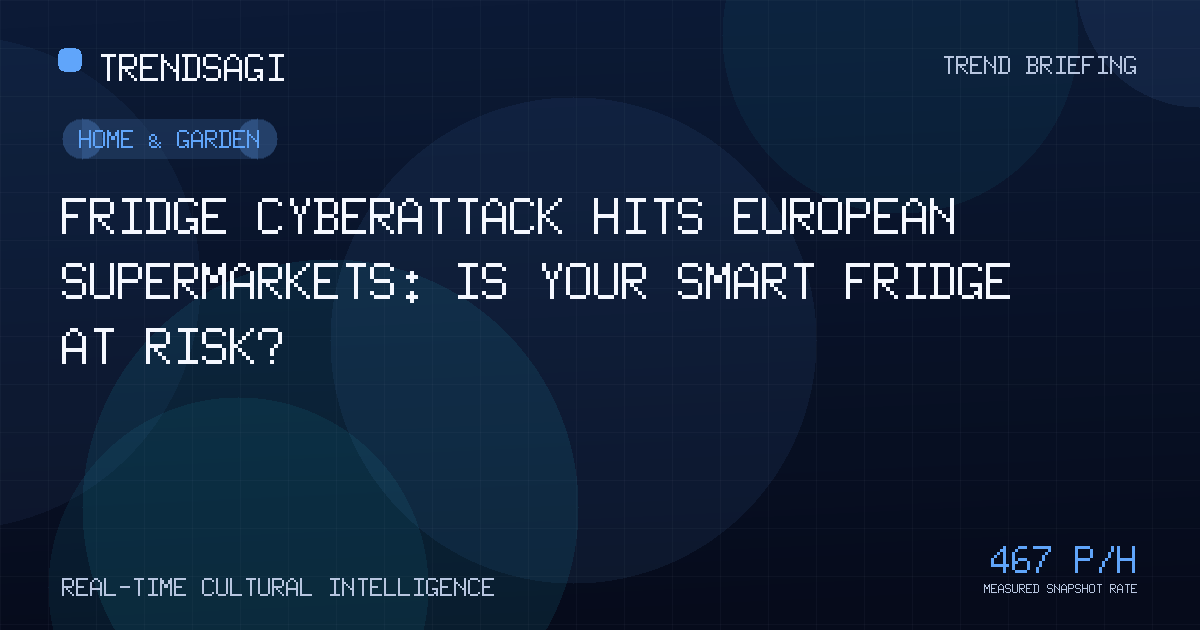
Fridge Cyberattack Hits European Supermarkets: Is Your Smart Fridge at Risk?
Suspected fridge cyberattacks hit supermarkets in Sweden, Belgium, Luxembourg and Ireland. What is verified, what is not, and whether your home smart fridge is
Automated briefing. Generated from stored signal measurements and source-backed research; it is not manually reviewed. Read the methodology and limitations or the editorial standards.
Metrics in this briefing are a snapshot associated with its publication date and may not reflect current conditions.
What changed
A wave of suspected cyberattacks beginning around 1-2 November 2026 hit refrigerators and freezers in supermarkets across Sweden, Belgium, Luxembourg and Ireland, including 13 SuperValu stores, forcing chilled and frozen products off sale, according to The Independent, the Egyptian Gazette and Citizen Digital. The same coverage links the incidents to an earlier one in France the previous month. In the 902-second window ending 2026-11-02T17:46:10Z, TrendsAGI measured a snapshot rate of 466.9 posts per hour and a latest snapshot volume of 393 posts.
| Observation time | Measured posts/hour | Snapshot volume |
|---|---|---|
| 2026-11-02T17:46:10Z | 466.9 | 393 posts |
Short answer: there is no verified evidence that any home smart fridge has been compromised in this wave. The attacks reported so far involve commercial refrigeration in supermarkets, not consumer appliances, and the cause is still not officially confirmed.
Why this topic may be moving
Coverage verifies that the incidents happened and that products were pulled from sale. It also says the incidents are suspected cyberattacks, not that they have been definitively confirmed as such. The measured snapshot rate of 466.9 posts/hour shows the social conversation spreading quickly, but it does not tell us why any individual post was made, and no page in the brief quantifies how much discussion is genuine concern versus joking, including about the unrelated 'fridge cigarettes' Diet Coke meme.
The alarm is focused on connected appliances: if supermarket fridges can be disrupted, readers ask whether their own fridge could be next. Most ranking news pages confirm the incidents but give thin, speculative answers on home-device risk. Attribution is also inconsistent; Russian involvement is mentioned only as suspicion in one source.
Timeline of verified reporting
- October 2026 (reported): an earlier incident in France, linked by coverage to the later wave.
- 1-2 November 2026: suspected attacks on supermarket refrigerators and freezers in Sweden, Belgium, Luxembourg and Ireland, including 13 SuperValu stores.
- 2 November 2026: continued coverage; chilled and frozen products taken off sale while the incidents are investigated.
This timeline uses only what the brief verifies. Exact store counts outside the 13 SuperValu stores, and whether the incidents are formally confirmed as cyberattacks, remain unconfirmed.
Why it matters
For shoppers, the immediate impact is availability: chilled and frozen goods pulled from shelves in affected stores. For store operators, the incident raises questions about how internet-connected refrigeration controls work and how an attack could raise temperatures. For households, the practical question is narrower: is a home smart fridge the same kind of device as a supermarket refrigeration system? The verified reporting does not establish that link, and no source confirms a home smart fridge has been compromised.
The verified facts establish disruption to commercial refrigeration in several European countries; they do not establish that consumer smart fridges are at risk, and no source confirms a home device has been compromised.
What to watch next
- Any official confirmation that the incidents were cyberattacks, and any named attribution.
- Updated store counts and whether the France incident is formally linked.
- Whether investigators say the same method or infrastructure was used across countries.
- Whether the social conversation shifts from alarm to practical consumer advice.
- Any verified report of a home smart fridge being compromised, which would materially change the risk picture.
Frequently asked questions
Which supermarkets and countries have been hit by the fridge/freezer cyberattack?
Verified reporting names Sweden, Belgium, Luxembourg and Ireland, including 13 SuperValu stores in Ireland, with an earlier linked incident in France. The brief does not verify a total store count across all countries.
Has the incident been confirmed as a cyberattack, and who is suspected?
The incidents are reported as suspected cyberattacks; the brief does not verify definitive confirmation. Russian involvement is mentioned only as suspicion in one source, so it should be treated as unconfirmed.
Are the hacked supermarket fridges the same as home smart fridges?
No. The verified reporting concerns commercial refrigeration in supermarkets, not consumer smart appliances, and the brief does not establish that the same systems or vulnerabilities apply at home.
Can hackers actually target my fridge at home, and what would that achieve?
The brief does not verify any home smart fridge compromise, so this cannot be answered with certainty. A connected appliance could in principle be a target, but what an attacker could achieve depends on the specific device and is not established by the verified reporting.
Should I disconnect my smart fridge or freezer from the internet?
The brief does not verify consumer advice specific to this incident. If you want to reduce exposure, concrete steps include changing default passwords, applying firmware updates, and placing the appliance on a separate network segment — but these are general protective measures, not confirmed responses to this event.
Why are commercial fridges and freezers internet-connected at all?
The brief does not verify the technical design of the affected systems. The verified reporting establishes only that supermarket refrigeration was disrupted and products were taken off sale.
Methodology and limitations
The measured figure is a snapshot rate of 466.9 posts per hour over an exact 902-second window using 3 stored observations, measured at 2026-11-02T17:46:10Z, alongside a latest snapshot volume of 393 posts. It is not a live rate, forecast, reach, engagement or unique-person count. The signal can establish that the topic was moving quickly at that moment; it cannot establish why any individual post was made, how much discussion is genuine concern, or whether the incidents are confirmed cyberattacks. External facts are attributed to The Independent, the Egyptian Gazette and Citizen Digital. Unconfirmed details, including state sponsorship, total store counts and any home-device compromise, are stated as unconfirmed or left out.
Sources
Track This Topic for New Signals
Set alerts for future velocity or sentiment changes around this topic.
Explore Tracking PlansAbout TrendsAGI research
TrendsAGI's automated research pipeline publishes dated signal snapshots, methodology notes, and practical workflows for teams evaluating cultural momentum. Read how signals are scoped, scored, and limited in our research methodology.