Whale Sightings Surge Across Global Oceans
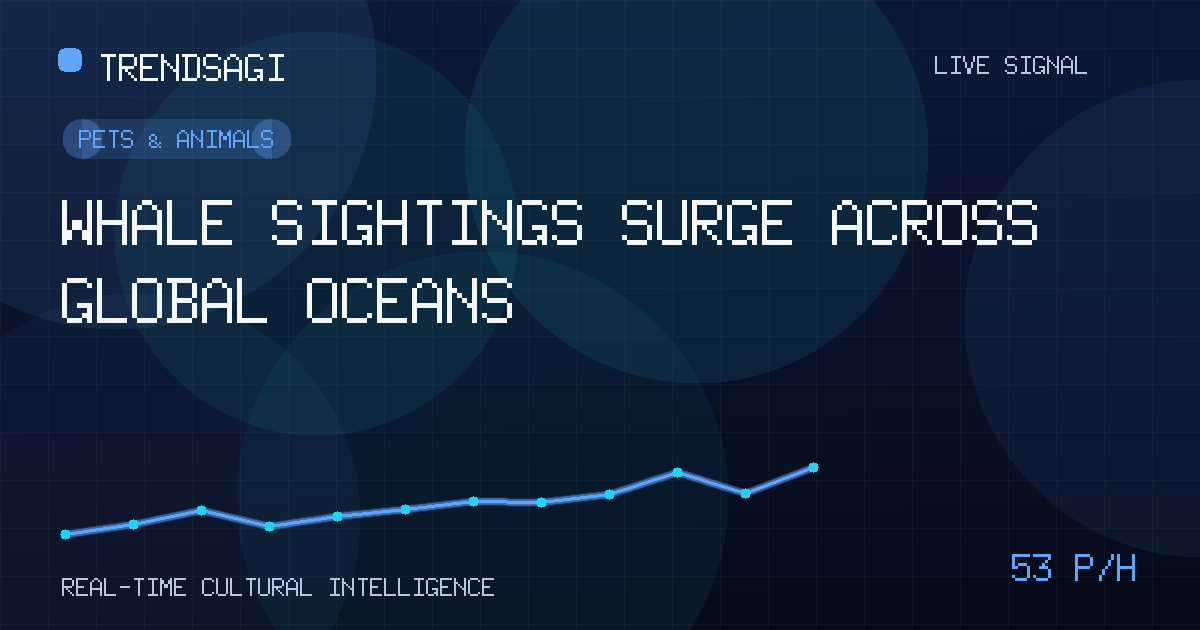
Whale sightings have surged globally with 956 mentions and 53.5 posts per hour, driven by climate change impacts on ocean ecosystems.
Automated briefing. Generated from stored signal measurements and source-backed research; it is not manually reviewed. Read the methodology and limitations.
Metrics in this briefing are a snapshot associated with its publication date and may not reflect current conditions.
TL;DR
- Social media mentions of whales have spiked to 956 in the past 24 hours
- Discussion velocity is running at 53.5 posts per hour
- Multiple whale species reported in unusual locations
- Climate change and ocean health are driving the conversation
- Conservation groups are leveraging the trend for awareness
Unusual Whale Activity Sparks Global Attention
Marine biologists and ocean enthusiasts are reporting a surge in whale sightings across multiple continents. The data shows an unusual clustering of activity, with posts flooding in from both coastal communities and research vessels. This isn't just a seasonal migration pattern—something bigger is happening in our oceans.
Climate Change Connection Emerges
Many observers are linking the increased whale activity to shifting ocean temperatures and changing food availability. Warmer waters are pushing whale populations into new territories, creating unexpected encounters with human populations. Social media is abuzz with videos of whales appearing in places where they haven't been seen for decades.
The most striking pattern is how quickly climate-related whale movements are becoming visible to the public eye.
Conservation Momentum Builds
Environmental organizations are capitalizing on the trend to highlight the importance of marine ecosystem health. The surge in public interest is providing a unique opportunity to educate about the challenges facing whale populations, from ship strikes to entanglement in fishing gear. Several campaigns are gaining traction alongside the organic whale content.
Scientific Community Responds
Marine research institutions are reporting increased requests for data and expert commentary. The unusual patterns are prompting calls for more comprehensive tracking of whale movements and their relationship to ocean conditions. Scientists emphasize that while the current surge is noteworthy, long-term monitoring is essential to understand the full impact of environmental changes.
What This Means for Ocean Health
The whale trend serves as a barometer for broader ocean health. These massive creatures are often the first indicators of significant changes in marine ecosystems. The current spike in attention could mark a turning point in how we monitor and respond to oceanic shifts, potentially leading to more proactive conservation measures.
Track This Topic for New Signals
Set alerts for future velocity or sentiment changes around this topic.
Explore Tracking PlansAbout TrendsAGI research
TrendsAGI's automated research pipeline publishes dated signal snapshots, methodology notes, and practical workflows for teams evaluating cultural momentum. Read how signals are scoped, scored, and limited in our research methodology.


