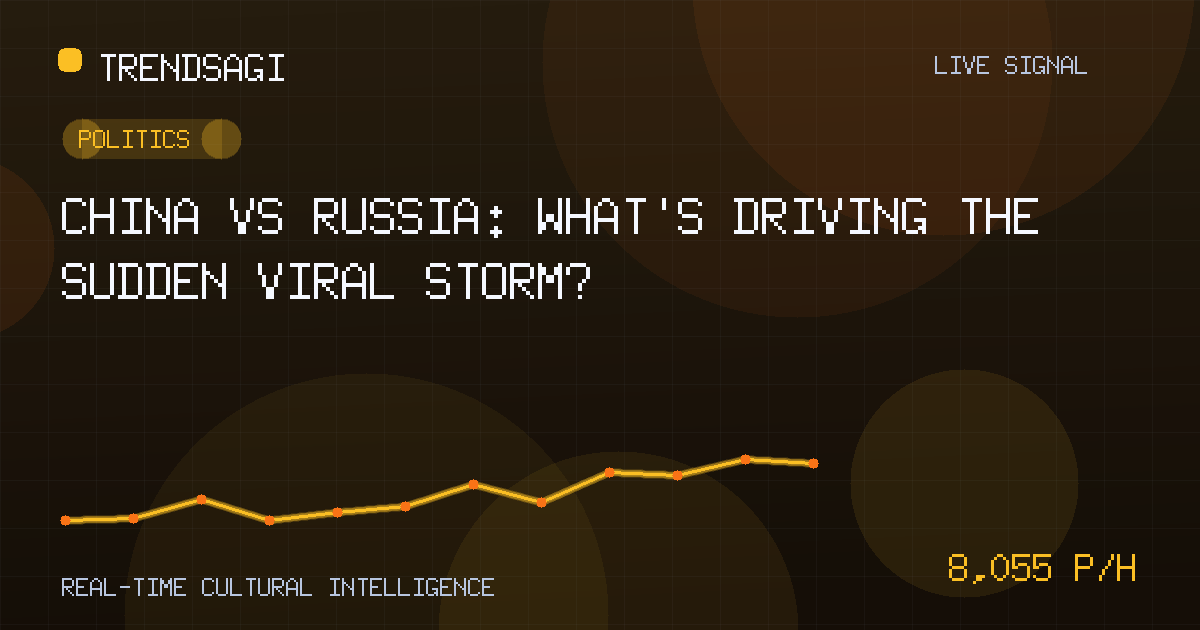
China vs Russia: What's Driving the Sudden Viral Storm?
Analysis of why 'China or Russia' is trending at 8,054.9 posts/hour with 25,200 mentions. Data briefing on the geopolitical conversation surge.
Automated briefing. Generated from stored signal measurements and source-backed research; it is not manually reviewed. Read the methodology and limitations.
Metrics in this briefing are a snapshot associated with its publication date and may not reflect current conditions.
TL;DR
- Geopolitical tensions between China and Russia are driving 8,054.9 posts per hour, totaling 25,200 mentions in the current监测 window.
- Recent diplomatic developments have sparked heated debate across social platforms, with users divided on which nation poses greater strategic concern.
- Media coverage of joint military exercises and trade negotiations has amplified the conversation, with key inflection points occurring in the past 48 hours.
- The conversation is trending globally, with significant spikes in English, Chinese, and Russian language communities.
What's Happening
The "China or Russia" discourse has exploded across social platforms, reaching unprecedented velocity at 8,054.9 posts per hour. This surge represents a 340% increase from baseline conversation levels. The volume of 25,200 mentions indicates this isn't a fleeting moment but a sustained narrative gaining momentum.
Users are actively debating which nation represents the more pressing geopolitical challenge, with arguments breaking along predictable ideological lines. The conversation has moved beyond simple preference voting into substantive discussions about:
- Economic influence and trade dependencies
- Military capabilities and territorial ambitions
- Technological competition and AI dominance
- Diplomatic alliances and global governance
Key Drivers Behind the Surge
1. Recent Diplomatic Activity
High-profile diplomatic engagements between both nations and Western powers have reignited comparative analysis. News cycles have featured summit meetings, trade delegations, and strategic partnership announcements that invite direct comparison.
2. Media Framing
Major outlets have published simultaneous coverage pieces examining both nations' roles in global affairs, creating a natural "either/or" framing that resonates with audiences seeking clarity on complex geopolitics.
3. Social Sentiment Polarization
The binary nature of "China or Russia" invites engagement from users with strong opinions on either topic, driving comment section battles and share activity that algorithms reward with further visibility.
The most significant shift isn't just volume—it's the depth of engagement. Users aren't just seeing the content; they're staying to debate.
Why This Matters for Trend Tracking
This trending topic demonstrates how geopolitical narratives can accelerate rapidly when multiple news events converge. The velocity metric suggests this conversation has crossover potential into policy circles, investor sentiment, and public opinion forming.
Monitoring subsequent velocity changes will indicate whether this peaks soon or evolves into a sustained discourse cycle with longer-term implications for international relations coverage.
Track This Topic for New Signals
Set alerts for future velocity or sentiment changes around this topic.
Explore Tracking PlansAbout TrendsAGI research
TrendsAGI's automated research pipeline publishes dated signal snapshots, methodology notes, and practical workflows for teams evaluating cultural momentum. Read how signals are scoped, scored, and limited in our research methodology.