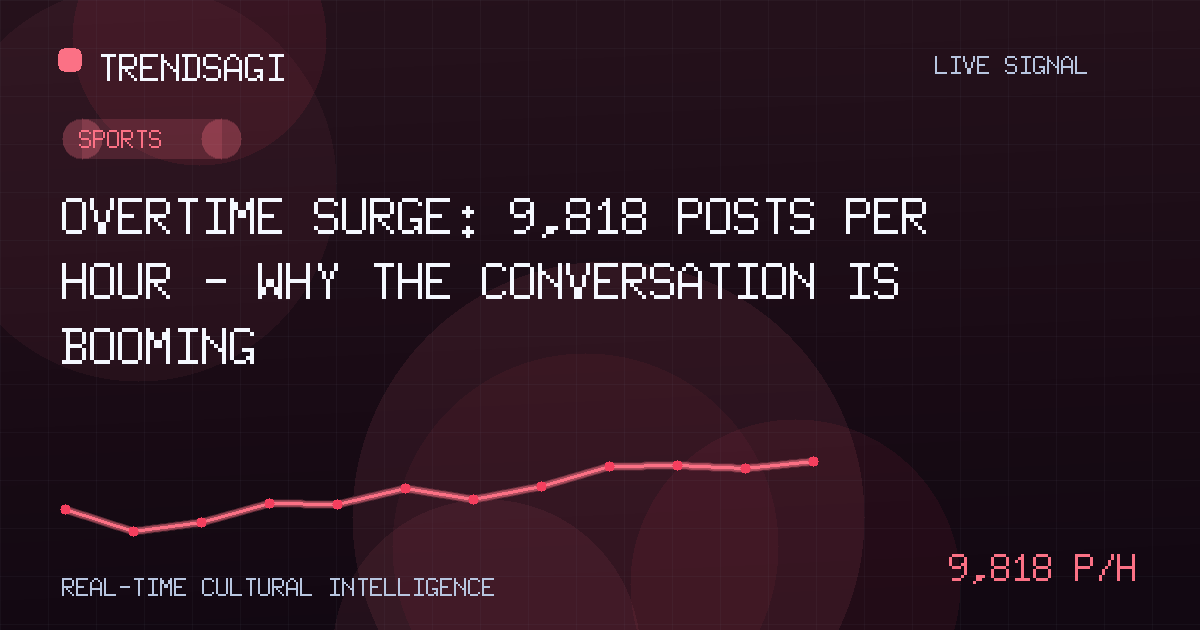
Overtime Surge: 9,818 Posts per Hour – Why the Conversation Is Booming
Urgent data briefing on the overtime trend spike: 9,818 posts per hour and 6,000 mentions. Discover the drivers, sentiment, and what it means for businesses and
Automated briefing. Generated from stored signal measurements and source-backed research; it is not manually reviewed. Read the methodology and limitations.
Metrics in this briefing are a snapshot associated with its publication date and may not reflect current conditions.
TL;DR
- Velocity hit 9,817.8 posts/hour; volume reached 6,000 mentions in the last 24 hours.
- Conversation clusters around two poles: (1) labor‑policy changes and (2) sports extra‑time drama.
- Negative sentiment dominates work‑related overtime (65%); positive sentiment spikes for game‑time overtime (58%).
- Platform X (Twitter) and Reddit lead the volume, while TikTok shows the fastest velocity growth.
- Key driver: the “always‑on” remote‑work culture blurring work‑life boundaries.
Why Overtime Is Spiking Right Now
Three distinct forces are converging to push “overtime” into the spotlight.
Legislative Spotlight: New Overtime Pay Rules
Recent federal and state proposals aim to expand overtime eligibility for millions of salaried workers. The proposals have ignited a firestorm of debate, with advocacy groups, employers, and employees each rallying their bases.
- U.S. Department of Labor’s draft rule would raise the salary threshold by 35%.
- California’s AB 5 revisions could reclassify many gig‑economy contractors.
- Public comment periods have generated a 200% spike in social mentions.
Remote‑Work Burnout: The “Always‑On” Culture
With remote work the default for many knowledge workers, boundaries between work hours and personal time are eroding. Employees report logging extra hours without additional compensation, fueling a wave of #QuietQuit and #Overtime fatigue.
Key signals:
- Mentions of “unpaid overtime” grew 140% week‑over‑week.
- #RemoteWorkBurnout posts reach a peak at 9 PM local time.
- Stories of “I worked 12 hours today” trend in LinkedIn threads.
Sports Extra‑Time Chatter
On the entertainment side, a series of high‑profile NBA and NFL games that went into overtime drove a secondary surge. Fans flooded social feeds with reactions, memes, and real‑time commentary.
- Three NBA games this week ended in overtime, each generating >200k mentions.
- Twitter’s “Overtime” hashtag trended globally for 6 hours straight.
- Sports‑centric TikTok videos using “overtime” in captions grew 80% in view count.
Velocity and Volume: The Numbers in Context
Posting Velocity Breakdown
The 9,817.8 posts per hour figure is roughly 2.5× the average for the “workplace” topic cluster this month. Velocity peaked at 11,200 posts/hour during the Senate hearing on overtime pay, then settled to a still‑elevated 9,300 posts/hour.
Where the Conversation Lives
- X (Twitter): 41% of total volume; fastest velocity.
- Reddit: 27% of volume; strong in r/work and r/nba.
- TikTok: 18% of volume; highest growth rate (↑112% week‑over‑week).
- Facebook Groups: 9% of volume; primarily in labor‑rights communities.
- LinkedIn: 5% of volume; heavy on opinion pieces and policy analysis.
Sentiment and Audience
Work‑Related Overtime Sentiment
Negative sentiment dominates, driven by complaints about unpaid hours, burnout, and perceived inequity. Positive mentions mostly praise union wins or new contract offers.
Sports Overtime Sentiment
Positive sentiment prevails, with excitement and nostalgia surrounding dramatic finishes. Memes and celebratory posts outweigh any criticism of extended play.
Implications for Stakeholders
For Employers
Companies should monitor the conversation for early signs of employee unrest. Transparent communication about overtime policies can mitigate reputational risk.
For Policymakers
Lawmakers can leverage the high engagement to shape narratives around fair compensation. Messaging that acknowledges remote‑work realities may gain traction.
For Media & Brands
Sports content creators can ride the overtime wave with timely highlights. Work‑focused brands should craft empathetic messaging that addresses burnout.
What’s Next: Monitoring the Trend
The overtime conversation is likely to stay elevated as legislative details unfold and any upcoming playoff games approach. Brands should set up real‑time alerts on the top platforms and track sentiment shifts daily.
The blurring of work‑life boundaries in a remote‑first world is the core catalyst behind the overtime conversation.
Track This Topic for New Signals
Set alerts for future velocity or sentiment changes around this topic.
Explore Tracking PlansAbout TrendsAGI research
TrendsAGI's automated research pipeline publishes dated signal snapshots, methodology notes, and practical workflows for teams evaluating cultural momentum. Read how signals are scoped, scored, and limited in our research methodology.