UNRWA in Crisis: Why the UN Agency for Palestine Refugees Is Dominating Headlines
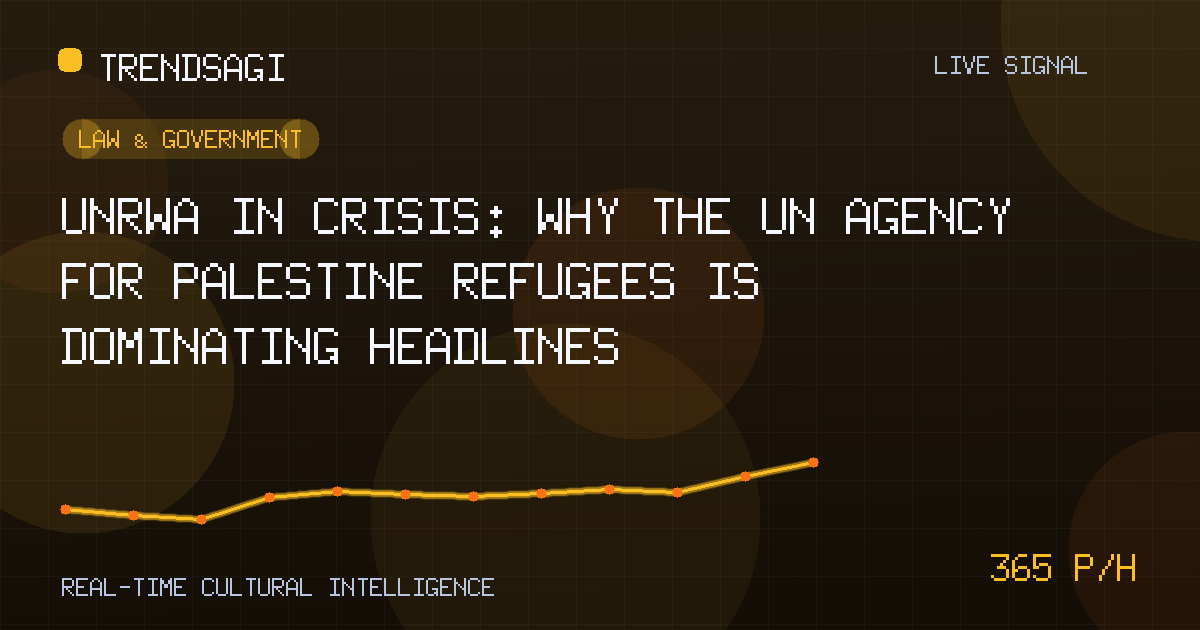
Analysis of UNRWA trending with 365.2 posts/hour velocity. Explains why the UN relief agency for Palestine refugees is dominating headlines amid funding crises
Automated briefing. Generated from stored signal measurements and source-backed research; it is not manually reviewed. Read the methodology and limitations.
Metrics in this briefing are a snapshot associated with its publication date and may not reflect current conditions.
TL;DR
- UNRWA is experiencing unprecedented social media velocity at 365.2 posts/hour with 594 mentions, indicating breaking news urgency.
- Funding crises and humanitarian operations in Gaza are driving the conversation, with Israel and major donors clashing over the agency's future.
- Key actors include the US, Israel, Arab states, and the UN itself—each with competing interests in the agency's survival.
- The debate centers on whether UNRWA should continue its 75-year mandate or be reformed/replaced.
What Is UNRWA?
The United Nations Relief and Works Agency for Palestine Refugees provides humanitarian aid to millions of Palestinians across Gaza, the West Bank, Jordan, Lebanon, and Syria. Founded in 1949, it is the largest UN agency in the Middle East, serving approximately 5.9 million registered refugees.
The agency sits at the intersection of humanitarian need and political warfare—its survival determines whether millions receive aid or face abandonment.
Why It Is Trending Now
Funding Freeze Crisis
Several major donors, led by the United States, have dramatically reduced or frozen contributions to UNRWA. This follows allegations that staff members were involved in the October 7 Hamas attacks. The funding cuts threaten critical services including:
- Primary healthcare clinics
- Emergency food assistance
- schools serving 500,000+ students
- refugee camp infrastructure
Political Pressure and Calls for Reform
Israel has called for UNRWA to be disbanded and its functions transferred to other agencies. Meanwhile, Arab states and the UN Secretary-General have urged restored funding, warning of catastrophic humanitarian consequences. This creates a diplomatic standoff with profound implications for regional stability.
Humanitarian Emergency in Gaza
Gaza relies heavily on UNRWA for basic services. The current conflict has displaced over 1.5 million people, many sheltering in UNRWA facilities. Any disruption to operations would compound an already dire humanitarian catastrophe.
Key Takeaways
UNRWA's trending velocity reflects a high-stakes political battle with humanitarian consequences. The coming weeks will determine whether the agency survives its funding crisis or undergoes fundamental restructuring. For analysts, watch for: donor announcements, UN General Assembly actions, and statements from Arab League members.
Track This Topic for New Signals
Set alerts for future velocity or sentiment changes around this topic.
Explore Tracking PlansAbout TrendsAGI research
TrendsAGI's automated research pipeline publishes dated signal snapshots, methodology notes, and practical workflows for teams evaluating cultural momentum. Read how signals are scoped, scored, and limited in our research methodology.


