Smart Money: Why It's Trending Now
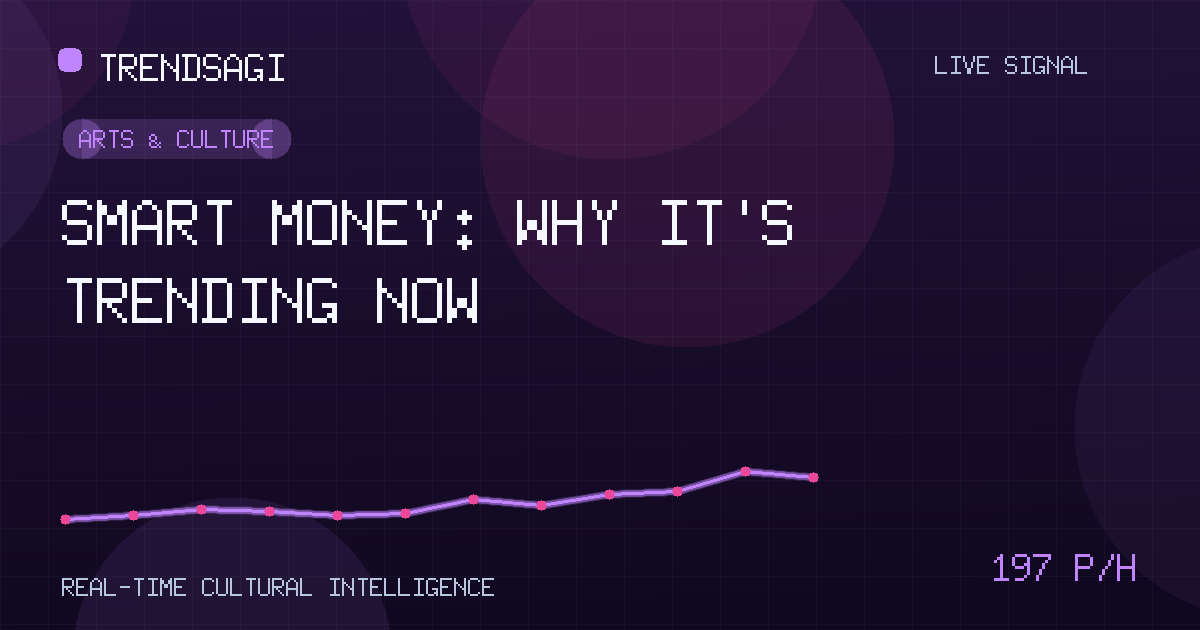
Smart Money is trending with 197.5 posts/hour. Learn why institutional investors are dominating discussions and how retail traders are responding.
Automated briefing. Generated from stored signal measurements and source-backed research; it is not manually reviewed. Read the methodology and limitations.
Metrics in this briefing are a snapshot associated with its publication date and may not reflect current conditions.
TL;DR
- Smart Money is trending with 197.5 posts/hour and 329 total mentions
- The term refers to sophisticated investors who make informed, strategic decisions
- Current market volatility is driving increased discussion around institutional vs. retail investing
- Social media is amplifying debates about market manipulation and insider knowledge
- Experts suggest tracking Smart Money movements as a key indicator for market trends
What Is Smart Money?
Smart Money refers to capital controlled by experienced, well-informed investors. These include institutional investors, hedge funds, and market insiders who use advanced strategies and deep research to make investment decisions.
Why It Matters Now
The term is gaining traction as retail investors try to decode market movements. With increased market volatility, many are looking to Smart Money as a potential guide for navigating uncertainty.
Retail vs. Institutional Debate
Discussions are heating up around the power imbalance between retail and institutional investors. Social media platforms are buzzing with debates about whether retail investors can ever truly compete with Smart Money.
Understanding Smart Money movements can provide critical insights into market trends and potential opportunities.
Market Manipulation Concerns
Some conversations focus on the ethical implications of Smart Money's influence. Critics argue that institutional investors have unfair advantages, potentially manipulating markets to their benefit.
How to Track Smart Money
Investors are increasingly using tools to monitor institutional buying patterns. This includes analyzing SEC filings, options activity, and other market indicators to identify Smart Money strategies.
Future Implications
As retail investing continues to grow, the relationship between Smart Money and individual investors will likely evolve. This could lead to new regulations or innovative tools to level the playing field.
Track This Topic for New Signals
Set alerts for future velocity or sentiment changes around this topic.
Explore Tracking PlansAbout TrendsAGI research
TrendsAGI's automated research pipeline publishes dated signal snapshots, methodology notes, and practical workflows for teams evaluating cultural momentum. Read how signals are scoped, scored, and limited in our research methodology.