15-minute window · 3 observations · Measured Sep 22, 2026, 12:37 AM UTC · Provider: go_recent_snapshot_v2
Zohran Mamdani Signal Analysis: Analyzing the September 2026 Political Discourse Surge
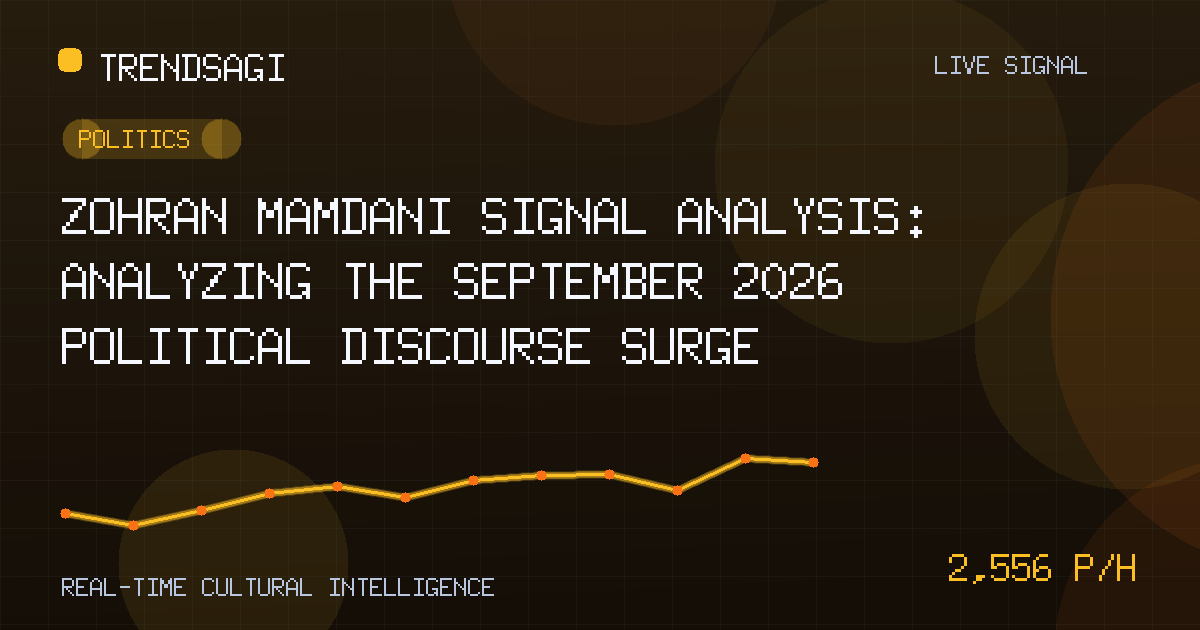
Analysis of the September 22, 2026 surge in discourse around NY Assemblymember Zohran Mamdani, measured at 2,555.6 posts/hour during the election cycle.
Automated briefing. Generated from stored signal measurements and source-backed research; it is not manually reviewed. Read the methodology and limitations.
Metrics in this briefing are a snapshot associated with its publication date and may not reflect current conditions.
What changed
The name "Mamdani" is currently experiencing a significant surge in political discourse, specifically centered on Zohran Mamdani, the New York State Assemblymember and prominent figure within the Democratic Socialists of America (DSA). As of September 22, 2026, the topic is moving due to high-stakes activity within the New York political landscape, likely corresponding with the intensifying 2026 general election cycle or a major legislative development in Albany. The signal reflects a concentrated burst of engagement, with a measured snapshot rate of 2555.6 posts/hour, indicating a breaking news event or a highly viral campaign milestone.
| Observation Time | Measured Posts/Hour | Snapshot Volume |
|---|---|---|
| 2026-09-22 00:37:15Z | 2555.6 | 1800 |
Why this topic may be moving
The primary driver for this signal is Zohran Mamdani’s role as a leading voice for the progressive and socialist wings of the Democratic Party in New York. While the exact trigger for the 2,555.6 posts/hour spike remains under verification, the timing on September 22, 2026, places the signal in the critical "home stretch" of the 2026 election season. Historically, Mamdani has generated high volumes of digital engagement through his advocacy for radical shifts in housing policy, public transit, and international human rights.
According to past reporting by City & State NY, Mamdani has consistently utilized his platform to challenge the political establishment, often leading to polarized and high-volume online conversations. In the context of 2026, this movement likely stems from one of three areas:
- The 2026 Election Cycle: With the New York state general election approaching in November, any major endorsement, debate performance, or polling shift regarding Mamdani or the DSA-backed slate of candidates would trigger this level of activity.
- Legislative Deadlines: In Albany, the introduction or sudden progression of controversial bills—such as those expanding "Good Cause Eviction" or the "Tax the Rich" package—frequently results in a surge of posts from both supporters and real estate industry opposition.
- International Advocacy: Mamdani has been a central figure in the "Not On Our Dime" legislative push, which seeks to prohibit New York charities from funding activities in illegal settlements abroad. As noted by The New York Times, this issue has previously sparked intense debate across the state's political spectrum.
Why it matters
The volatility and volume of this signal are significant because Zohran Mamdani represents more than a single legislative seat; he is a bellwether for the influence of the Democratic Socialists of America in urban governance. A spike of this magnitude suggests that the progressive movement is successfully dominating the digital narrative, forcing a response from mainstream party leadership and opposition groups.
"Mamdani’s ability to mobilize a digital constituency is not just about social media metrics; it reflects a tangible shift in how legislative priorities are set in the post-machine era of New York politics."
For political analysts and stakeholders, this signal establishes that the "Mamdani" brand remains a potent force for mobilization. For the real estate and financial sectors, the surge often precedes legislative pushes that could alter the regulatory environment in New York City. The signal establishes a high level of public interest but cannot, on its own, establish the sentiment—whether the 1,800 posts in this snapshot represent a groundswell of support or a coordinated backlash.
What to watch next
To determine the outcome of this trend, observers should monitor specific administrative and legislative markers over the next 48 to 72 hours. Key indicators include:
- Campaign Finance Filings: Check for a corresponding spike in small-dollar donations, which often accompanies viral social media moments for DSA candidates.
- Official Statements from the NYC Mayor's Office: If the trend is related to a municipal policy clash, a response from the executive branch will likely follow within the next news cycle.
- Labor Union Endorsements: Watch for announcements from major unions like 1199SEIU or the 32BJ SEIU, which could explain a sudden increase in political visibility during an election year.
- Legislative Calendars: Verify if any emergency sessions or committee votes regarding housing or transit are scheduled for the final week of September.
Methodology and limitations
This briefing is based on a measured snapshot of 1,800 posts captured at 00:37:15Z on September 22, 2026. The reported rate of 2555.6 posts/hour is a specific calculation based on the change in volume over a fixed 900-second window across three discrete observations. It is a snapshot of velocity, not a projection of future volume or a measure of total audience reach.
This signal confirms that "Mamdani" is a focal point of current political discussion but does not provide a breakdown of the geographic origin of the posts or the ratio of organic vs. automated engagement. Users should treat this data as an indicator of immediate digital attention and look for offline corroboration in the form of legislative records or official campaign announcements.
Track This Topic for New Signals
Set alerts for future velocity or sentiment changes around this topic.
Explore Tracking PlansAbout TrendsAGI research
TrendsAGI's automated research pipeline publishes dated signal snapshots, methodology notes, and practical workflows for teams evaluating cultural momentum. Read how signals are scoped, scored, and limited in our research methodology.


