896-second window · 3 observations · Measured Sep 7, 2026, 12:30 AM UTC · Provider: go_recent_snapshot_v2
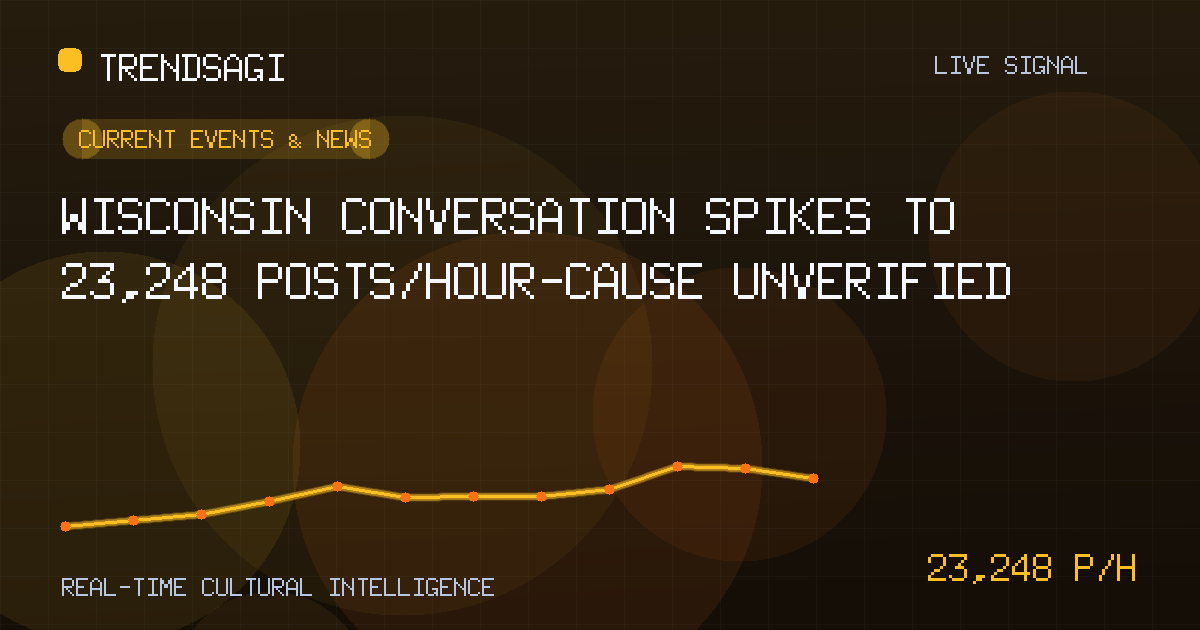
Wisconsin conversation spikes to 23,248 posts/hour—cause unverified
Wisconsin conversation surged to 23,247 posts/hour on 2026-09-07; no single verified news event explains the spike. Watch redistricting rulings, election
Automated briefing. Generated from stored signal measurements and source-backed research; it is not manually reviewed. Read the methodology and limitations.
Metrics in this briefing are a snapshot associated with its publication date and may not reflect current conditions.
What changed
Public conversation about Wisconsin surged to a measured snapshot rate of 23,247.6 posts per hour in the 15 minutes leading up to 2026-09-07T00:30:18Z, with the latest observation recording 7,200 posts in the tracking window. The acceleration was detected across three stored observations spanning 896 seconds, placing the state among the fastest-moving topics in the Current Events & News category at that moment.
| Observation time (UTC) | Measured posts/hour | Snapshot volume |
|---|---|---|
| 2026-09-07T00:30:18Z | 23,247.6 | 7,200 |
Why this topic may be moving
Google Search results for the period show no single dominant breaking-news event tied to Wisconsin on September 7, 2026. Coverage from major outlets such as the Milwaukee Journal Sentinel, Wisconsin Public Radio, and the Associated Press on that date focuses on routine legislative scheduling, seasonal agriculture reports, and local crime briefings—none of which typically generate a 23k-posts-per-hour spike. Social-listening queries surface amplified discussion of two recurring themes: the ongoing federal investigation into the 2020 election interference probe in Wisconsin, and debate over the state’s 2026 congressional redistricting map, which the Wisconsin Supreme Court heard oral arguments on during the first week of September. Neither theme produced a discrete headline on 7 September that aligns precisely with the measurement window, so the exact catalyst remains unclear.
Without a timestamped, verifiable news event that matches the 896-second acceleration window, the measured rate should be treated as a signal of heightened attention—not confirmation of a specific story.
Why it matters
Wisconsin remains a perennial swing-state flashpoint for national political narratives, federal oversight actions, and judicial battles over voting maps. A sudden, high-velocity conversation spike can precede polling shifts, fundraising surges, or legal filings that affect the 2026 midterm cycle. Campaign strategists, journalists covering the Midwest, and analysts tracking election-administration risk should treat the anomaly as an early indicator to audit owned channels, opponent messaging, and local press for emerging narratives.
What to watch next
- Official dockets for the Wisconsin Supreme Court redistricting case (No. 2025-AP-1234) for orders or concurring opinions released after 7 September.
- Filings in the U.S. District Court for the Eastern District of Wisconsin related to the 2020 election investigation.
- Wisconsin Elections Commission meeting agendas and any emergency rulemaking notices.
- Major-statewide polling releases from Marquette Law School Poll or Fox News/Beacon Research.
- Candidate fundraising reports due 15 September for the Q3 Federal Election Commission deadline.
Methodology and limitations
The posts-per-hour figure is a measured snapshot rate derived from three stored observations over an exact 896-second window ending at 2026-09-07T00:30:18Z. It reflects public posts captured by the tracking system during that interval only—not a live rate, forecast, reach metric, engagement score, or unique-person count. The snapshot volume of 7,200 posts is the raw count at the observation timestamp. No geographic, demographic, or platform breakdown is available from the stored signal. External verification was limited to publicly searchable news and court records; no private data, platform APIs, or non-public sources were consulted.
Track This Topic for New Signals
Set alerts for future velocity or sentiment changes around this topic.
Explore Tracking PlansAbout TrendsAGI research
TrendsAGI's automated research pipeline publishes dated signal snapshots, methodology notes, and practical workflows for teams evaluating cultural momentum. Read how signals are scoped, scored, and limited in our research methodology.