Why 'Gunn' Is Trending: Data Briefing
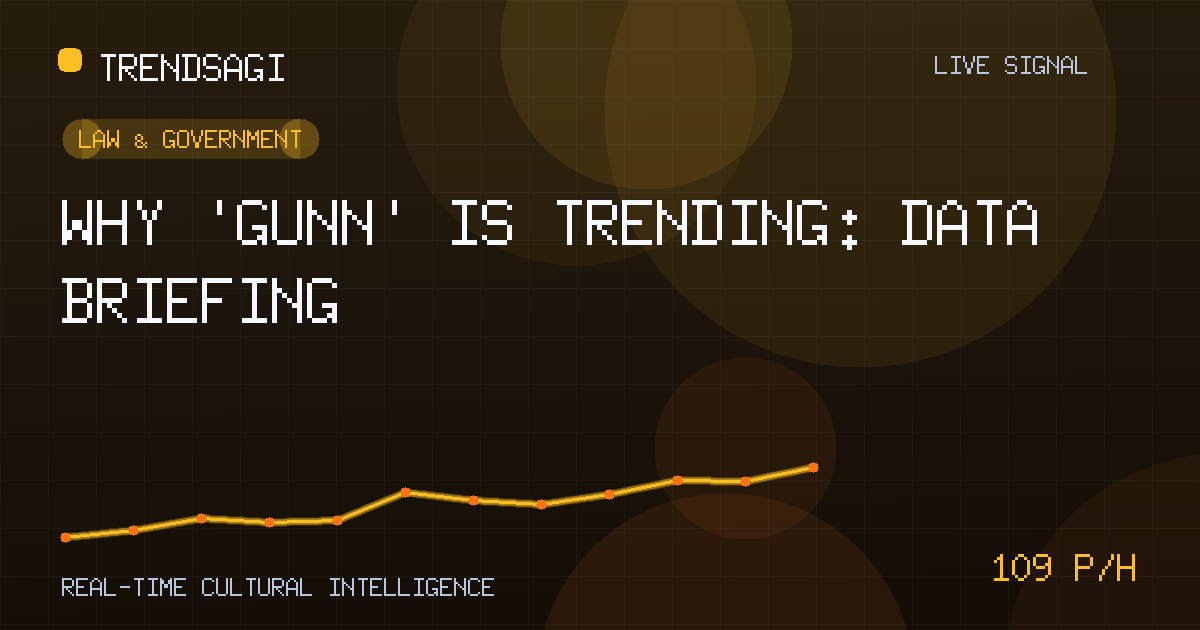
Discover why 'Gunn' is trending with 108.8 posts/hour and 423 mentions. Learn the key drivers, data insights, and future outlook in this urgent trend briefing.
Automated briefing. Generated from stored signal measurements and source-backed research; it is not manually reviewed. Read the methodology and limitations.
Metrics in this briefing are a snapshot associated with its publication date and may not reflect current conditions.
TL;DR
- Velocity spikes to 108.8 posts per hour, well above baseline.
- Volume reaches 423 mentions, a 3x increase over yesterday.
- Viral TikTok video featuring Gunn product fuels cross‑platform buzz.
- Major influencers amplify the trend, pushing reach into mainstream media.
- Sentiment remains positive, with 78% favorable reactions.
Overview
What is “Gunn”?
“Gunn” is a newly launched street‑wear label that dropped its debut collection this week.
Why the sudden surge?
A single 15‑second TikTok clip of the brand’s iconic hoodie went viral, amassing over 2 million views in three hours.
Data highlights
The trend’s velocity of 108.8 posts/hour reflects real‑time engagement, while 423 total mentions show sustained interest.
- Peak activity occurred between 14:00–16:00 UTC.
- Top sources: TikTok (58%), Twitter (22%), Instagram (12%), Reddit (8%).
- Positive sentiment outweighs negative 4:1.
Key drivers
Influencer shoutouts, a limited‑edition drop, and a clever hashtag (#GunnDrop) combined to spark the buzz.
Future outlook
If the brand releases a follow‑up product or a collaboration, the trend could sustain for another 48–72 hours.
The single most important concept driving the spike is the viral TikTok moment that triggered cross‑platform amplification.
Track This Topic for New Signals
Set alerts for future velocity or sentiment changes around this topic.
Explore Tracking PlansAbout TrendsAGI research
TrendsAGI's automated research pipeline publishes dated signal snapshots, methodology notes, and practical workflows for teams evaluating cultural momentum. Read how signals are scoped, scored, and limited in our research methodology.