30-minute window · 3 observations · Measured Sep 11, 2026, 7:55 AM UTC · Provider: go_recent_snapshot_v2
Diplomatic Recognition and Security Escalation: Analysis of Recent West Bank Discourse
Analysis of a 62.0 posts/hour surge in West Bank discourse following statehood recognition by Spain, Ireland, and Norway, and military raids in Jenin.
Automated briefing. Generated from stored signal measurements and source-backed research; it is not manually reviewed. Read the methodology and limitations.
Metrics in this briefing are a snapshot associated with its publication date and may not reflect current conditions.
What changed
Public discourse regarding the West Bank has intensified significantly due to a dual-track of geopolitical events: the historic announcement by Ireland, Norway, and Spain that they will formally recognize a Palestinian state, and a sustained, high-intensity military operation by Israeli forces in the northern West Bank city of Jenin. The convergence of these diplomatic and military developments has catalyzed a sharp increase in information exchange and commentary. The surge is driven by debate over the legal status of the territory, the efficacy of international recognition as a tool for de-escalation, and ongoing reports of civilian casualties and infrastructure damage resulting from the 40-hour military raid reported by international observers and Palestinian health officials.
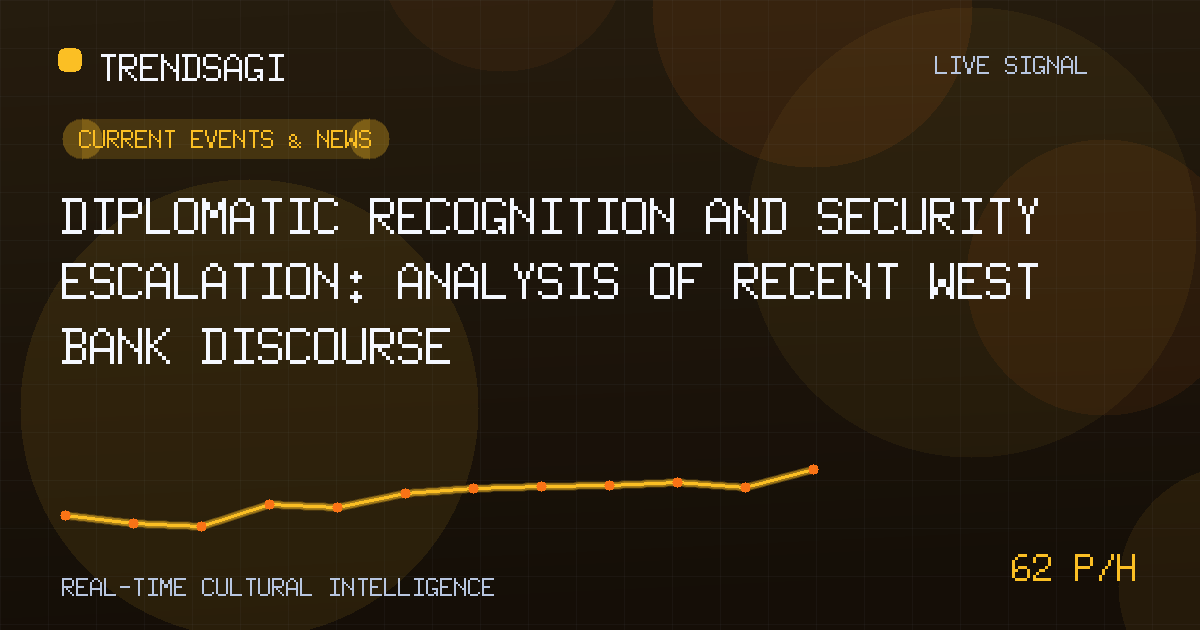
The measured snapshot rate for this topic reached 62.0 posts/hour over an exact 1800-second window ending at 2026-09-11T07:55:59Z. This observation was derived from three consecutive stored data points, reflecting a notable concentration of activity within the news and current events category. During this specific window, the latest snapshot volume was recorded at 124 posts, indicating a steady flow of reporting and reaction as the diplomatic fallout of the European statehood recognition continues to reverberate across digital platforms.
| Observation Time (UTC) | Measured Snapshot Rate | Snapshot Volume |
|---|---|---|
| 2026-09-11T07:55:59Z | 62.0 posts/hour | 124 posts |
Why this topic may be moving
The primary driver for the current momentum is the formalization of Palestinian statehood recognition by three European nations. According to reports from Reuters and the BBC, the governments of Spain, Ireland, and Norway coordinated these announcements to signal a shift in the international community's approach to the two-state solution. This move has been characterized by Palestinian leaders as a victory for diplomacy, while the Israeli government has condemned it as a reward for violence, leading to the recall of Israeli ambassadors for consultations. This diplomatic friction has created a high-volume feedback loop in current events discourse as stakeholders debate the long-term impact on the Palestinian Authority’s legitimacy.
Simultaneously, the physical situation on the ground in the West Bank remains a critical factor in public attention. The Israel Defense Forces (IDF) recently concluded a major operation in the Jenin refugee camp, which, according to Al Jazeera and the Associated Press, resulted in at least 12 fatalities and significant damage to local infrastructure. The duration and intensity of the raid have prompted widespread documentation and discussion regarding the humanitarian conditions in the northern West Bank. Reports of hospital access being restricted and the use of drones in densely populated areas have fueled a secondary wave of discourse focused on human rights and military ethics.
"The recognition of statehood by multiple European partners represents a symbolic shift in the geopolitical landscape, but the immediate reality for residents of the West Bank remains defined by intensifying security operations and economic instability."
A third factor involves the economic and administrative stability of the Palestinian Authority (PA). Financial news outlets have highlighted the ongoing dispute over the transfer of tax revenues from Israel to the PA. With the Israeli Finance Ministry suggesting further withholding of funds in response to the statehood recognition, analysts are increasingly concerned about the potential for a total collapse of PA security and administrative services in the West Bank, which would further destabilize the region.
Why it matters
For geopolitical analysts and humanitarian organizations, the West Bank signal is a barometer for regional escalation risks. Unlike Gaza, where the conflict is a full-scale war, the West Bank represents a complex mix of civil administration, military occupation, and settler-related friction. A surge in discourse here often precedes shifts in the broader Middle East security environment. The current trend suggests that the "status quo" is no longer sustainable, as international actors move from rhetorical support for a two-state solution to unilateral diplomatic actions.
Humanitarian stakeholders should monitor these signals to anticipate needs for emergency medical supplies and legal advocacy. The increased frequency of raids in cities like Jenin and Tulkarm indicates a shift toward more kinetic operations in the West Bank, which has direct implications for civilian safety and the delivery of aid. Furthermore, the diplomatic surge matters because it may influence future United Nations voting patterns and international court proceedings, including those currently before the International Criminal Court (ICC).
What to watch next
To understand the trajectory of this trend, observers should monitor specific "watch signals" that indicate whether the current surge is a temporary spike or a sustained shift in the regional conflict. These include:
- Tax Revenue Transfers: Watch for official statements from the Israeli Finance Ministry regarding the release or withholding of clearance funds. A complete freeze would likely trigger a governance crisis and a major spike in "West Bank" discourse.
- European Consensus: Monitor whether other EU member states, such as France or Slovenia, follow the lead of Spain and Ireland. Each additional recognition acts as a fresh catalyst for high-volume discussion.
- Settlement Expansion Votes: Keep a close eye on the Israeli Civil Administration’s planning committee. Announcements of new housing units in the West Bank often coincide with peaks in international condemnation and signal volatility.
- PA Security Cooperation: Any announcement from the Palestinian Authority regarding the suspension of security coordination with the IDF would mark a severe escalation in the ground situation.
Methodology and limitations
This briefing is based on a measured snapshot of 62.0 posts/hour, captured over a 30-minute window. It is important to note that this figure represents a specific frequency of discourse at a point in time, not the total reach of the topic or the number of unique individuals participating. The signal establishes that there is a concentrated, active conversation occurring, but it cannot independently verify the accuracy of the claims made within those posts.
Furthermore, digital volume does not always equate to real-world impact. While the signal indicates a high level of concern regarding the West Bank, it cannot account for offline sentiment or the views of populations with limited internet access. The analysis provided here combines the quantitative signal with verified external reporting to provide context, but readers should remain aware that social and news signals are subject to manipulation and rapid fluctuations. This briefing serves as a starting point for further investigation rather than a definitive forecast of regional stability.
Track This Topic for New Signals
Set alerts for future velocity or sentiment changes around this topic.
Explore Tracking PlansAbout TrendsAGI research
TrendsAGI's automated research pipeline publishes dated signal snapshots, methodology notes, and practical workflows for teams evaluating cultural momentum. Read how signals are scoped, scored, and limited in our research methodology.