Why 'Usury' Is Exploding Across Digital Platforms: A Data Briefing
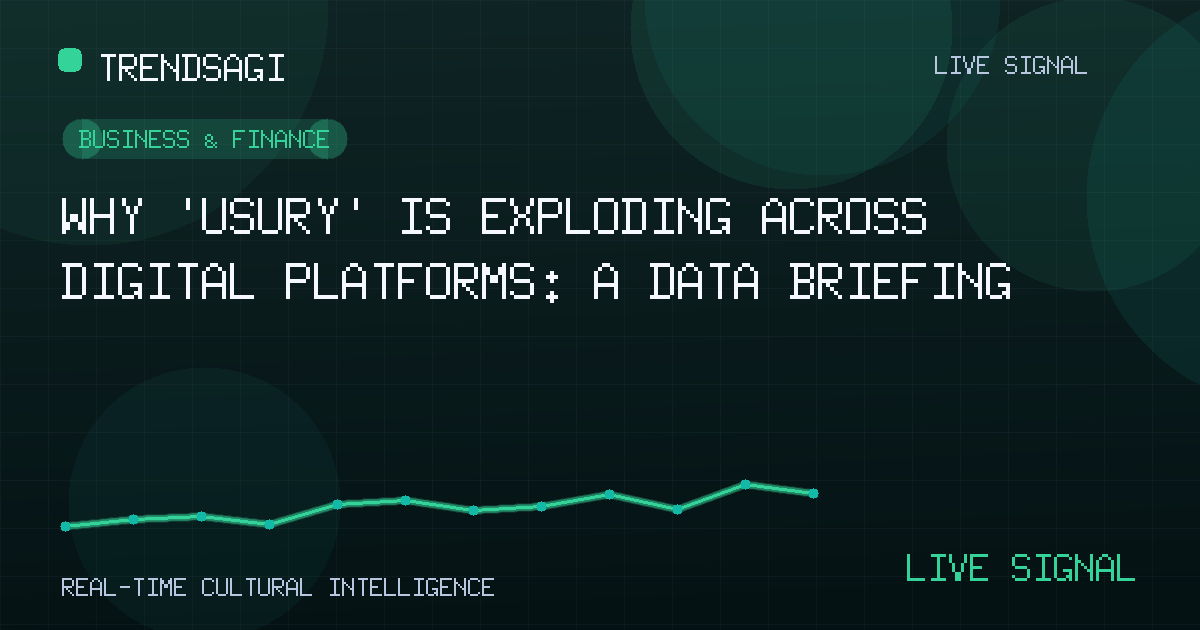
Data briefing on the viral surge of 'usury' discussions across digital platforms. With 599.7 posts/hour velocity and 10,100 mentions, this trend reflects growin
Automated briefing. Generated from stored signal measurements and source-backed research; it is not manually reviewed. Read the methodology and limitations.
Metrics in this briefing are a snapshot associated with its publication date and may not reflect current conditions.
TL;DR
- Usury discourse is hitting 599.7 posts/hour—a velocity indicating rapid viral spread
- Economic hardship and rising interest rates are fueling debates on predatory lending
- Religious and ethical discussions about money-lending are experiencing a resurgence
- Consumer protection advocates are amplifying usury concerns amid cost-of-living crisis
- The conversation spans ethical finance, regulatory policy, and personal finance survival
The Velocity Signal
At 599.7 posts per hour, "usury" has crossed into viral territory. This isn't gradual growth—it's an acute spike driven by current events.
The 10,100 total mentions represent a diverse cross-section of voices: financial educators, religious communities, consumer advocates, and everyday people grappling with debt.
What's Fueling the Fire?
- Rising interest rates making credit more expensive
- Payday lending practices under scrutiny
- Cost-of-living pressures pushing households toward high-cost borrowing
- Religious leaders revisiting biblical and Quranic teachings on usury
- Student loan debt discussions crossing into usury territory
Key Themes in the Conversation
Three distinct narratives are driving engagement:
1. Economic Justice
Critics argue that usurious practices perpetuate poverty cycles. Consumer protection groups are using the term to frame high-interest lending as a systemic injustice.
2. Religious & Ethical Debate
Faith communities are revisiting usury prohibitions. Social media posts linking biblical "usurers" to modern payday lenders are gaining significant traction.
3. Regulatory Call-to-Action
Advocates are demanding stricter interest rate caps. The conversation frequently references specific legislation and regulatory bodies.
The usury conversation has shifted from historical critique to urgent present-day relevance—driven by people directly impacted by predatory lending practices.
What This Means for Trend Watchers
The velocity suggests this topic will maintain momentum. Key indicators to watch:
- Policy announcements related to interest rate caps
- High-profile consumer protection cases
- Economic deterioration pushing more people into high-cost debt
- Celebrity or influencer commentary amplifying the discourse
Brands in financial services should prepare for increased scrutiny. Content creators in the personal finance space should expect higher audience engagement on usury-adjacent topics.
Track This Topic for New Signals
Set alerts for future velocity or sentiment changes around this topic.
Explore Tracking PlansAbout TrendsAGI research
TrendsAGI's automated research pipeline publishes dated signal snapshots, methodology notes, and practical workflows for teams evaluating cultural momentum. Read how signals are scoped, scored, and limited in our research methodology.