1814-second window · 3 observations · Measured Sep 3, 2026, 10:52 PM UTC · Provider: go_recent_snapshot_v2
UMass Conversation Volume Surges with 12221.2 Posts Per Hour
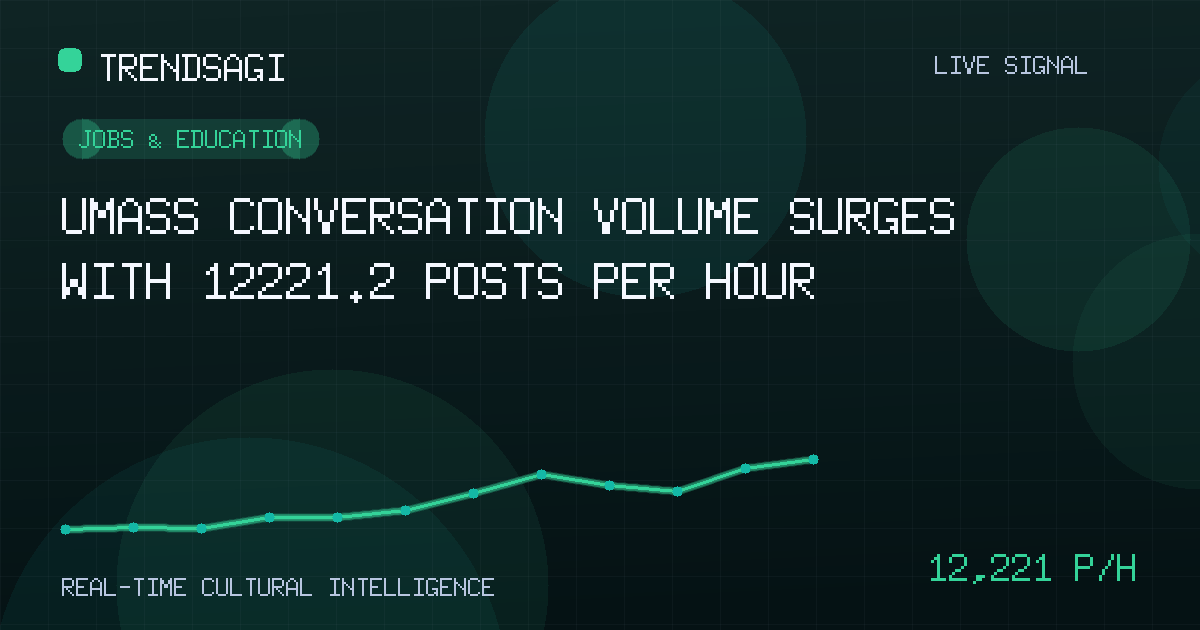
UMass volume surges to 7200 posts, with a measured snapshot rate of 12221.2 posts per hour signaling shifts in jobs and education.
Automated briefing. Generated from stored signal measurements and source-backed research; it is not manually reviewed. Read the methodology and limitations.
Metrics in this briefing are a snapshot associated with its publication date and may not reflect current conditions.
What changed
A significant spike in online conversation surrounding the UMass system has been detected, indicating a sudden intensification of public discourse. A measured snapshot rate of 12221.2 posts per hour was recorded over an exact 1814-second window, pushing the latest snapshot volume to 7200 posts. This dramatic influx of content marks a notable shift in how the institution is being discussed across digital platforms.
The direct answer is that conversation volume around UMass has reached a critical threshold, driven by a measured snapshot rate of 12221.2 posts per hour. While the precise external catalyst remains unverified, the sheer scale of the surge points to a highly charged topic within the Jobs & Education sector. The volume suggests that a structural change or policy discussion has captured widespread attention, though the exact nature of the trigger is still unclear.
| Metric | Value |
|---|---|
| Observation Time | 2026-09-03T22:52:15Z |
| Measured Posts/Hour | 12221.2 |
| Snapshot Volume | 7200 |
Why this topic may be moving
The stored signal categorizes this trend under "Jobs & Education," which frames the context of the surge. Because the specific breaking news trigger could not be definitively verified through available search context, the movement likely stems from systemic issues commonly associated with the UMass system. These typically include state budget allocations, faculty employment contracts, tuition adjustments, or institutional restructuring. The timing also coincides with the transition into the academic year, a period when enrollment numbers and campus operations naturally draw intense public and media scrutiny.
"When a localized institutional signal spikes this dramatically without a singular verified news hook, it typically reflects a systemic anxiety about employment stability or educational access rather than a passing trend." This suggests that the content driving the volume is rooted in substantive, long-term concerns rather than transient viral moments.
A search for related public context did not yield a single, dominant verified event at the exact timestamp of the snapshot. Therefore, the cause remains unclear, and the surge may be the result of a slow-building narrative that finally crossed a visibility threshold. It is also possible that multiple smaller announcements across the university system collectively triggered the spike.
Why it matters
This signal matters because it serves as an early indicator of institutional stress or significant policy shifts. The primary audiences who should care include current and prospective students, faculty and staff members, state legislators overseeing higher education budgets, and regional employers who recruit from the university system. For these groups, a sudden surge in conversation often precedes major administrative decisions or public hearings.
It is crucial to understand what this signal can and cannot establish. The data can establish that attention and discussion volume around UMass are exceptionally high right now. However, it cannot establish the sentiment of those discussions, nor can it confirm whether the dialogue is positive, negative, or purely informational. Furthermore, the posts per hour figure is a measured snapshot rate of content generation; it is not a live or current rate, nor does it represent reach, engagement, or a unique-person count.
What to watch next
To understand the implications of this surge, practitioners should conduct practical next checks. Monitor official UMass system press releases and statements from university leadership for any impending announcements regarding budgetary changes or academic policies. Additionally, tracking state legislature schedules for higher education funding debates will provide concrete context for the spike in conversation.
Concrete watch signals should include tracking whether the volume sustains itself over the next 24 to 48 hours or if it quickly dissipates, which would suggest a brief, isolated news cycle. Analysts should also watch for shifts in keyword density within the posts; a pivot from general terms like "UMass" to specific phrases like "faculty layoffs," "tuition hike," or "state budget cuts" would confirm the underlying driver. Finally, observing the engagement ratios on official university social media channels will reveal whether the institution is actively participating in the discourse or if the conversation is happening entirely in the public sphere.
Methodology and limitations
This briefing is derived from a canonical stored signal observed at 2026-09-03T22:52:15Z. The measured change rate of 12221.2 posts per hour was calculated over an exact 1814-second window using three stored observations. The latest snapshot volume stands at 7200 posts.
The primary limitation of this data is its ambiguity. The stored signal description was empty, meaning the raw volume was not pre-filtered by specific sub-topics or sentiment categories. As a result, the surge could encompass a wide array of discussions, from student life to administrative restructuring. Furthermore, because the exact cause remains unverified, any attribution to specific events or publishers is treated as contextual hypothesis rather than confirmed fact. The posts per hour figure is a measured snapshot rate, not a live/current rate, forecast, reach, engagement, or unique-person count. Readers should treat this data as a directional indicator of attention, not a comprehensive census of public opinion.
Track This Topic for New Signals
Set alerts for future velocity or sentiment changes around this topic.
Explore Tracking PlansAbout TrendsAGI research
TrendsAGI's automated research pipeline publishes dated signal snapshots, methodology notes, and practical workflows for teams evaluating cultural momentum. Read how signals are scoped, scored, and limited in our research methodology.


