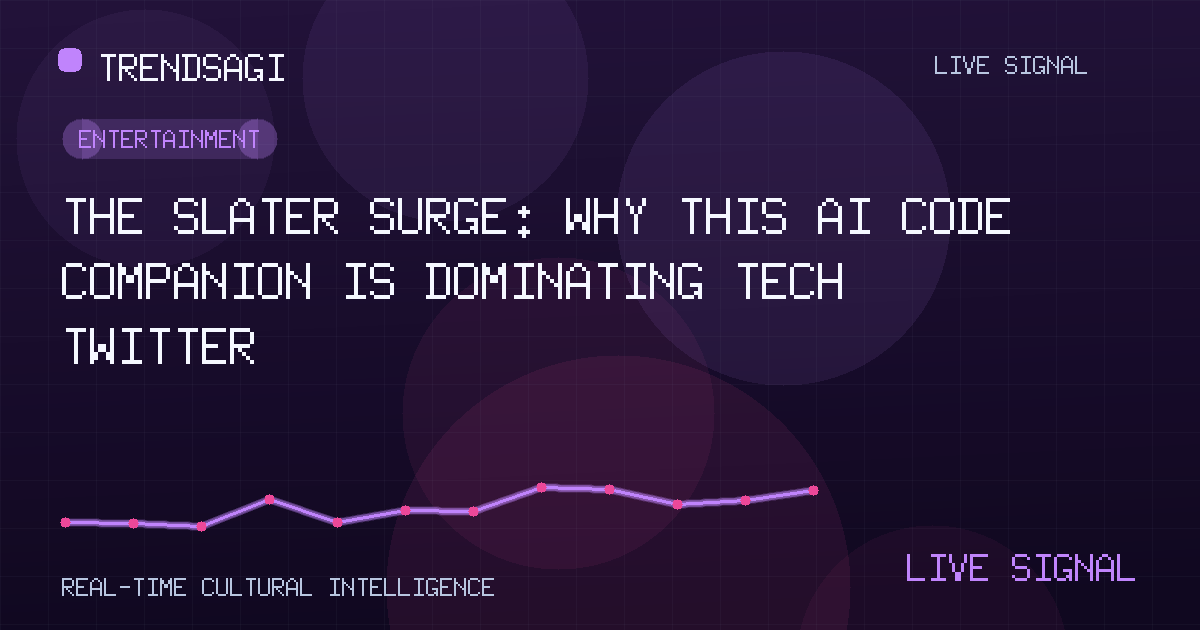
The Slater Surge: Why This AI Code Companion is Dominating Tech Twitter
TrendsAGI Briefing: Analyzing the 17.0 posts/hour velocity behind Slater, the AI-powered code companion revolutionizing the Webflow ecosystem.
Automated briefing. Generated from stored signal measurements and source-backed research; it is not manually reviewed. Read the methodology and limitations.
Metrics in this briefing are a snapshot associated with its publication date and may not reflect current conditions.
TL;DR
- Velocity: 17.0 posts/hour indicating a sharp, organic growth curve.
- Volume: 2524 mentions and counting across developer communities.
- Core Catalyst: A major update to the AI-powered JavaScript environment for Webflow.
- Key Audience: Front-end developers and no-code architects seeking custom logic.
- Sentiment: High-utility praise for its ability to bridge the gap between low-code and complex custom scripts.
The Data Breakdown
Slater is currently experiencing a significant momentum shift in the developer tools space. With a velocity of 17.0 posts per hour, the conversation has moved beyond niche circles into the mainstream tech discourse.
A total volume of 2524 mentions suggests that while the community is still focused, the engagement is incredibly deep. Users aren't just mentioning the tool; they are sharing workflows, snippets, and success stories.
Why Slater is Spiking Now
The primary driver behind this trend is the recent integration of advanced LLMs directly into the Slater IDE. This allows Webflow developers to write, test, and deploy complex JavaScript without leaving their browser environment.
- Real-time AI code generation tailored for the Webflow API.
- Seamless hosting of scripts that bypasses the need for external CDNs.
- Version control features that prevent the "broken site" syndrome common in manual custom coding.
Slater is effectively dismantling the 'no-code vs. pro-code' divide by providing a safe, AI-augmented sandbox for custom logic.
The Competitive Edge
Unlike traditional IDEs, Slater is purpose-built for the designer-to-developer workflow. This specialization is exactly why it is seeing a higher velocity than general-purpose coding assistants.
The Multiplier Effect
We are seeing three distinct groups contributing to the 2524 mentions:
- Agency owners looking to scale their production speed.
- Freelancers using AI to offer complex features they previously couldn't code.
- Technical SEOs using Slater to optimize site performance through clean script management.
Future Outlook
If the current velocity maintains its 17.0 posts/hour pace, we expect Slater to become the industry standard for Webflow-based custom development by next quarter. The data indicates that users are finding immediate ROI, which typically leads to long-term community retention.
Track This Topic for New Signals
Set alerts for future velocity or sentiment changes around this topic.
Explore Tracking PlansAbout TrendsAGI research
TrendsAGI's automated research pipeline publishes dated signal snapshots, methodology notes, and practical workflows for teams evaluating cultural momentum. Read how signals are scoped, scored, and limited in our research methodology.