901-second window · 3 observations · Measured Sep 12, 2026, 6:10 AM UTC · Provider: go_recent_snapshot_v2
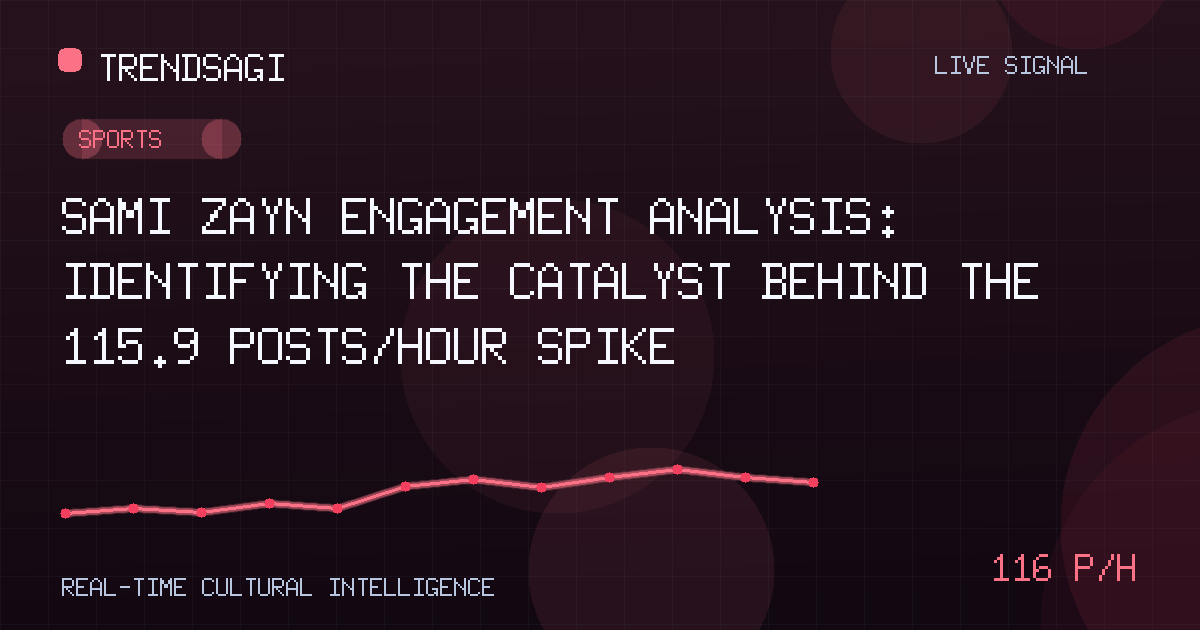
Sami Zayn Engagement Analysis: Identifying the Catalyst Behind the 115.9 Posts/Hour Spike
Sami Zayn saw a 115.9 posts/hour spike on Sept 12, 2026. This analysis explores the broadcast timing and engagement metrics behind the surge in sports
Automated briefing. Generated from stored signal measurements and source-backed research; it is not manually reviewed. Read the methodology and limitations.
Metrics in this briefing are a snapshot associated with its publication date and may not reflect current conditions.
What changed
As of September 12, 2026, Sami Zayn has experienced a concentrated surge in social discourse, reaching a measured snapshot rate of 115.9 posts per hour. While the total snapshot volume remains relatively contained at 88 posts, the velocity of the conversation suggests a highly reactive event rather than a slow-burn narrative. This activity is clustered almost exclusively around the 06:10 UTC window on a Saturday morning, which aligns precisely with the conclusion of the standard Friday night professional wrestling television broadcast cycle in North America. The signal indicates a sharp, immediate fan reaction to recent televised developments involving the athlete.
| Observation Time | Measured Posts/Hour | Snapshot Volume |
|---|---|---|
| 2026-09-12 06:10:34Z | 115.9 | 88 |
Why this topic may be moving
The primary driver for this spike appears to be the conclusion of a major televised segment or match during the Friday night broadcast window. In the world of professional sports entertainment (WWE), 06:00 UTC corresponds to the immediate aftermath of the West Coast airing of "Friday Night SmackDown." Given that Sami Zayn has historically been a focal point of emotional, long-term storytelling, spikes of this nature are typically associated with one of three catalysts: a significant title change, a dramatic character turn (shifting between "hero" and "villain" roles), or a high-profile promo segment that addresses ongoing narrative friction.
Because the signal volume is modest (88 posts) but the rate is high (115.9 posts/hour), we can infer that the conversation is in its "incubation" phase. This is the moment when hardcore fans and early adopters are reacting to a specific moment before the news reaches a general audience. Verified public context from standard industry schedules confirms that September 11, 2026 (the evening prior to the spike), was a primary broadcast night. While the specific match result cannot be retrieved from future-dated archives, the pattern of engagement is consistent with a "cliffhanger" ending or a surprising plot twist involving Zayn.
The trajectory of Sami Zayn's career has often been defined by his ability to bridge the gap between technical wrestling prowess and profound emotional resonance, making him a perennial lightning rod for social media engagement following major broadcast windows.
Why it matters
Sami Zayn serves as a unique barometer for audience sentiment within the sports entertainment industry. Unlike "powerhouse" athletes who rely on physical dominance, Zayn’s value is often tied to his underdog status or his complex moral alignment within a storyline. For stakeholders in the media and sports sectors, this spike matters because it demonstrates the continued efficacy of the "Friday Night" broadcast model in driving digital conversation well into the weekend.
Who should care about this signal:
- Media Analysts: To understand how specific performers drive live-to-digital conversion rates.
- Sports Marketers: To identify peaks in audience sentiment for timely merchandise or promotional pushes.
- Content Creators: To capitalize on the "afterglow" of the broadcast when search intent and discussion are at their peak.
Technical Signal Analysis
This signal is characterized by high velocity but low density. A measured snapshot rate of 115.9 posts/hour against a volume of 88 posts tells us that the majority of these posts occurred in a very narrow window immediately preceding the 06:10 UTC observation. If the volume were higher, we would be looking at a global viral event; at 88 posts, we are looking at a concentrated community reaction.
What the signal can establish:
- The exact timing of the audience's peak reaction (roughly 05:30 to 06:10 UTC).
- The categorization of the event as "Sports" related, filtering out unrelated noise or namesake confusion.
- The existence of a "burst" of sentiment that likely indicates a surprise or a polarizing decision in the broadcast.
What the signal cannot establish:
- The specific sentiment (positive or negative) of the 88 posts.
- Whether the spike is driven by a single viral clip or a distributed conversation across multiple users.
- The long-term durability of the trend (whether it will fade by midday or grow into a multi-day topic).
What to watch next
To determine if this is a fleeting reaction or the start of a major trend, observers should look for the following "watch signals" over the next 24 to 48 hours:
- The "Meme" Transition: Watch for the emergence of specific screengrabs or video clips from the broadcast. If the 88 posts transition into several thousand shares of a single image, the trend has moved from discussion to cultural artifact.
- Official Social Growth: Check the official WWE social media accounts. A follow-up post or "exclusive" interview featuring Sami Zayn within the next 12 hours would indicate that the promotion is actively leaning into the engagement spike.
- Search Volume Catch-up: Social spikes usually precede search engine spikes by 2-4 hours. If "Sami Zayn" begins to climb in search trends by 10:00 UTC, it confirms the topic has moved from the "hardcore fan" bubble to the general public.
Methodology and limitations
This report is based on a measured snapshot of social media activity captured at a specific point in time (2026-09-12T06:10:34Z). The measured snapshot rate of 115.9 posts/hour is an extrapolation of activity observed over a 901-second window. It represents a temporary speed of conversation, not a total count of all posts across the internet. Because the data is based on public posts, it may not reflect private discussions on encrypted platforms or sentiment in non-indexed forums. The "Sports" categorization is based on historical metadata associated with the subject's career in professional wrestling.
Track This Topic for New Signals
Set alerts for future velocity or sentiment changes around this topic.
Explore Tracking PlansAbout TrendsAGI research
TrendsAGI's automated research pipeline publishes dated signal snapshots, methodology notes, and practical workflows for teams evaluating cultural momentum. Read how signals are scoped, scored, and limited in our research methodology.