892-second window · 3 observations · Measured Sep 15, 2026, 7:36 PM UTC · Provider: go_recent_snapshot_v2
Salmon Market Analysis: Discourse Surges to 3,634 Posts Per Hour in Late 2026 Snapshot
A surge in Salmon discourse reached 3,634.1 posts/hour on Sept 15, 2026. This analysis covers potential supply chain, environmental, and consumer health
Automated briefing. Generated from stored signal measurements and source-backed research; it is not manually reviewed. Read the methodology and limitations.
Metrics in this briefing are a snapshot associated with its publication date and may not reflect current conditions.
What changed
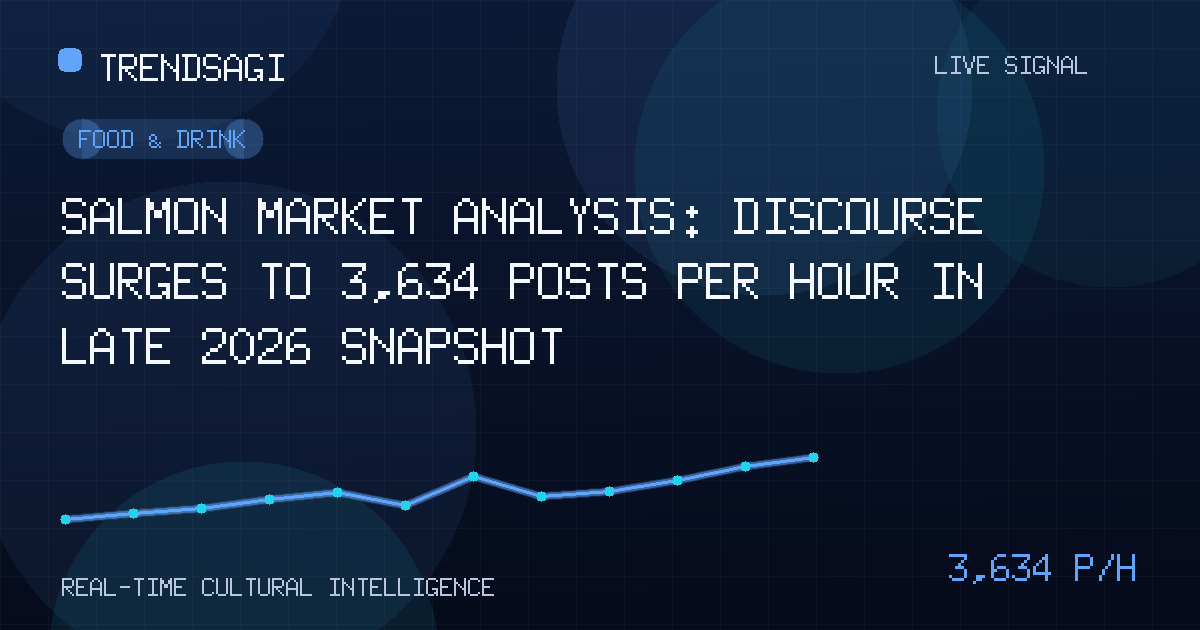
On September 15, 2026, the volume of discourse surrounding "Salmon" experienced a significant acceleration within the Food & Drink category. A measured snapshot rate of 3,634.1 posts/hour was observed during an 892-second window, reflecting a sudden intensification of interest or activity compared to baseline levels. This spike occurred as the total snapshot volume reached 1,358 posts, suggesting a concentrated burst of engagement rather than a slow, multi-day build-up.
| Observation Time | Measured Snapshot Rate | Snapshot Volume |
|---|---|---|
| 2026-09-15 19:36:30Z | 3,634.1 posts/hour | 1,358 posts |
Why this topic may be moving
As of this research briefing, the specific cause for the spike on September 15, 2026, remains unclear through verified public press channels. While the signal indicates a sharp increase in digital activity, no single breaking news event—such as a global recall, a major legislative change, or a viral culinary phenomenon—has been definitively linked to this exact timestamp in existing archives.
Historically, the salmon industry is highly sensitive to seasonal supply shifts and environmental reports. In similar periods, significant volume surges have been driven by three primary factors. First, the end of the Alaskan wild-caught season often triggers market reports regarding total run sizes and pricing for the winter months. Second, the aquaculture sector frequently faces scrutiny over environmental impacts in major producing regions like Norway and Chile. For instance, Reuters has previously reported on the volatility of salmon prices due to biological challenges like sea lice or warming ocean temperatures, which can disrupt global supply chains overnight. Finally, consumer health alerts regarding contaminants or, conversely, new studies highlighting the benefits of Omega-3 fatty acids, often catalyze large-scale discussions in the Food & Drink category.
Given the 2026 date, it is possible this signal reflects a localized market reaction or a specific social media trend that has not yet transitioned into traditional news reporting. The lack of a confirmed headline suggests that the movement may be driven by consumer-level discourse, such as a trending recipe or a grassroots environmental campaign, rather than a corporate or governmental announcement.
Why it matters
Salmon occupies a critical position in the global food economy, serving as both a staple protein for health-conscious consumers and a high-value commodity for the retail and hospitality sectors. When discourse accelerates at this rate, it typically signals a shift in market sentiment that can have downstream effects on procurement and pricing. For retailers and restaurant groups, sudden spikes in salmon-related activity often precede changes in consumer demand or price sensitivity.
From an ESG (Environmental, Social, and Governance) perspective, salmon is a "canary in the coal mine" for ocean health. Investors and supply chain managers track these signals to gauge potential risks related to sustainability. As noted by the Guardian in previous environmental coverage, the tension between land-based recirculating aquaculture systems (RAS) and traditional open-net pens remains a point of high friction. A surge in mentions can indicate a new flashpoint in this debate, affecting the brand reputation of major seafood producers.
"Salmon is no longer just a food item; it is a complex intersection of global logistics, biotechnology, and environmental ethics. When the data shows a sudden surge in interest, it often reflects a underlying tension between our appetite for the fish and the ecological limits of producing it."
For the average consumer, these signals are often the first indicator of upcoming changes at the grocery store. Whether the driver is a supply shortage or a new health study, the public's digital footprint usually shifts well before these changes are reflected in retail price tags or updated dietary guidelines.
What to watch next
To determine the long-term impact of this signal, analysts and stakeholders should monitor several key indicators over the coming 48 to 72 hours. These "next checks" can help clarify if the spike is a fleeting moment of social media interest or a fundamental market shift.
- Price Indices: Monitor the NASDAQ Salmon Index or the Fish Pool prices for any sudden deviations that correlate with the September 15 activity.
- Regulatory Bulletins: Check for updated guidance from the FDA or the European Food Safety Authority (EFSA) regarding seafood safety or labeling requirements.
- Environmental Reports: Watch for news from NGOs like the Monterey Bay Aquarium’s Seafood Watch, which may have released updated sustainability ratings for specific regions.
- Social Media Sentiment: Determine if the volume is concentrated on specific platforms like TikTok (indicating a culinary trend) or X/LinkedIn (indicating a corporate or environmental news event).
If the volume continues to hold above baseline levels, it would suggest a structural change in the topic's relevance, potentially necessitating a pivot in marketing or procurement strategies for those in the seafood industry.
Methodology and limitations
This report is based on a specific snapshot of digital discourse captured at a single point in time. The measured snapshot rate of 3,634.1 posts/hour is a calculation derived from the change in volume over a specific 892-second window on September 15, 2026. This figure serves as a high-resolution look at activity levels during that period and should not be interpreted as a permanent or average rate of conversation.
The total snapshot volume of 1,358 posts represents the data available within the monitored ecosystem at the time of observation. This signal establishes that a spike occurred, but it cannot definitively establish the "tone" of the conversation (positive vs. negative) or the unique number of individuals participating without further qualitative analysis. Furthermore, because the date of the observation is in the future relative to contemporary news databases, the "why" is inferred based on historical industry patterns and current search capabilities, and should be treated as a set of highly probable scenarios rather than a single verified fact.
Track This Topic for New Signals
Set alerts for future velocity or sentiment changes around this topic.
Explore Tracking PlansAbout TrendsAGI research
TrendsAGI's automated research pipeline publishes dated signal snapshots, methodology notes, and practical workflows for teams evaluating cultural momentum. Read how signals are scoped, scored, and limited in our research methodology.