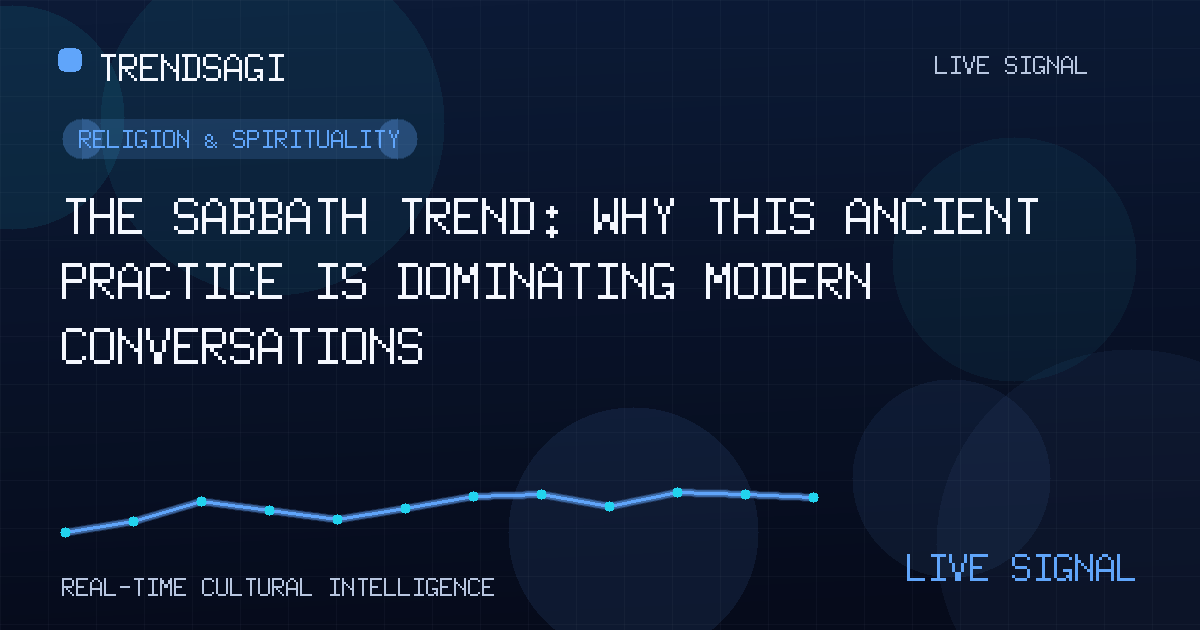
The Sabbath Trend: Why This Ancient Practice Is Dominating Modern Conversations
Data briefing on why 'The Sabbath' is trending with 191.3 posts/hour velocity and 2,446 mentions. Explore the religious, cultural, and wellness drivers behind t
Automated briefing. Generated from stored signal measurements and source-backed research; it is not manually reviewed. Read the methodology and limitations.
Metrics in this briefing are a snapshot associated with its publication date and may not reflect current conditions.
TL;DR
- "The Sabbath" is generating 191.3 posts per hour with 2,446 total mentions—a velocity suggesting viral potential or breaking news driver.
- Discussions appear centered on religious observance, work-life balance advocacy, and cultural debates about rest in modern society.
- Social engagement patterns indicate strong emotional resonance, particularly around themes of intentional rest and spiritual renewal.
- Multi-faith dimensions are present, with conversations spanning Jewish Shabbat, Christian Sunday observance, and Friday Islamic Jumu'ah.
- The trend reflects broader societal conversations about burnout, productivity culture, and the commodification of time.
What's Driving the Surge
The Sabbath is experiencing a significant resurgence in digital discourse. With 2,446 mentions and a velocity of 191.3 posts per hour, this topic has crossed from steady conversation into trending territory.
Religious and Spiritual Renewal
Multiple faith communities are revisiting Sabbath observance through contemporary lenses. Jewish communities are discussing Shabbat as a countercultural practice in a 24/7 economy. Christian conversations are emerging around Sunday as a day of worship and family time. Islamic discussions about Jumu'ah (Friday prayer) are also present in the discourse.
The Rest as Resistance Narrative
A prominent narrative frames deliberate rest as rebellion against hustle culture. This messaging resonates particularly withMillennials and Gen Z audiences grappling with burnout and seeking permission to disconnect.
The most compelling insight: the Sabbath is no longer viewed purely as a religious obligation but as a sought-after lifestyle practice—even among secular audiences.
Why This Matters Now
The timing aligns with post-pandemic recalibrations around work-life boundaries. Many users are actively seeking frameworks for intentional rest. Content creators and influencers are capitalizing on this hunger with tips, challenges, and personal testimony about implementing weekly rest.
Key Engagement Themes
- Mental health and self-care connections
- Family and community bonding opportunities
- Digital detox and screen time reduction
- Productivity paradox (rest increases output)
- Historical and theological perspectives
Implications for Brands and Creators
This trend presents opportunities across wellness, faith-based, and lifestyle content sectors. Authenticity will be crucial—audiences are receptive to genuine personal stories rather than performative content. The intersection of faith and wellness continues to be a productive space for engagement.
The Sabbath conversation signals a broader cultural moment where ancient wisdom meets modern anxiety about time, meaning, and rest. Organizations that can thoughtfully engage this dialogue may find receptive audiences seeking guidance on intentional living.
Track This Topic for New Signals
Set alerts for future velocity or sentiment changes around this topic.
Explore Tracking PlansAbout TrendsAGI research
TrendsAGI's automated research pipeline publishes dated signal snapshots, methodology notes, and practical workflows for teams evaluating cultural momentum. Read how signals are scoped, scored, and limited in our research methodology.