912-second window · 3 observations · Measured Sep 3, 2026, 12:37 AM UTC · Provider: go_recent_snapshot_v2
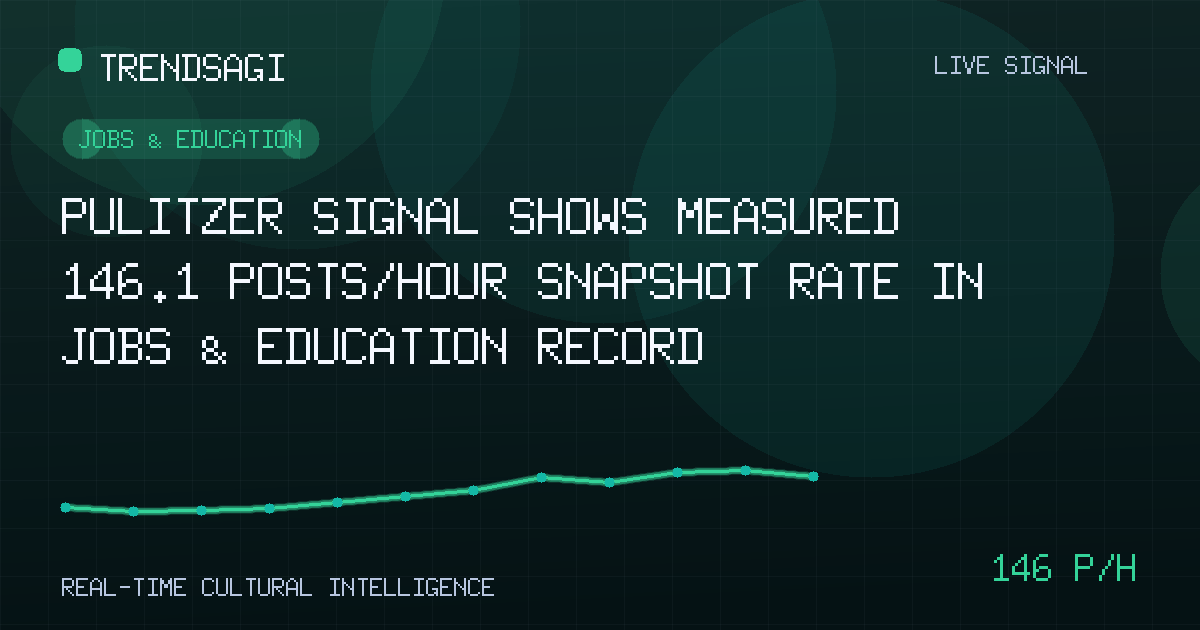
Pulitzer signal shows measured 146.1 posts/hour snapshot rate in Jobs & Education record
Pulitzer signal measured 146.1 posts/hour over 912 seconds with 69 snapshot posts; cause unclear, useful for Jobs and Education checks.
Automated briefing. Generated from stored signal measurements and source-backed research; it is not manually reviewed. Read the methodology and limitations.
Metrics in this briefing are a snapshot associated with its publication date and may not reflect current conditions.
What changed
The stored “Pulitzer” signal shows a measured snapshot rate of 146.1 posts/hour over an exact 912-second window, with a latest snapshot volume of 69 posts at 2026-09-03T00:37:09Z. That is the central observed change: a short-term increase in post volume around a well-known journalism award name, classified under Jobs & Education. The supplied record does not yet establish whether the movement is driven by prize news, hiring, curriculum, controversy, or general reference.
| Observation time | 2026-09-03T00:37:09Z |
|---|---|
| Measured posts/hour | 146.1 |
| Snapshot volume | 69 posts |
The measurement window is short: 912 seconds. It is too brief to treat as a long-run trend. That makes the rate useful for noticing an unusual burst, but not for confirming a durable trend. The snapshot volume tells how many posts were observed at the latest point, while the posts/hour figure is a measured snapshot rate from 3 stored observations, not a forecast, reach count, engagement metric, or unique-person count.
Why this topic may be moving
The label “Pulitzer” is broad. It can appear in posts about the Pulitzer Prizes, journalism careers, media education, award winners, newspaper history, academic programs, or public debate over news coverage. Because the stored signal description is empty, the current cause remains unclear from the supplied data alone.
Common drivers for a short spike in this topic include:
- Award announcements or ceremonies that bring prize winners and nominees into discussion.
- Journalism-education news involving scholarships, fellowships, curricula, or admissions tied to Pulitzer recognition.
- Employment or hiring stories that use “Pulitzer” as a credibility marker for reporters, editors, or media professionals.
- Public discussion of a specific news report, documentary, or investigative project associated with a Pulitzer-winning team.
None of those explanations can be confirmed here without verified public context. The safest editorial statement is that the volume change is real in the stored measurement, while the trigger is still unverified.
“A measured 146.1 posts/hour snapshot rate is a strong cue to investigate the trigger, but it is not evidence of the story’s quality, reach, or long-term trend.”
Why it matters
For media employers, journalism educators, and talent teams, a visible “Pulitzer” spike can signal renewed attention to reporting excellence, newsroom credibility, or award-linked hiring and training programs. In a Jobs & Education category, the topic may be especially relevant to people comparing newsroom roles, reporting fellowships, graduate programs, and career paths that reference Pulitzer recognition.
The signal also matters as a benchmark for how quickly a recognized brand can become a discussion trigger. If the cause is prize-related, the spike may concentrate around specific winners. If the cause is career-related, it may appear in job postings, mentorship posts, or curriculum announcements. If the cause is unclear, the signal should be treated as an investigation prompt rather than a conclusion.
What to watch next
Practical next checks should focus on verifying the trigger and separating the rate from the content.
- Check whether the 146.1 posts/hour rate persists in later stored observations or returns to baseline.
- Read the actual posts in the snapshot to identify the dominant subject: awards, jobs, education, or commentary.
- Look for named individuals, institutions, prize categories, or news stories that appear repeatedly.
- Check whether the category stays in Jobs & Education or shifts toward Awards, Media, or General News.
- Compare the snapshot volume of 69 posts with previous volumes for the same label to see whether the burst is exceptional.
Useful watch signals include a continued posts/hour rate above the observed window, a rise in posts mentioning specific prize winners, a new award announcement, or a cluster of education-related posts about programs, scholarships, or hiring. A drop in volume within the next stored observations would suggest a short burst rather than a durable shift.
Methodology and limitations
The observed change is based on a canonical stored signal: snapshot observed at 2026-09-03T00:37:09Z, latest snapshot volume of 69 posts, and a measured change rate of 146.1 posts/hour over an exact 912-second window using 3 stored observations. The rate is a measured snapshot rate, not a live current rate, forecast, reach estimate, engagement score, or unique-person count.
The main limitation is that the stored signal description is empty and no verified public cause was supplied. The topic label is also broad, so a post count cannot prove why the discussion is increasing. A short 912-second window can be sensitive to a single event, a batch of posts, or a temporary burst. The 69-post snapshot is a point-in-time volume, not the total number of posts over the rate window. Future verification should rely on named public context, repeated observations, and content-level review before treating the movement as a confirmed trend.
Track This Topic for New Signals
Set alerts for future velocity or sentiment changes around this topic.
Explore Tracking PlansAbout TrendsAGI research
TrendsAGI's automated research pipeline publishes dated signal snapshots, methodology notes, and practical workflows for teams evaluating cultural momentum. Read how signals are scoped, scored, and limited in our research methodology.