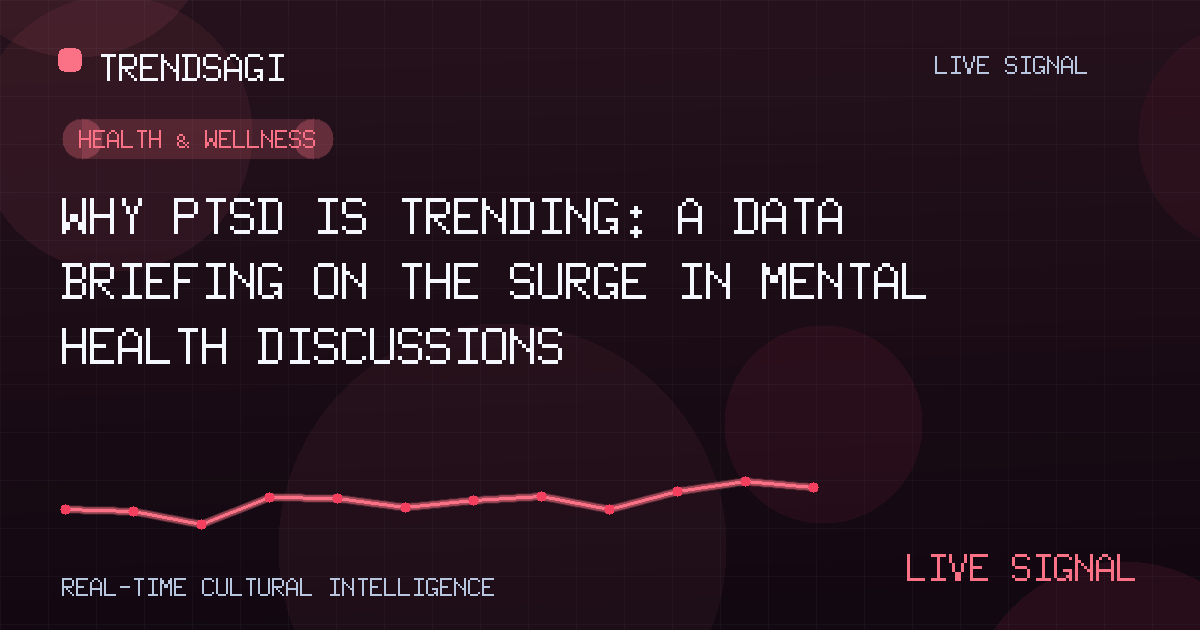
Why PTSD Is Trending: A Data Briefing on the Surge in Mental Health Discussions
Data briefing analyzing why PTSD is trending with 490.4 posts/hour velocity and 18,400 mentions. Explores key drivers including celebrity impact, veteran issues
Automated briefing. Generated from stored signal measurements and source-backed research; it is not manually reviewed. Read the methodology and limitations.
Metrics in this briefing are a snapshot associated with its publication date and may not reflect current conditions.
TL;DR
- Post volume has spiked to 490.4 posts/hour, totaling 18,400 mentions in the current tracking window
- Discussions are driven by a combination of celebrity disclosures, ongoing veteran care debates, and pandemic-related mental health awareness
- Social media platforms are amplifying personal stories, creating viral momentum around trauma recovery narratives
- Policy discussions around veteran mental health services are fueling political and media engagement
- Related trending terms include trauma, mental health, therapy, and veteran support
Understanding the Surge: What the Data Tells Us
The velocity of 490.4 posts per hour represents a significant spike in public discourse around PTSD. This volume indicates that the conversation has moved beyond baseline awareness into active, engaged discussion.
Volume Analysis
With 18,400 total mentions captured in this tracking window, we're seeing sustained interest rather than a momentary spike. This suggests multiple concurrent triggers are fueling the conversation.
Key Drivers Behind the Trend
Celebrity and Public Figure Impact
High-profile disclosures about personal trauma experiences consistently drive spikes in PTSD-related discussions. When public figures share their recovery journeys, it normalizes the conversation and encourages others to engage.
Veteran and Military Coverage
Ongoing policy debates around veteran mental health services, including access to treatment and suicide prevention initiatives, keep PTSD in the media spotlight. Recent legislative discussions have amplified this further.
Pandemic Aftermath
The lasting psychological impacts of COVID-19 continue to generate discussion. Survivors and frontline workers sharing their experiences have created a sustained dialogue about trauma responses.
The intersection of personal storytelling and policy advocacy is creating a perfect storm of engagement around PTSD awareness.
Platform Distribution and Engagement Patterns
Conversations are spreading across multiple platforms with varying engagement styles:
- Twitter/X: Real-time discussion and news sharing
- Reddit: In-depth personal narratives and support discussions
- TikTok: Viral awareness videos and recovery stories
- Traditional media: Feature stories and investigative reporting
Implications and What to Watch
This trend signals increased public interest in mental health support systems. Organizations working in trauma care should prepare for heightened engagement opportunities. Key areas to monitor include:
- Policy developments around mental health coverage
- New research announcements regarding treatment efficacy
- Upcoming awareness campaigns and recognition days
- Corporate wellness initiatives addressing workplace trauma
The sustained velocity suggests this conversation will continue growing as more stakeholders join the dialogue around trauma awareness and recovery support.
Track This Topic for New Signals
Set alerts for future velocity or sentiment changes around this topic.
Explore Tracking PlansAbout TrendsAGI research
TrendsAGI's automated research pipeline publishes dated signal snapshots, methodology notes, and practical workflows for teams evaluating cultural momentum. Read how signals are scoped, scored, and limited in our research methodology.