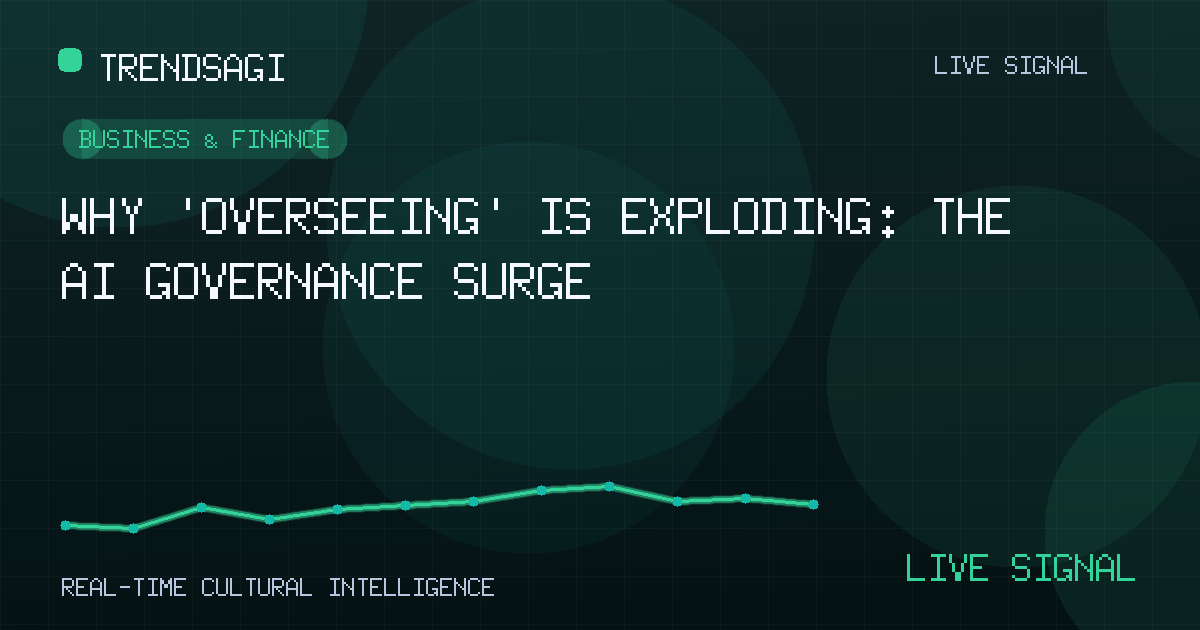
Why 'Overseeing' Is Exploding: The AI Governance Surge
Analysis of why 'overseeing' is trending at 214.6 posts/hour with 1,358 mentions. Explore the AI governance surge and what it means for businesses and policymak
Automated briefing. Generated from stored signal measurements and source-backed research; it is not manually reviewed. Read the methodology and limitations.
Metrics in this briefing are a snapshot associated with its publication date and may not reflect current conditions.
TL;DR
- Discussions around "overseeing" have hit 214.6 posts/hour, signaling massive interest in AI governance and accountability frameworks.
- Volume reached 1,358 mentions as regulators, tech leaders, and the public debate who should control AI systems.
- Key drivers include new EU AI Act enforcement, corporate boardroom concerns, and public trust crises.
- The conversation has shifted from theoretical ethics to concrete oversight mechanisms and legal requirements.
The Oversight Momentum
"Overseeing" has become the defining buzzword of the AI safety conversation. At 214.6 posts per hour, the velocity is staggering—suggesting that stakeholders across industries are scrambling to understand their obligations. This isn't merely academic interest; it's a practical response to regulatory deadlines and public pressure.
Regulatory Pressure Cooker
The European Union's AI Act has created a cascade effect. Companies worldwide are racing to establish oversight structures before enforcement begins. Meanwhile, the US executive order on AI has accelerated domestic discussions about federal oversight bodies.
Corporate Wake-Up Call
Boards are no longer asking if they need oversight—they're asking how. Key areas driving boardroom attention include:
- Risk assessment protocols for AI deployment
- Audit trails for algorithmic decisions
- Designated AI governance committees
- Liability frameworks for automated outcomes
Public Trust Crisis
High-profile AI failures have fueled public demand for accountability. When systems produce harmful outputs, users want to know: who was overseeing this? The answer often proves unsatisfactory, amplifying calls for stronger oversight mechanisms.
The shift from "Can we build it?" to "Who oversees it?" represents the most significant pivot in tech governance in a decade.
What This Means for You
Whether you're a developer, executive, or policy maker, the oversight trend demands action. Organizations without clear governance frameworks risk regulatory penalties, reputational damage, and operational disruptions. The conversation has moved beyond if to how—and the clock is ticking.
Key Takeaways
- Implement documented AI oversight processes immediately
- Assign clear accountability at the board level
- Monitor evolving regulatory requirements across jurisdictions
- Build transparency mechanisms into AI systems from the start
Track This Topic for New Signals
Set alerts for future velocity or sentiment changes around this topic.
Explore Tracking PlansAbout TrendsAGI research
TrendsAGI's automated research pipeline publishes dated signal snapshots, methodology notes, and practical workflows for teams evaluating cultural momentum. Read how signals are scoped, scored, and limited in our research methodology.