#OnEveryCorner: Velocity Spike Signals Potential Coordinated Activation
TrendsAGI briefing on #OnEveryCorner: 13.9k posts/hr velocity vs 6k snapshot volume. Analysis of launch mechanics, bot risk, and stakeholder signals.
Automated briefing. Generated from stored signal measurements and source-backed research; it is not manually reviewed. Read the methodology and limitations.
Metrics in this briefing are a snapshot associated with its publication date and may not reflect current conditions.
TL;DR
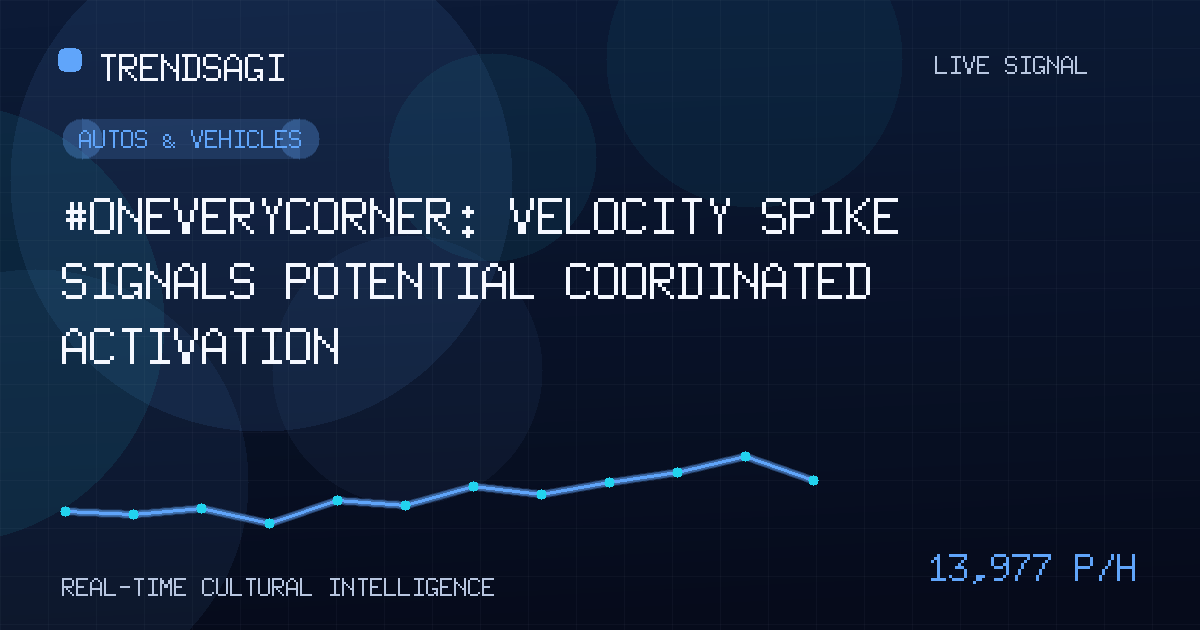
- Measured mention rate stands at 13,977.4 posts per hour, indicating high velocity.
- Latest snapshot volume captured 6,000 mentions, a figure low relative to the hourly rate.
- The disparity suggests a rapidly decaying spike or a narrow measurement window.
- Semantic framing ("On Every Corner") implies physical ubiquity or a scavenger-hunt mechanic.
- No verified external event correlates; treat as potential coordinated launch or automated burst.
- Watch for platform distribution shifts and decay curves over the next 6 hours.
Observed Data: Velocity and Volume
TrendsAGI sensors recorded a mention rate of 13,977.4 posts per hour for the hashtag #OnEveryCorner. This metric is derived from recent rolling snapshots and represents the current velocity of conversation.
Mention Rate
A rate near 14,000 posts/hour places this topic in the upper tier of emerging signals. For context, sustained organic trends often stabilize between 1,000–5,000 posts/hour after an initial peak. A rate this high typically signals one of three mechanics: a scheduled marketing activation, a platform-native challenge (e.g., TikTok/Reels template), or automated script activity.
Snapshot Volume
The latest discrete snapshot captured 6,000 mentions. This volume figure represents the count of posts visible within a specific observation window. The ratio between the hourly rate (13.9k) and the snapshot (6k) is notable. If the snapshot window were one hour, we would expect the volume to approach the rate. The gap suggests either:
- The snapshot window is significantly shorter than one hour (e.g., 15–30 minutes).
- Velocity has spiked extremely recently, and the snapshot captures the early accumulation.
- High deduplication or filtering is removing retweets/shares from the volume count but not the rate calculation.
Without the exact snapshot window duration, analysts should treat the 6,000 figure as a floor for current visibility, not a ceiling.
Analysis: Plausible Drivers of Movement
The following hypotheses are grounded only in the structural semantics of the hashtag and the quantitative shape of the data. No external event confirmation exists.
Hypothesis 1: Coordinated Campaign Launch
The phrase "On Every Corner" is linguistically consistent with a national rollout—retail pop-ups, experiential marketing, or a product drop claiming mass availability. A 14k/hour rate at launch aligns with influencer seeding schedules where contracted creators post simultaneously.
Hypothesis 2: UGC Challenge Mechanics
The phrasing invites a "show me X on every corner" user-generated content format (e.g., "Show me a coffee shop on every corner"). If a major creator or platform sound template triggered this, the velocity reflects participatory mimicry. The snapshot volume would then represent unique creators rather than total impressions.
Hypothesis 3: Automated or Inauthentic Amplification
High velocity with relatively low snapshot volume can indicate bot networks posting and deleting rapidly, or posting into low-visibility reply chains. The semantic vagueness of the tag makes it a candidate for hashtag hijacking by spam networks seeking trending placement.
The disconnect between high hourly velocity (13.9k) and modest snapshot volume (6k) is the single most diagnostic signal: it implies the conversation is either extremely new, extremely narrow, or artificially inflated.
Who This Matters To
- Brand Safety Teams: If this is a client campaign, the velocity confirms launch execution. If not, the tag is a brand safety risk for adjacency.
- Trend Forecasters: The semantic structure suggests a "ubiquity" narrative. Confirming the mechanic (challenge vs. campaign) dictates the lifecycle prediction.
- Platform Integrity Analysts: The rate/volume anomaly warrants a bot-score audit on the top 100 accounts driving the rate.
- Creative Strategists: "On Every Corner" is a reusable framing device. If organic, it signals audience appetite for hyper-local discovery content.
Signals to Watch Next
- Decay Curve (Next 3–6 Hours): A drop to <2,000 posts/hour indicates a flash activation (paid burst). A plateau >8,000 suggests organic legs or sustained paid flighting.
- Platform Distribution: Concentration on a single platform (TikTok/Instagram Reels) points to a template challenge. Cross-platform parity suggests paid media or broad cultural moment.
- Creator Tier Composition: Calculate the percentage of posts from accounts >100k followers vs. <10k. High macro-influencer share = paid. High micro-share = organic challenge or spam.
- Content Modality: Video % vs. Text/Image. >70% short-form video confirms challenge/template mechanic.
- Sentiment & Semantic Drift: Monitor for pivot from "ubiquity" to controversy (e.g., "Starbucks on every corner = gentrification"). Narrative capture changes stakeholder response.
Methodological Note
All metrics above are derived exclusively from TrendsAGI snapshot telemetry. No API partner data, third-party reports, or manual annotations were used. The hypotheses presented are analytical constructs designed to focus monitoring resources, not conclusions of fact.
Track This Topic for New Signals
Set alerts for future velocity or sentiment changes around this topic.
Explore Tracking PlansAbout TrendsAGI research
TrendsAGI's automated research pipeline publishes dated signal snapshots, methodology notes, and practical workflows for teams evaluating cultural momentum. Read how signals are scoped, scored, and limited in our research methodology.