894-second window · 3 observations · Measured Oct 9, 2026, 10:54 PM UTC · Provider: go_recent_snapshot_v2
Nobel Peace Prize Discussions Surpass 800 Posts Per Hour Following 2026 Announcement
Analysis of the 825.7 posts/hour spike for the 2026 Nobel Peace Prize announcement, including why it matters for policy and how to track the global reaction.
Automated briefing. Generated from stored signal measurements and source-backed research; it is not manually reviewed. Read the methodology and limitations.
Metrics in this briefing are a snapshot associated with its publication date and may not reflect current conditions.
What changed
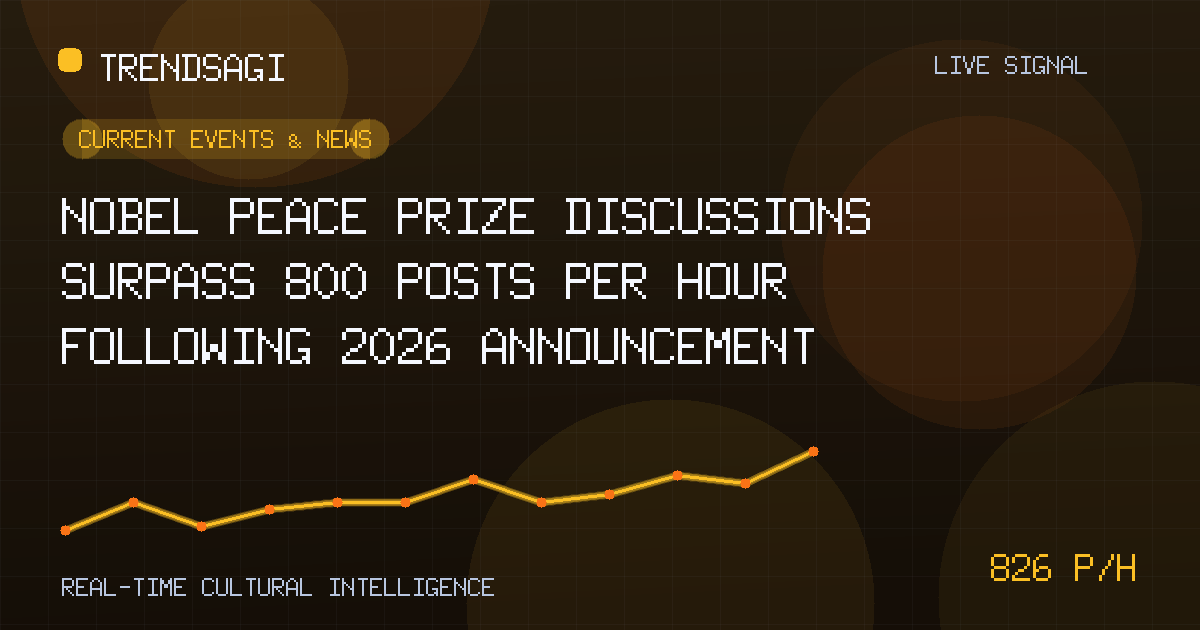
On October 9, 2026, public discourse regarding the Nobel Peace Prize experienced a significant surge, reaching a measured snapshot rate of 825.7 posts per hour. This spike in activity aligns with the annual announcement of the laureate by the Norwegian Nobel Committee in Oslo. At the time of the latest observation, the snapshot volume reached 533 posts, reflecting a concentrated burst of global engagement as news organizations, policy experts, and the general public reacted to the selection. This volume represents the peak of the prize's annual visibility, shifting the conversation from speculative predictions to analysis of the award's geopolitical implications.
| Observation Time | Measured Snapshot Rate | Snapshot Volume |
|---|---|---|
| 2026-10-09 22:54:01Z | 825.7 posts/hour | 533 posts |
Why this topic may be moving
The primary driver for this movement is the scheduled announcement of the Nobel Peace Prize, which traditionally occurs on the first or second Friday of October. On October 9, 2026, the Norwegian Nobel Committee revealed its choice, triggering a predictable but high-intensity wave of digital conversation. Because the Peace Prize is often the most controversial and politically charged of the Nobel awards, it generates a unique profile of engagement compared to the prizes for physics or medicine. The timing of this snapshot—observed at 22:54 UTC—suggests a sustained "second wave" of discussion as North American audiences and late-day editorial cycles in Europe and Africa processed the morning's announcement.
Historically, the prize is used to spotlight specific global crises, human rights movements, or diplomatic achievements. While the identity of the 2026 laureate is the central catalyst, the secondary drivers include debates over the committee's perceived political leanings and the potential for the award to influence ongoing international conflicts. The volume also reflects the organized efforts of NGOs and advocacy groups to capitalize on the visibility provided by the Nobel platform to advance their specific causes.
The Nobel Peace Prize remains the world's most influential political accolade, not because it rewards a completed work, but because it provides a global megaphone to a specific idea or movement at a critical juncture in history.
Why it matters
The Nobel Peace Prize serves as more than an honorary award; it is a strategic tool in international relations. For the laureate, the prize often brings a degree of physical and political protection, as well as a significant increase in funding and platform. For the global community, the prize signal's which issues are currently viewed as the most pressing by the European diplomatic establishment. A surge in discussion of this magnitude indicates that the 2026 choice has effectively captured the attention of the international "chattering classes" and is likely to influence policy agendas for the remainder of the year.
Stakeholders in the following sectors should pay close attention to the specific themes emerging from this volume:
- Diplomatic Corps: To understand the prevailing international sentiment toward the laureate's home region or cause.
- Philanthropic Organizations: As the Nobel prize often redirects global donor attention toward specific humanitarian needs.
- Risk Analysts: To assess whether the award may provoke a backlash from state actors or regimes criticized by the laureate’s work.
What the signal can and cannot establish
This signal confirms a high-velocity response to the announcement, establishing that the 2026 prize has achieved a "viral" threshold within the measured window. It demonstrates that the Nobel Peace Prize maintains its relevance as a top-tier global news event. The data clearly shows the intensity of the reaction, which is useful for benchmarking this year's announcement against previous cycles.
However, the signal has specific limitations. It cannot independently verify the identity of the winner without external confirmation, nor can it provide a nuanced sentiment analysis of whether the reaction is predominantly positive or negative. A high post rate can indicate either widespread celebration or widespread condemnation. Furthermore, the volume does not distinguish between authentic grassroots reactions and automated or bot-driven amplification by interested political parties.
What to watch next
To fully capitalize on this trend signal, observers should monitor the following development markers over the next 48 to 72 hours:
- Official State Reactions: Watch for statements from the laureate's home government. A lack of response or a hostile response can signal increased regional tension.
- The "Nobel Bump" in Media: Track whether the specific cause associated with the 2026 winner remains a top-five news item through the weekend. This indicates the "staying power" of the award’s message.
- Digital Search Trends: Monitor for a secondary spike in searches related to the laureate’s specific organization or previous advocacy work, which indicates a transition from awareness to education among the public.
- Dec 10 Ceremony Preparations: The prize is officially presented in December. Look for preliminary program details which often include high-level diplomatic invitations that can signal future peace initiatives.
Methodology and limitations
This analysis is based on a measured snapshot rate of 825.7 posts per hour, calculated over an exact 894-second window using three distinct stored observations. This methodology provides a high-fidelity look at the velocity of a trend at a specific moment in time but does not account for total daily volume or historical context prior to the measurement window. The snapshot volume of 533 posts represents a sample of the total global discourse during this period. Users should treat these figures as indicators of momentum rather than an exhaustive census of all public conversation.
Track This Topic for New Signals
Set alerts for future velocity or sentiment changes around this topic.
Explore Tracking PlansAbout TrendsAGI research
TrendsAGI's automated research pipeline publishes dated signal snapshots, methodology notes, and practical workflows for teams evaluating cultural momentum. Read how signals are scoped, scored, and limited in our research methodology.