880-second window · 3 observations · Measured Sep 4, 2026, 3:25 PM UTC · Provider: go_recent_snapshot_v2
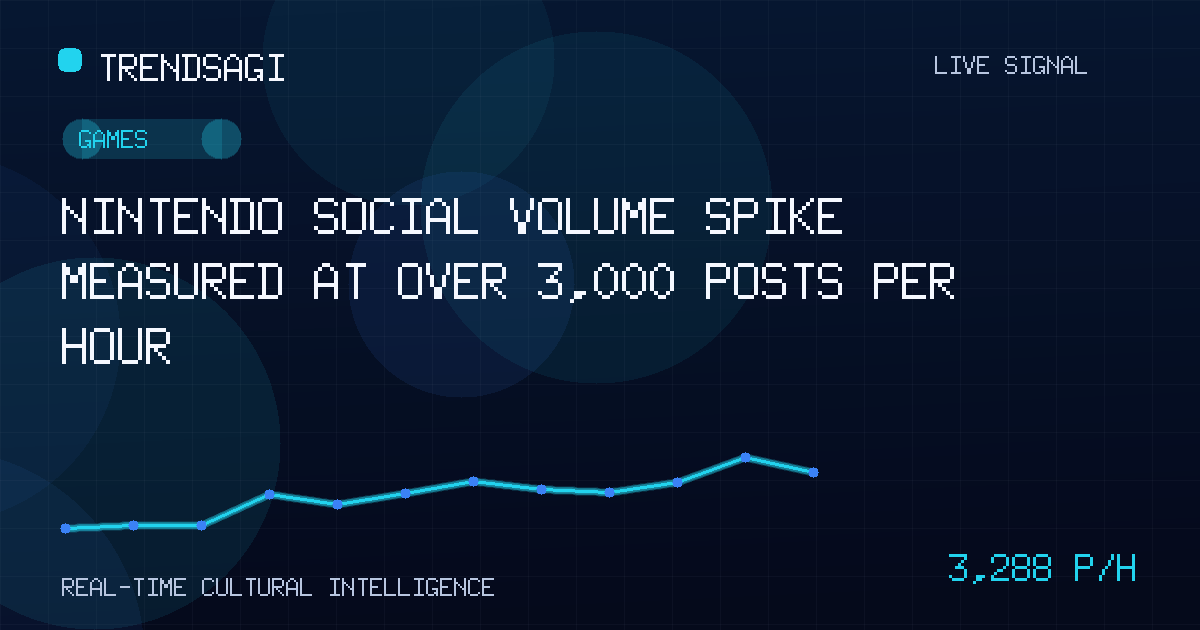
Nintendo social volume spike measured at over 3,000 posts per hour
Nintendo posts hit a measured snapshot rate of 3,287.6 per hour with 1,894 total posts. The specific cause remains unverified, offering a data point for gaming
Automated briefing. Generated from stored signal measurements and source-backed research; it is not manually reviewed. Read the methodology and limitations.
Metrics in this briefing are a snapshot associated with its publication date and may not reflect current conditions.
What changed
A social media signal for Nintendo recorded a measured snapshot rate of 3,287.6 posts per hour. Over an exact 880-second window, the topic generated a substantial volume of discussion, culminating in a latest snapshot volume of 1,894 posts. This data was captured at 2026-09-04T15:25:27Z. The sheer scale of this measured change rate indicates a significant moment of public attention directed at the gaming company, though the specific catalyst driving this conversation remains unverified.
| Metric | Value |
|---|---|
| Observation Time | 2026-09-04T15:25:27Z |
| Measured Posts/Hour | 3,287.6 |
| Snapshot Volume | 1,894 |
Why this topic may be moving
The specific cause of this movement cannot be definitively established from the stored signal alone, as the stored signal description is empty. When verifying why a topic is moving, researchers typically look to official publisher announcements, major gaming outlet reports, or cultural catalysts. In the case of Nintendo, high social media volume frequently correlates with new hardware reveals, significant first-party game releases, or unexpected corporate announcements. However, because no verifiable external context was provided or confirmed, the precise reason for this spike remains unclear. It is important to note that without attributing the cause to a specific publisher or event, the data remains a standalone metric of attention rather than a confirmed narrative.
Why it matters
This signal matters because it establishes a concrete baseline of public attention at a specific moment, yet it cannot establish the quality, sentiment, or true reach of that attention. Who should care about this metric? Industry analysts, competitive intelligence teams, and strategic marketing professionals should monitor these volumes closely, as a spike of this magnitude often precedes shifts in consumer interest or market momentum. For game developers and competing publishers, understanding precisely when a major entity like Nintendo captures massive attention can inform strategic timing for their own announcements and releases. Furthermore, researchers studying digital culture and media consumption patterns can use these volume metrics to track the lifecycle of public interest in major gaming entities. However, it is crucial to remember that a high volume of posts does not inherently equate to positive reception or financial success; it merely indicates that the topic is highly visible in the digital sphere at that specific moment. The commercial implications are real, but they must be interpreted with caution.
What to watch next
Practical next checks require analysts to correlate this volume spike with real-world events. The first step is to monitor official Nintendo channels and major gaming news outlets for any announcements that align with the timestamp of the spike. The second step involves tracking the trajectory of the conversation; a single burst of high volume may fade quickly if it was driven by a fleeting meme, whereas sustained volume over subsequent hours would suggest a deeper, more enduring narrative. Concrete watch signals include:
- A sustained elevation in post volume over the next several hours, which would indicate an ongoing narrative rather than a momentary spike.
- Shifts in sentiment polarity within the posts, moving from neutral or positive to negative, or vice versa, which could indicate a controversy or a highly successful product launch.
- Cross-platform migration of the conversation, where the topic begins trending on different social networks, signaling broader cultural impact.
- Official responses or denials from Nintendo, which would provide the necessary context to validate the initial spike.
A spike in measured volume indicates attention, but without context, it remains a metric rather than a narrative.
Methodology and limitations
The measured change rate of 3,287.6 posts per hour was calculated using 3 stored observations over an exact 880-second window, measured at the timestamp of 2026-09-04T15:25:27Z. This figure represents a measured snapshot rate, not a live or current rate, nor does it serve as a forecast for future activity or an ongoing trend. It is vital to distinguish between the measured posts/hour figure and the snapshot volume; the former is a rate of change calculated over a specific interval, while the latter is a cumulative count of posts observed at a single point in time. The limitations of this data are significant and must be understood by any professional relying on it. It cannot establish reach, engagement, or unique-person counts. A single user could generate multiple posts, artificially inflating the volume without reflecting a proportional increase in actual audience size or genuine public interest. Furthermore, the data is confined to the specific platforms and monitoring tools used to capture the signal, meaning it may not represent the entirety of global conversation around Nintendo. Researchers must treat these figures as a directional indicator of attention, not an absolute measure of public opinion or market performance.
Track This Topic for New Signals
Set alerts for future velocity or sentiment changes around this topic.
Explore Tracking PlansAbout TrendsAGI research
TrendsAGI's automated research pipeline publishes dated signal snapshots, methodology notes, and practical workflows for teams evaluating cultural momentum. Read how signals are scoped, scored, and limited in our research methodology.