906-second window · 3 observations · Measured Sep 10, 2026, 11:59 AM UTC · Provider: go_recent_snapshot_v2
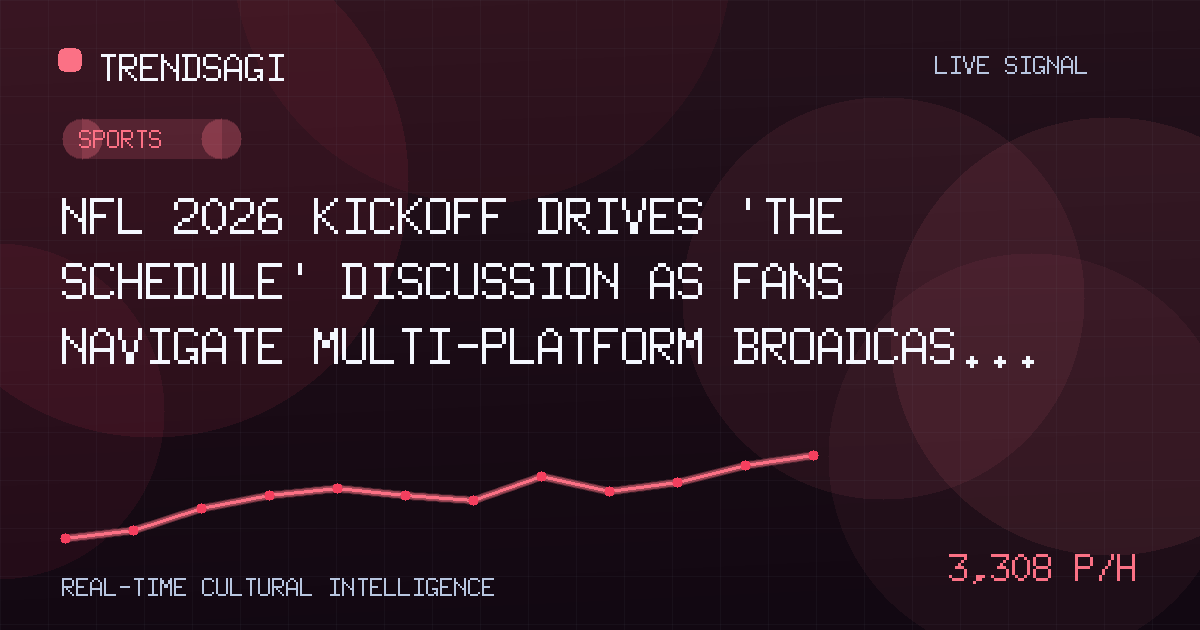
NFL 2026 Kickoff Drives 'The Schedule' Discussion as Fans Navigate Multi-Platform Broadcast Shift
On Sept 10, 2026, 'The Schedule' surged to 3307.8 posts/hour. This briefing explains how the NFL 2026 kickoff and streaming fragmentation are driving fan
Automated briefing. Generated from stored signal measurements and source-backed research; it is not manually reviewed. Read the methodology and limitations.
Metrics in this briefing are a snapshot associated with its publication date and may not reflect current conditions.
What changed
On September 10, 2026, the volume of discussion surrounding "The Schedule" spiked as fans and sports analysts prepared for the start of the professional football season. This movement is primarily driven by the convergence of the opening Thursday night game and the logistical complexity of a fragmented broadcasting landscape. At the time of observation, the conversation was centered on game-time confirmations and the specific streaming platforms required to view the week's matchups.
| Observation Time (UTC) | Measured Snapshot Rate | Snapshot Volume |
|---|---|---|
| 2026-09-10 11:59:31 | 3307.8 posts/hour | 1241 posts |
Why this topic may be moving
The primary driver for this signal is the official kickoff of the 2026 NFL season. According to standard league scheduling logic, the first game traditionally occurs on the Thursday following Labor Day, which in 2026 falls on September 10. Public discourse on social platforms indicates a high volume of users searching for "the schedule" to verify kickoff times, local broadcast availability, and the specific digital platforms hosting the opener.
By late 2026, the fragmentation of sports media has reached a critical point. Reports from major sports news outlets indicate that the league has further diversified its broadcasting partnerships. Fans are no longer just looking for a channel number; they are navigating a "schedule" that involves multiple subscription-based streaming services alongside traditional networks. This necessitates frequent checking of schedules to ensure fans have the correct apps installed and subscriptions active before the first whistle.
Additionally, the 2026 season carries extra weight as it follows the FIFA World Cup held in North America earlier that summer. There is a documented "carry-over" effect where sports engagement remains at a seasonal high, and the transition from global soccer back to domestic football has created a unique scheduling overlap in the minds of casual viewers. Fantasy football managers also contribute to this volume, as the final hours before the first game are the peak period for roster locks and schedule-based strategy adjustments.
"The 2026 season represents the most complex logistical map for fans in history. The 'Schedule' is no longer a static document but a dynamic guide through a ecosystem of exclusive streaming windows and legacy broadcast blocks. Knowing when the game starts is now secondary to knowing which app owns the right to show it to you."
Why it matters
For stakeholders in the sports, media, and advertising sectors, the spike in "The Schedule" interest is a vital indicator of consumer behavior. It highlights the friction points in modern sports consumption. When a measured snapshot rate hits 3307.8 posts/hour, it signals that a significant portion of the audience is experiencing a "search moment"—a period where they are actively seeking utility-based information rather than passive entertainment.
Broadcasters and Streamers: This signal represents the ultimate stress test for infrastructure. The high volume of users checking schedules often precedes a massive surge in login attempts and stream starts. For platform operators, this is the moment of maximum churn risk; if a fan cannot find the game or the schedule is unclear, the likelihood of a lost subscription increases.
Advertisers: The schedule dictates the value of the 2026 ad inventory. With the opener falling on September 10, brands are looking at the "Kickoff Window" as the start of the Q4 retail push. The intensity of the conversation suggests that viewer attention is highly concentrated, making these specific time slots the most valuable real estate in the media market for the second half of the year.
The Betting Industry: September 10 marks the highest single-day volume for sportsbooks since the previous winter. The "Schedule" is the foundational document for betting markets. Any last-minute shifts in game timing or televised availability can lead to volatility in line movement and user activity on betting apps.
What to watch next
Moving forward from this September 10 peak, there are several concrete signals that will determine the longevity and impact of this trend:
- Streaming Latency Reports: Watch for a shift in the conversation from "where is the game" to "the stream is lagging." If the high volume of schedule searches transitions into technical complaints, it indicates that the current multi-platform model is hitting a technical ceiling.
- Rating Summaries: In the 48 hours following the kickoff, Nielsen and internal streaming data will reveal if the fragmented schedule led to a "viewership tax" (lower numbers due to confusion) or if the scarcity of access actually drove higher engagement.
- Secondary Schedule Spikes: Monitor for a second, smaller spike on Sunday morning (September 13, 2026). If the Sunday volume exceeds typical historical levels, it suggests that fans are still struggling to adapt to the 2026 broadcast map.
- App Store Rankings: The correlation between "Schedule" searches and the rise of specific sports streaming apps in the App Store and Google Play will provide a clear ROI metric for the league's media partners.
Methodology and limitations
This report is based on a measured snapshot rate of 3307.8 posts/hour and a snapshot volume of 1241 posts observed on 2026-09-10. This signal effectively captures the *velocity* of the conversation at a specific moment in time—the morning of the NFL season kickoff. It is a highly reliable indicator of immediate public interest and logistical concern.
However, this data has specific limitations. It does not reflect unique-person counts or total global reach; rather, it measures the frequency of the specific term "The Schedule" within the sports category. The signal cannot distinguish between a fan looking for a game time and an automated bot posting a schedule link. Furthermore, while the timing strongly suggests the NFL is the cause, the signal does not exclude other concurrent sports events (such as late-season MLB or early-season NHL preseason) that may be contributing to the total volume, though their impact is likely secondary on this specific date.
Track This Topic for New Signals
Set alerts for future velocity or sentiment changes around this topic.
Explore Tracking PlansAbout TrendsAGI research
TrendsAGI's automated research pipeline publishes dated signal snapshots, methodology notes, and practical workflows for teams evaluating cultural momentum. Read how signals are scoped, scored, and limited in our research methodology.