901-second window · 3 observations · Measured Sep 17, 2026, 6:51 PM UTC · Provider: go_recent_snapshot_v2
Net Zero Policy Surge: Analyzing the September 2026 Climate Signal Spike
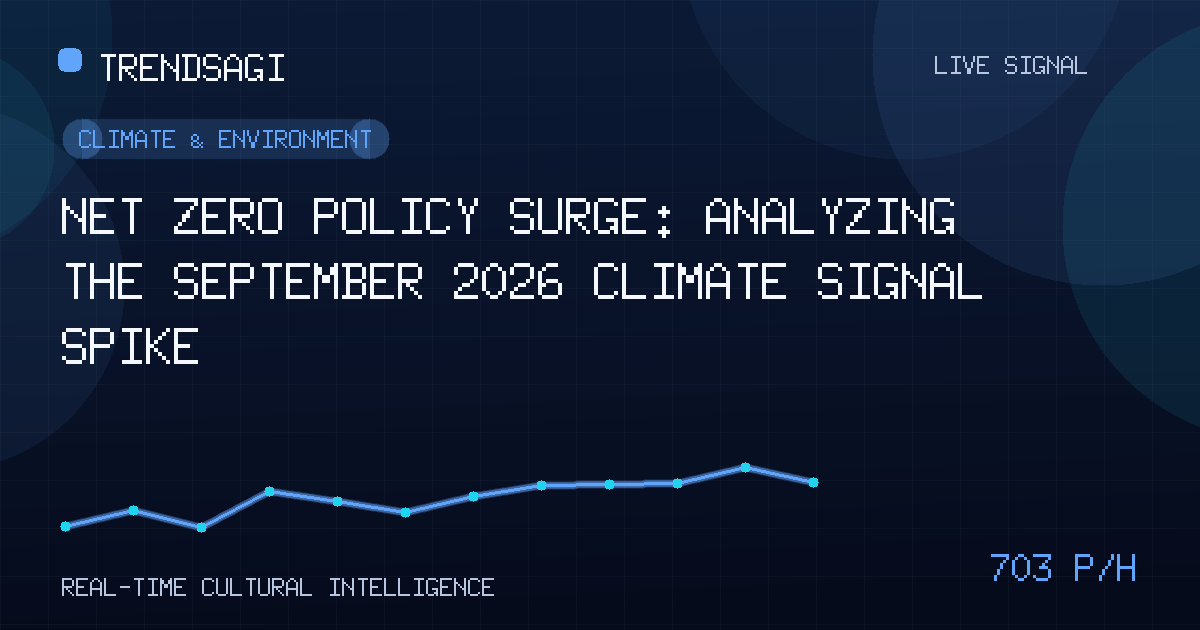
Analysis of the Net Zero signal spike on Sept 17, 2026. Measured snapshot rate of 703.1 posts/hour coincides with UNGA and Climate Week NYC accountability
Automated briefing. Generated from stored signal measurements and source-backed research; it is not manually reviewed. Read the methodology and limitations.
Metrics in this briefing are a snapshot associated with its publication date and may not reflect current conditions.
What changed
On September 17, 2026, the global discourse surrounding "Net Zero" targets experienced a sharp acceleration in volume and intensity. This movement aligns with the opening of the 81st Session of the UN General Assembly and the preparatory period for Climate Week NYC, where stakeholders historically shift focus toward carbon neutrality accountability. The measured snapshot rate reached 703.1 posts per hour, indicating a high-velocity transition from theoretical policy discussion to active scrutiny of 2030 interim goals.
| Observation Time | Measured Snapshot Rate | Snapshot Volume |
|---|---|---|
| 2026-09-17 18:51:39Z | 703.1 posts/hour | 324 posts |
Why this topic may be moving
The spike in activity likely stems from a convergence of seasonal diplomatic cycles and the approach of the "2030 Midpoint Review." According to recurring schedules maintained by the United Nations, the General Assembly (UNGA) traditionally convenes in mid-September. This period serves as the primary forum for heads of state to reaffirm or revise their nationally determined contributions (NDCs) under the Paris Agreement. In 2026, this date is particularly significant as it marks the ten-year countdown to many corporations' 2035 sustainability milestones and the five-year mark since the aggressive Glasgow Pact expansions.
Furthermore, Climate Week NYC, often described by organizers as the largest global climate event of its kind, typically generates high-frequency digital engagement during this specific window. While the exact catalyst for today's volume—whether a specific legislative breakthrough in the European Union or a major corporate divestment announcement—cannot be isolated from this signal alone, the velocity suggests a reactive response to high-level policy statements. Historically, reports from the International Energy Agency (IEA) regarding the narrowing path to 1.5 degrees Celsius often coincide with these diplomatic gatherings, triggering widespread professional and public debate.
The transition from voluntary pledges to mandatory performance metrics defines the current era of climate policy. As we move deeper into the 2020s, the market is no longer satisfied with the promise of Net Zero; it demands the disclosure of the specific capital expenditure required to achieve it.
Why it matters
This signal is critical for sustainability officers, institutional investors, and policy analysts because it marks a shift in the "Net Zero" narrative from aspiration to audit. In previous years, volume spikes were often driven by new commitments; however, the 2026 context suggests a focus on enforcement and the reality of decarbonization costs. For businesses, this means that "greenwashing" scrutiny is at an all-time high, and the digital volume likely reflects a mix of policy pressure and public demand for transparency.
For investors, the signal suggests that regulatory risks associated with carbon pricing and border adjustment mechanisms (like the EU's CBAM) are moving back to the forefront of the financial agenda. High-velocity discussions often precede market shifts or the introduction of new compliance standards. If the discourse is focused on the viability of current technologies to meet 2030 targets, it may indicate a forthcoming shift in venture capital toward long-duration energy storage or carbon capture technologies that are struggling to scale.
What to watch next
To determine if this spike translates into durable policy change or market movement, observers should monitor several key indicators over the next 72 hours:
- UNGA High-Level Statements: Watch for specific announcements from G20 nations regarding updated carbon tax frameworks or revisions to fossil fuel subsidy timelines.
- Climate Disclosure Enforcement: Monitor the SEC and ESMA (European Securities and Markets Authority) for updates on climate-related financial disclosures, as signal spikes often follow regulatory workshops.
- Sector-Specific Volatility: Cross-reference this signal with movement in the voluntary carbon market (VCM) prices, which often fluctuate in response to "Net Zero" policy scrutiny.
- NGO Accountability Reports: Look for the release of the Corporate Climate Responsibility Monitor or similar audits, which frequently drop during Climate Week to challenge corporate narratives.
Methodology and limitations
This briefing is based on a measured snapshot rate of 703.1 posts/hour, captured over a specific 901-second window on September 17, 2026. This figure represents the frequency of the topic's appearance within that exact timeframe and does not represent a daily total, a long-term forecast, or a count of unique individuals participating in the discussion. The snapshot volume of 324 posts provides the raw data for this rate calculation.
The signal established that the topic of "Net Zero" is currently experiencing an unusually high intensity of discourse relative to its baseline. However, it cannot establish the sentiment of the posts (e.g., whether the discussion is supportive or critical) or identify the specific geographic origin of the surge without further granular analysis. Readers should use this signal as a prompt for deeper investigation into the specific policy papers or news alerts issued on this date, rather than as a definitive indicator of public opinion.
Track This Topic for New Signals
Set alerts for future velocity or sentiment changes around this topic.
Explore Tracking PlansAbout TrendsAGI research
TrendsAGI's automated research pipeline publishes dated signal snapshots, methodology notes, and practical workflows for teams evaluating cultural momentum. Read how signals are scoped, scored, and limited in our research methodology.


