1600-second window · 3 observations · Measured Aug 27, 2026, 8:56 AM UTC · Provider: go_recent_snapshot_v2
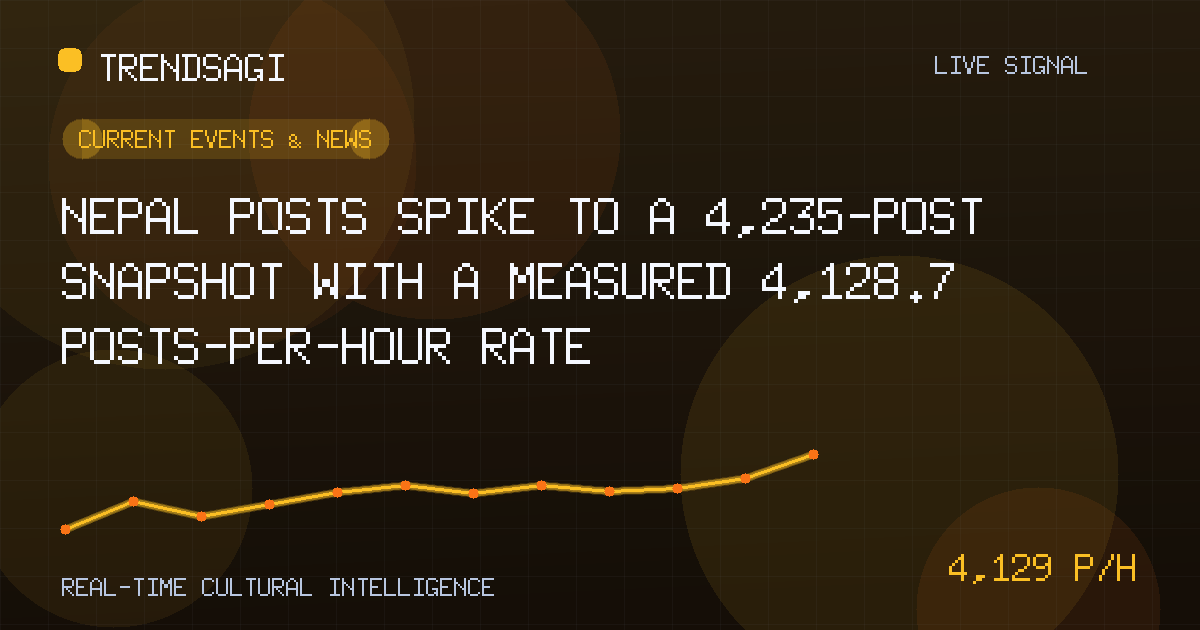
Nepal posts spike to a 4,235-post snapshot with a measured 4,128.7 posts-per-hour rate
Nepal shows a 4,235-post snapshot and a measured 4,128.7 posts-per-hour rate, with travel disruption as the main unverified driver.
Automated briefing. Generated from stored signal measurements and source-backed research; it is not manually reviewed. Read the methodology and limitations.
Metrics in this briefing are a snapshot associated with its publication date and may not reflect current conditions.
What changed
Nepal produced a large social-posting signal: the stored snapshot contains 4,235 posts, and the measured change rate is 4,128.7 posts per hour. That rate was calculated over an exact 1,600-second window using three stored observations, with the latest observation recorded at 20:56:25 UTC on 27 August 2026. The direct answer is simple: the topic is moving sharply in posting volume, and the stored travel-and-transportation category suggests the spike may involve transit, tourism, infrastructure, or disruption rather than a single local event.
The measured figure is a snapshot rate, not a live current rate, a forecast, a unique-person count, or a measure of engagement. It shows how quickly posts about Nepal were accumulating during a short observation window, but it does not identify the cause by itself. The stored signal has an empty description, so the briefing treats the cause as still unclear unless verified public reporting can be checked.
| Field | Value |
|---|---|
| Observation time | 20:56:25 UTC, 27 August 2026 |
| Measured posts per hour | 4,128.7 |
| Snapshot volume | 4,235 posts |
Why this topic may be moving
The strongest plausible explanation is a sudden news or travel disruption that makes people discuss Nepal rapidly. In a travel-and-transportation category, spikes are often driven by flight delays, airport closures, road blockages, visa and permit changes, tour-operator alerts, trekking-route disruptions, or transport safety incidents. Nepal’s geography makes transportation especially sensitive to weather, landslides, airport weather, and road conditions, so a small operational problem can generate a large volume of posts quickly.
Another possibility is a policy or regulatory change affecting travelers, such as border procedures, airline schedules, ticket pricing, tourism regulations, or emergency travel advisories. If a government agency, airline, airport authority, or major tourism body issued a notice, that could explain a fast rise in user-generated posts. Because the stored description is empty, this briefing cannot confirm a specific trigger. The cause should be treated as unclear until a verified public source explains the movement.
“The signal is large enough to matter, but the stored data does not yet establish why the topic is moving.”
A third possibility is a viral transportation story or user-generated incident report. Social platforms can amplify a single airport video, a road closure, a trekking emergency, or a public statement into a large burst of discussion. In that case, the spike may be event-driven and short-lived. If the topic persists beyond the initial burst, the explanation is more likely to involve an ongoing disruption or a policy change rather than a one-off viral post.
Why it matters
Anyone planning travel to or through Nepal should care because a sharp rise in transportation-related posts often precedes practical friction: missed connections, changed itineraries, delayed permits, route closures, or higher transport costs. For travelers, the useful question is not only “why is the topic trending?” but “does this affect flights, ground transport, visas, accommodation, or outdoor routes?”
For tourism operators, airport and ground-transport partners, and local service providers, the spike may indicate customer confusion, increased inquiry load, or a need for clearer operational updates. A high posting rate can mean that travelers are seeking real-time information faster than official channels can provide it. It can also mean that a disruption is creating operational risk, especially if flights, buses, trains, or road access are affected.
For researchers and analysts, the value is in the speed of the signal. A measured rate of 4,128.7 posts per hour is a strong indicator that the topic is moving quickly within the observed window. It is not proof of a crisis, but it is enough to justify closer monitoring, especially when the stored category is travel and transportation.
What to watch next
- Official transport updates: Check whether airports, airlines, bus operators, rail services, or road authorities have issued advisories, cancellations, or schedule changes.
- Government travel guidance: Look for travel advisories, border notices, or emergency statements from relevant agencies, and note whether they are new or unchanged.
- Weather and infrastructure reports: Monitor reports of rain, snow, landslides, floods, road closures, or airport weather, since these are common transportation drivers in Nepal.
- Tourism and trekking alerts: Track whether trekking operators, hotels, guides, or tour boards are reporting route closures, delayed permits, or safety issues.
- Duration of the spike: A short burst may indicate a viral incident; sustained posting over multiple observation windows may indicate an ongoing disruption or policy issue.
- Change in language: Watch for a shift from general travel chatter to specific complaints, safety reports, flight delays, or requests for assistance.
The most useful next check is to compare the current snapshot with earlier stored observations. If the posts-per-hour rate remains high, the topic is likely still active. If it falls sharply, the event may have passed or the conversation may be consolidating around a smaller number of accounts.
Methodology and limitations
The briefing uses a stored snapshot of 4,235 posts and a measured rate of 4,128.7 posts per hour. The rate was derived from three stored observations over an exact 1,600-second window, and the latest observation time is 20:56:25 UTC on 27 August 2026. The rate is a snapshot measurement, not a real-time current rate and not a prediction of future posting behavior.
The signal cannot establish the cause of the spike. It cannot identify the number of unique people posting, the location of the posters, the sentiment of the posts, or whether the posts are related to a single event. The stored category, “Travel and transportation,” is a useful contextual clue, but it is not a verified explanation. The stored description is empty, so the article avoids asserting a specific cause.
External reporting would be needed to verify whether the movement is driven by a disruption, policy change, airline or airport issue, weather event, or viral incident. Until then, the safest conclusion is that Nepal is showing a strong measured posting spike in a travel-and-transportation context, and the cause remains unconfirmed in the supplied signal.
Track This Topic for New Signals
Set alerts for future velocity or sentiment changes around this topic.
Explore Tracking PlansAbout TrendsAGI research
TrendsAGI's automated research pipeline publishes dated signal snapshots, methodology notes, and practical workflows for teams evaluating cultural momentum. Read how signals are scoped, scored, and limited in our research methodology.