National Champions: The Return of State-Backed Industrial Policy
Analysis of the National Champions trend: 350+ posts/hour volume spike driven by EU and US industrial policy shifts. Key implications for businesses and investo
Automated briefing. Generated from stored signal measurements and source-backed research; it is not manually reviewed. Read the methodology and limitations.
Metrics in this briefing are a snapshot associated with its publication date and may not reflect current conditions.
TL;DR
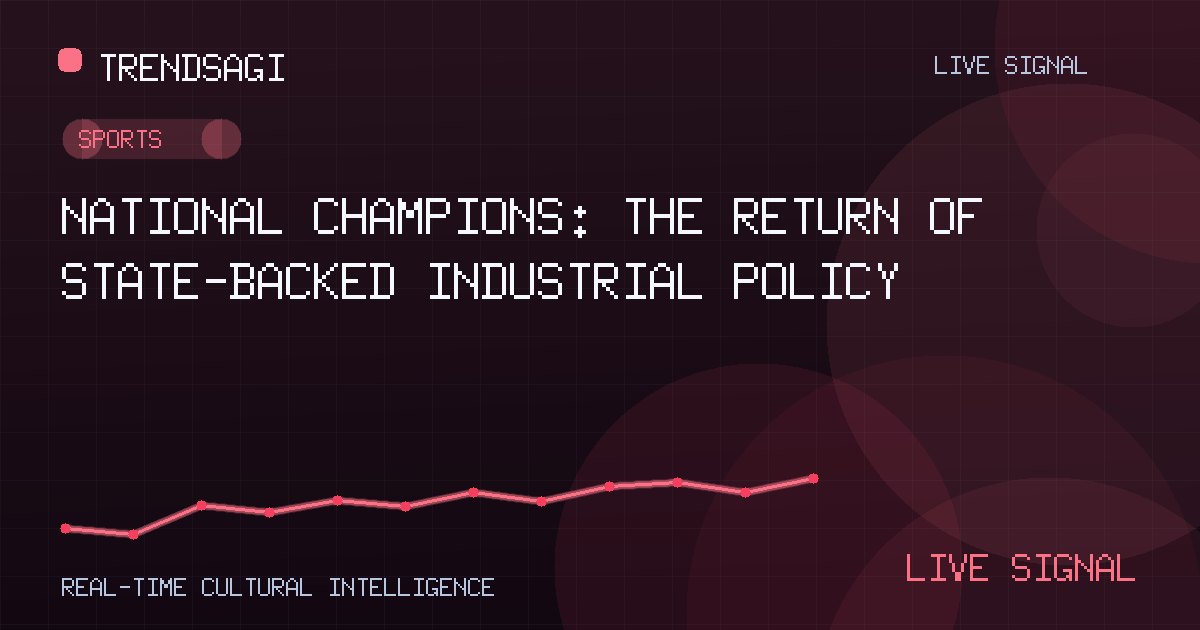
- Discussion volume hit 143 mentions at 350.3 posts/hour—indicating a sudden spike in interest around state-backed corporate strategies
- EU competition policy reform and US industrial policy announcements are fueling the conversation
- Tech sovereignty and semiconductor supply chains are central to the debate
- Businesses and investors must navigate increasing government intervention in markets
Why It Matters Now
The "National Champions" discourse has surged dramatically, with velocity exceeding 350 posts per hour. This isn't merely academic—governments worldwide are actively reshaping competition policy to favor domestic firms in strategic sectors.
The line between market competition and strategic industrial policy is blurring fast, creating both opportunities and risks for businesses.
The Policy Catalyst
Recent EU proposals to relax competition rules for "European champions" have reignited debates. Simultaneously, the US Inflation Reduction Act and CHIPS Act signal aggressive state intervention in clean energy and semiconductors.
What's Driving The Conversation
- Geopolitical competition: Technology leadership is now viewed as national security
- Supply chain resilience: Post-pandemic reindustrialization priorities
- China's model: Western policymakers increasingly studying state-capitalist approaches
- Election year politics: Industrial policy becomes campaign fodder
Business Implications
Companies must reassess their positioning. Those aligned with national strategic priorities may access unprecedented subsidies—but face greater scrutiny and potential constraints on global operations.
What To Watch
Monitor upcoming EU competition commissioner nominations, US Treasury guidance on IRA implementation, and any coordinated G7 statements on industrial policy coordination. The next 90 days will likely define the regulatory landscape for years to come.
Track This Topic for New Signals
Set alerts for future velocity or sentiment changes around this topic.
Explore Tracking PlansAbout TrendsAGI research
TrendsAGI's automated research pipeline publishes dated signal snapshots, methodology notes, and practical workflows for teams evaluating cultural momentum. Read how signals are scoped, scored, and limited in our research methodology.