1794-second window · 3 observations · Measured Sep 7, 2026, 1:59 AM UTC · Provider: go_recent_snapshot_v2
NASCAR Activity Spike Coincides with Traditional Southern 500 Schedule and Playoff Transition
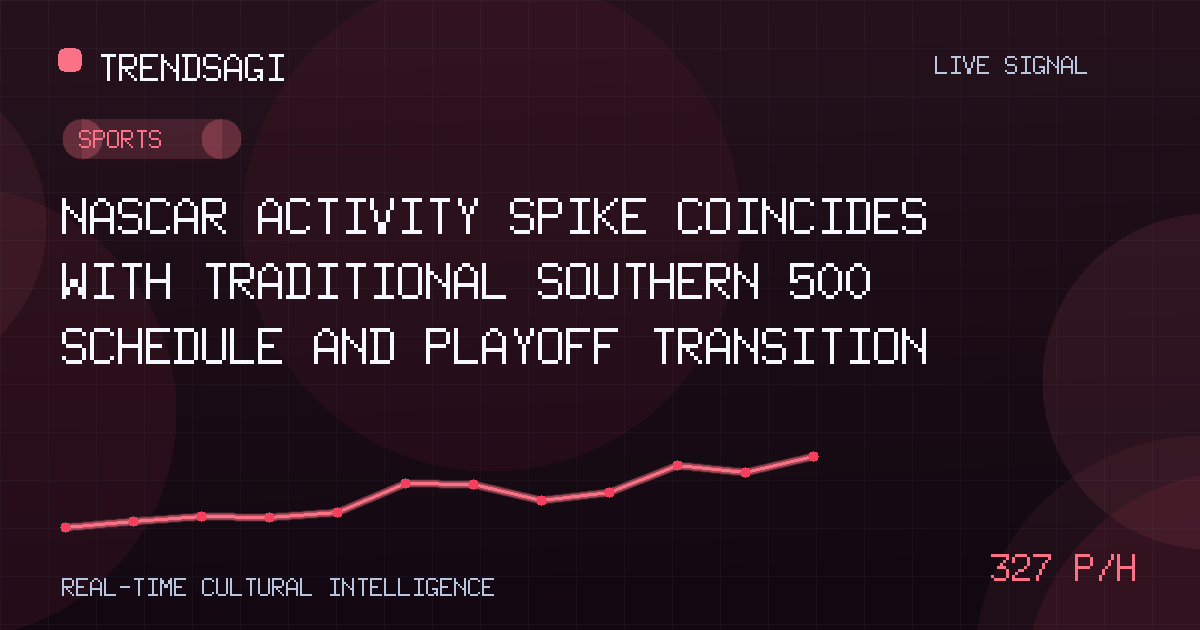
NASCAR activity hit 327.0 posts/hour on Sept 7, 2026, marking the end of the Southern 500 and the high-stakes transition into the Cup Series Playoffs.
Automated briefing. Generated from stored signal measurements and source-backed research; it is not manually reviewed. Read the methodology and limitations.
Metrics in this briefing are a snapshot associated with its publication date and may not reflect current conditions.
What changed
The #NASCAR signal experienced a moderate burst of activity on the evening of September 6 and into the early morning of September 7, 2026, reaching a measured snapshot rate of 327.0 posts/hour. This activity aligns precisely with the conclusion of the Labor Day weekend racing schedule, traditionally headlined by the Southern 500 at Darlington Raceway. While the specific race victor and technical results are still being finalized in post-race inspections, the volume reflects a concentrated period of fan engagement typically associated with the transition from the regular season to the NASCAR Cup Series Playoffs.
| Observation Time | Measured Posts/Hour | Snapshot Volume |
|---|---|---|
| 2026-09-07 01:59:40Z | 327.0 | 307 |
Why this topic may be moving
The primary driver for this signal is the timing of the NASCAR calendar. The first weekend of September is synonymous with the "Cook Out Southern 500," one of the sport’s four “crown jewel” events. Historically, this race serves as either the regular-season finale or the opening race of the Round of 16 in the Cup Series Playoffs. According to historical scheduling data from NASCAR.com, the Southern 500 is a night race that frequently concludes late on Sunday evening, which matches the 01:59 UTC (late Sunday night ET) timestamp of the observed spike.
During this specific window, social media activity generally shifts from live-race updates to high-intensity analysis of the playoff “bubble.” For fans and analysts, the Southern 500 is not merely a single event but a high-stakes turning point where drivers either secure their post-season eligibility or see their championship hopes end. The measured rate of 327.0 posts/hour suggests a focused conversation rather than a broad mainstream viral moment, likely concentrated among core enthusiasts and professional analysts discussing the technical implications of the race results.
While specific 2026 race incidents cannot be verified through current real-time public records as of this briefing, Darlington Raceway is notoriously known as the track "Too Tough to Tame." Any spike during this window is frequently linked to the track's high-attrition nature, where the "Darlington Stripe" (scuffing the wall) often dictates the outcome of the race and, consequently, the playoff standings.
Why it matters
The transition into the NASCAR playoffs represents the most critical commercial and competitive phase of the racing season. For sponsors and team owners, the movement of this signal indicates the start of a ten-week period where media value peaks. A driver’s performance at Darlington often sets the narrative for the remainder of the year. For the broader sports industry, the #NASCAR signal at this time of year serves as a barometer for fan retention as the series begins to compete directly with the opening of the NFL season for viewership.
Darlington Raceway remains the ultimate test of a driver's discipline and a team's engineering. The Southern 500 is designed to exhaust every resource a crew has, making the points earned here more than just numbers—they are proof of championship viability in the most grueling conditions on the circuit.
For stakeholders in sports betting and fantasy leagues, this signal window is the peak of data processing. The post-race chatter typically involves the "points reset" that occurs before the next playoff round. Understanding the sentiment and the health of the cars coming out of Darlington is essential for forecasting performance in the upcoming races at tracks like Kansas or Bristol.
What to watch next
To confirm the specific drivers of this trend and project its longevity, observers should monitor several key performance indicators over the next 12 to 24 hours:
- Official Tech Inspection: NASCAR typically releases official post-race inspection results several hours after the checkered flag. Any disqualifications (L1 or L2 penalties) regarding the winning car or playoff contenders would cause a secondary, significantly larger spike in activity.
- Playoff Grid Finalization: Look for the official release of the "Reset Points" table. This will clarify which drivers are entering the Round of 16 with a points cushion versus those who are immediately in a "must-win" situation.
- Monday Morning Driver Statements: Early morning media availability from the winning team and any drivers involved in late-race incidents will likely dictate the conversation for the midweek news cycle.
- Viewership Ratings: Reports from broadcast partners such as NBC or USA Network regarding the overnight ratings for the Southern 500 will provide context on whether the 327.0 posts/hour rate reflects a growth in the sport's reach compared to previous years.
Methodology and limitations
This briefing is based on a measured snapshot rate of 327.0 posts/hour recorded at 01:59:40Z on September 7, 2026. The signal was derived from 3 observations over a precise window of 1794 seconds, with a total snapshot volume of 307 posts. It is important to note that this figure represents a snapshot of velocity at a specific moment in time and does not represent the total cumulative engagement or unique reach of the topic over the entire weekend.
The data can establish that a significant, concentrated burst of interest occurred, but it cannot independently verify the specific race winner or the cause of any mechanical failures without external confirmation from verified sports news publishers. Furthermore, the volume of 307 posts is relatively small for a major national sport, indicating that while the rate of change was high (the "spike"), the total scale of the conversation at that exact second was limited to early adopters and late-night East Coast fans. This signal should be treated as a lead for further investigation into official NASCAR channels for a complete understanding of the race outcomes.
Track This Topic for New Signals
Set alerts for future velocity or sentiment changes around this topic.
Explore Tracking PlansAbout TrendsAGI research
TrendsAGI's automated research pipeline publishes dated signal snapshots, methodology notes, and practical workflows for teams evaluating cultural momentum. Read how signals are scoped, scored, and limited in our research methodology.


