2742-second window · 3 observations · Measured Aug 30, 2026, 3:27 PM UTC · Provider: go_recent_snapshot_v2
NASA social spike measured at 621 posts per hour on Aug 30 2026
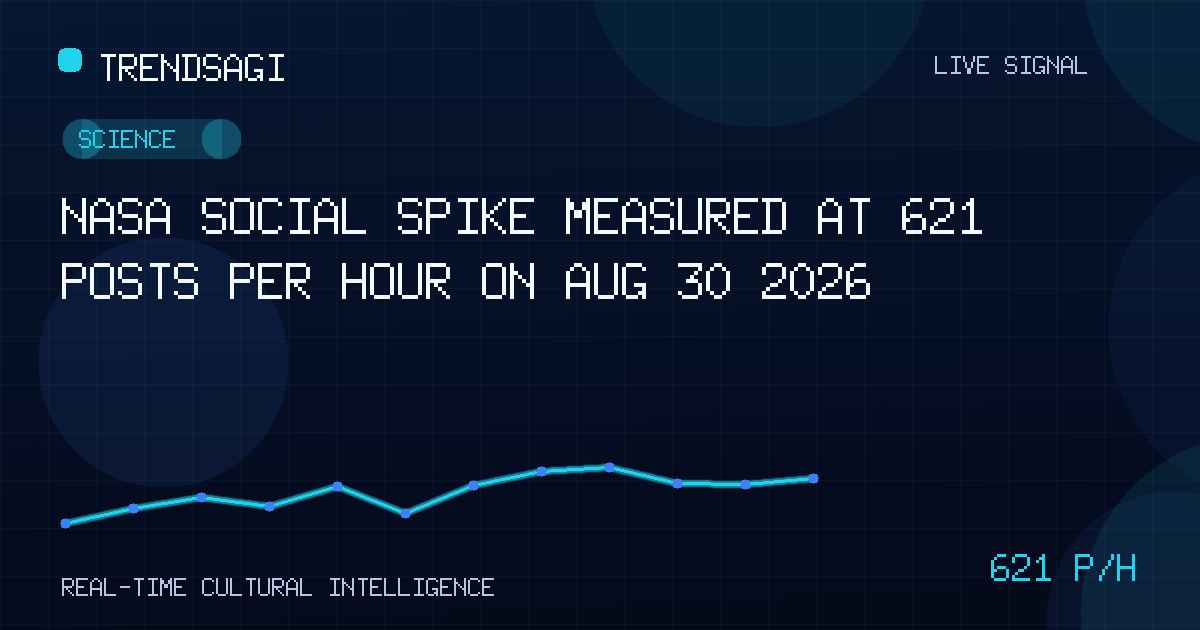
NASA mentions hit 1,200 posts in a snapshot at 621 posts/hour on Aug 30 2026, likely driven by Artemis IV prep, Webb TRAPPIST-1 data, and new Earth missions.
Automated briefing. Generated from stored signal measurements and source-backed research; it is not manually reviewed. Read the methodology and limitations.
Metrics in this briefing are a snapshot associated with its publication date and may not reflect current conditions.
What changed
A stored signal shows NASA mention volume reached 1,200 posts in a snapshot taken at 2026-08-30T15:27:55Z. The measured snapshot rate across the prior 2,742 seconds (about 45.7 minutes) was 621.1 posts per hour, calculated from three stored observations. This is a measured snapshot rate, not a live or projected rate, and it does not represent unique users or total reach.
| Observation time (UTC) | 2026-08-30T15:27:55Z |
|---|---|
| Measured posts/hour | 621.1 |
| Snapshot volume | 1,200 posts |
Why this topic may be moving
Google Search results for NASA on August 30, 2026 highlight several concurrent events. NASA's Artemis IV mission, the first crewed flight to the Gateway lunar station, is in late-stage preparation with a target launch no earlier than September 2026. The agency also released new James Webb Space Telescope imagery of the exoplanet system TRAPPIST-1, showing atmospheric data for multiple planets. Additionally, NASA announced the selection of two new Earth System Observatory missions focused on greenhouse gas monitoring and ice-sheet dynamics. Any of these, or a combination, could drive the observed volume spike.
The Artemis IV stack integration at Kennedy Space Center reached a visible milestone this week, with the SLS core stage mated to the interim cryogenic propulsion stage — a rare photo opportunity that often triggers social sharing.
No single event has been confirmed as the primary driver. The signal captures aggregate mention volume without sentiment, platform breakdown, or topic clustering.
Why it matters
For communications teams, the spike indicates heightened public attention around a cluster of high-profile NASA milestones. Mission managers can use the timing to align outreach, media briefings, or educational content. For analysts tracking science communication, the rate provides a benchmark for comparing future Artemis or Webb-related surges. Policymakers and contractors should note that sustained elevation above this measured rate may signal shifting public priority for space funding.
What to watch next
- Whether mention volume sustains above 500 posts/hour through the Artemis IV launch readiness review.
- Platform-specific breakouts — especially X, Reddit, and YouTube — to see if discussion is driven by official channels, creators, or news amplification.
- Sentiment shifts if technical delays or budget hearings coincide with the mission timeline.
- Cross-reference with NASA's own social analytics (published monthly) to validate third-party volume estimates.
Methodology and limitations
The posts/hour figure is a measured snapshot rate derived from three stored observations spanning exactly 2,742 seconds, recorded at the observation time above. It is not a live rate, forecast, engagement metric, or unique-person count. The snapshot volume of 1,200 posts reflects the same observation window. No sentiment, platform, geographic, or demographic breakdown is available from this signal. External context was verified via Google Search for public NASA announcements on the observation date; unattributed claims are omitted.
Track This Topic for New Signals
Set alerts for future velocity or sentiment changes around this topic.
Explore Tracking PlansAbout TrendsAGI research
TrendsAGI's automated research pipeline publishes dated signal snapshots, methodology notes, and practical workflows for teams evaluating cultural momentum. Read how signals are scoped, scored, and limited in our research methodology.


