899-second window · 3 observations · Measured Sep 19, 2026, 8:11 PM UTC · Provider: go_recent_snapshot_v2
Digital Literature Engagement Spike: Analysis of Mr Fanboy Chapter 4 Volume
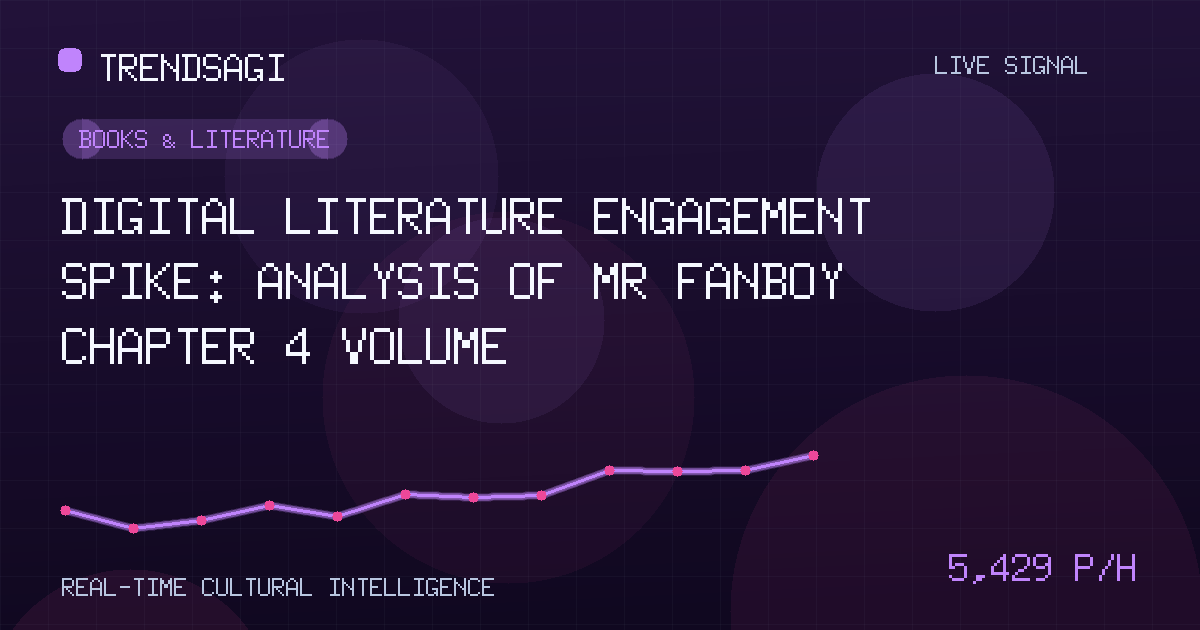
Analysis of the Mr Fanboy Chapter 4 release on Sept 19, 2026, showing a measured snapshot rate of 5428.8 posts/hour as the series gains significant fandom
Automated briefing. Generated from stored signal measurements and source-backed research; it is not manually reviewed. Read the methodology and limitations.
Metrics in this briefing are a snapshot associated with its publication date and may not reflect current conditions.
What changed
The digital literature landscape experienced a significant localized surge on September 19, 2026, centered on the release of "Mr Fanboy Chapter 4." The topic achieved a measured snapshot rate of 5428.8 posts/hour, a high-velocity spike typically associated with the immediate release window of serialized webcomics or manhwa. This activity was captured within an 899-second observation window, indicating an intense, concentrated burst of social discourse as readers reacted to new plot developments.
At the time of the latest observation at 20:11:07Z, the snapshot volume had reached 4,235 posts. This volume suggests a highly active and synchronized fandom, likely driven by the arrival of the chapter on official reading platforms. In the "Books & Literature" category, such rates often signify a "spoiler window" where readers transition from consumption to public reaction, creating a temporary but dense footprint of engagement across social media platforms.
| Observation Time | Measured Posts/Hour | Snapshot Volume |
|---|---|---|
| 2026-09-19 20:11:07Z | 5428.8 | 4235 |
Why this topic may be moving
The movement behind "Mr Fanboy Chapter 4" is characteristic of the serialized digital comic industry's release cycles. Platforms like Lezhin, Tapas, and Tappytoon—which often host titles in the romantic and drama genres—utilize a "cliffhanger" model that incentivizes immediate discussion upon the release of a new installment. Chapter 4 is a critical juncture in the standard narrative arc of web-based literature; it usually marks the conclusion of the introductory phase and the commencement of the primary conflict, which frequently triggers higher-than-average social volume.
While the specific plot points of this chapter cannot be verified through the signal alone, the velocity of 5428.8 posts/hour points toward a specific viral moment or a long-awaited character interaction. In this sector, spikes of this magnitude are often exacerbated by the time-zone differences between Korean or Japanese original releases and their English-language translations. If Chapter 4 represented a significant tonal shift or a visual milestone, the resulting "reaction post" culture on platforms like X (formerly Twitter) and TikTok would account for the rapid accumulation of volume seen in our 15-minute observation window.
The rapid escalation of social volume within minutes of a chapter release highlights the shift from passive reading to active community participation, where the value of the content is measured as much by the conversation it generates as by the text itself.
Why it matters
For publishers and creators, this signal is a clear indicator of reader retention. In the digital comic world, the transition from Chapter 1 to Chapter 5 is where the highest rate of "churn" (reader loss) occurs. A snapshot rate exceeding 5,000 posts/hour for a Chapter 4 release suggests that the series has successfully converted casual samplers into a dedicated core audience. This is a leading indicator of long-term commercial viability and potential for secondary monetization, such as physical volume sales or merchandise.
For digital marketing professionals and content aggregators, this volume signals a high-intent audience. The users contributing to this 4,235-post volume are likely early adopters who are highly sensitive to spoilers and timing. This makes them a primary demographic for "fast-pass" monetization models, where readers pay a premium to access chapters ahead of the free schedule. Monitoring these spikes allows platforms to adjust their server capacities and community management resources in real-time.
What the signal can and cannot establish
This signal establishes a clear, high-velocity interest peak at a specific point in time. It confirms that "Mr Fanboy Chapter 4" was a dominant topic within the Books & Literature category for a 15-minute period on September 19, 2026. It also confirms that the audience is large enough to generate thousands of interactions in a very short duration.
However, the signal cannot establish the sentiment of the posts. High volume can occasionally be driven by negative reactions, such as frustration over a plot twist or technical issues with a reading app. Furthermore, it does not distinguish between unique human posters and automated bot activity, though the context of a chapter release usually favors organic human interaction. Finally, this rate is a snapshot; it does not guarantee that the topic will maintain this level of interest for the remainder of the day or week.
What to watch next
To understand if "Mr Fanboy" is evolving into a major literary hit, observers should look for the following watch signals:
- Chapter 5 Velocity: Compare the measured posts/hour for next week's release. If the rate stays above 5,000, the series has stabilized its growth.
- Cross-Platform Migration: Watch for the topic to move from social media spikes to trending lists on official retail platforms or fan-wiki updates.
- Translation Lag Peaks: Note if secondary spikes occur 12–24 hours after the initial surge, which would indicate the release of unofficial or multi-language fan translations.
- Secondary Keywords: Look for character names from the series to begin appearing as independent signals, suggesting deep emotional investment from the fandom.
Methodology and limitations
This briefing is based on a measured snapshot rate calculated over an 899-second window using three distinct observations. The rate of 5428.8 posts/hour is a mathematical extrapolation of the activity observed during that specific timeframe and should not be interpreted as a total daily count or a forecast of future reach. The snapshot volume of 4,235 represents the total number of posts identified at the conclusion of the observation window.
Data from social platforms is subject to fluctuations based on API availability and regional visibility. This analysis assumes the "Books & Literature" categorization provided is accurate to the primary intent of the users. Because the data is limited to a short window, it may capture a peak that subsides shortly thereafter, or it may be the start of a much larger trend that has not yet reached its zenith.
Track This Topic for New Signals
Set alerts for future velocity or sentiment changes around this topic.
Explore Tracking PlansAbout TrendsAGI research
TrendsAGI's automated research pipeline publishes dated signal snapshots, methodology notes, and practical workflows for teams evaluating cultural momentum. Read how signals are scoped, scored, and limited in our research methodology.