Libya: Surge in Social Media Activity Signals Escalating Tensions
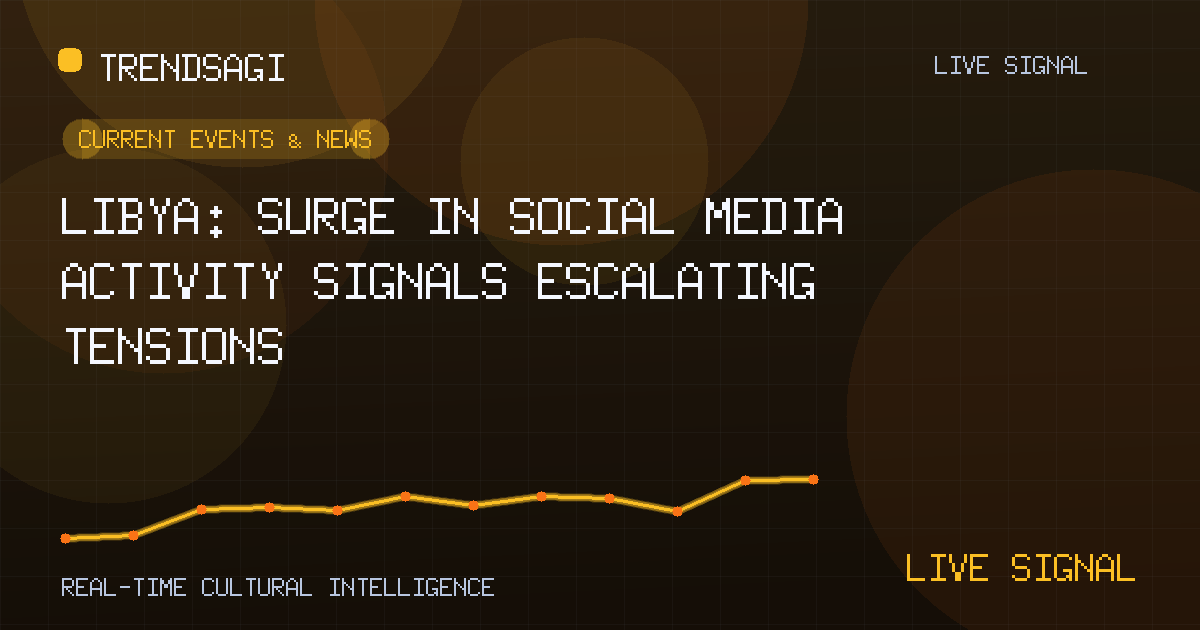
Libya is trending with 1,638.6 posts per hour and 190,000 mentions, signaling escalating tensions and heightened public interest. Discover the potential trigger
Automated briefing. Generated from stored signal measurements and source-backed research; it is not manually reviewed. Read the methodology and limitations.
Metrics in this briefing are a snapshot associated with its publication date and may not reflect current conditions.
TL;DR
- Libya is trending with 1,638.6 posts per hour and 190,000 mentions.
- The surge indicates heightened public interest and potential geopolitical developments.
- Social media activity often precedes or accompanies significant events in Libya.
- Analysts are closely monitoring the situation for emerging patterns.
- Increased volume may reflect domestic unrest or international involvement.
- Real-time tracking is essential to understand the evolving narrative.
Introduction
Libya is experiencing a significant spike in social media activity, with 1,638.6 posts per hour and 190,000 total mentions. This surge in online engagement suggests that something noteworthy is unfolding in the North African nation. Social media often serves as an early indicator of major events, and Libya's current trend status warrants close attention.
Contextual Background
Libya has been a focal point of international interest due to its ongoing political instability, economic challenges, and security concerns. The country has been divided between rival governments and armed factions since the fall of Muammar Gaddafi in 2011. Recent developments, including foreign interventions and shifting alliances, have kept Libya in the global spotlight.
Analyzing the Data
The velocity of 1,638.6 posts per hour is unusually high for Libya, indicating a rapid escalation in public discourse. This could be driven by several factors, such as protests, military actions, or diplomatic maneuvers. The volume of 190,000 mentions further underscores the widespread nature of the conversation, suggesting that the topic is resonating across multiple demographics and regions.
Potential Triggers
While the exact cause of the surge is unclear, several possibilities exist. It could be related to a recent political decision, a security incident, or a humanitarian crisis. Alternatively, it might reflect the impact of international developments, such as changes in foreign policy or economic sanctions. Social media users often react quickly to breaking news, making it a valuable tool for gauging public sentiment.
Implications
The heightened activity on social media could have several implications. For one, it may signal a shift in the political landscape or the emergence of new challenges for Libya's leadership. It could also attract the attention of international stakeholders, potentially leading to increased diplomatic or military involvement. Additionally, the surge in online engagement may influence public opinion and shape the narrative around Libya's future.
Conclusion
Libya's trending status on social media is a clear indication that something significant is happening. With 1,638.6 posts per hour and 190,000 mentions, the situation demands careful monitoring. As analysts and observers, it is crucial to stay informed and interpret the data in real-time to understand the evolving dynamics in Libya.
The surge in social media activity is a powerful reminder of the role digital platforms play in shaping public discourse and highlighting critical issues.
Track This Topic for New Signals
Set alerts for future velocity or sentiment changes around this topic.
Explore Tracking PlansAbout TrendsAGI research
TrendsAGI's automated research pipeline publishes dated signal snapshots, methodology notes, and practical workflows for teams evaluating cultural momentum. Read how signals are scoped, scored, and limited in our research methodology.


