905-second window · 3 observations · Measured Sep 17, 2026, 1:41 AM UTC · Provider: go_recent_snapshot_v2
Kevin Warsh and the Resurgence of Monetary Policy Speculation
Kevin Warsh sees a 334.0 posts/hour spike in business policy circles. Learn why this signal suggests a major shift in Federal Reserve speculation.
Automated briefing. Generated from stored signal measurements and source-backed research; it is not manually reviewed. Read the methodology and limitations.
Metrics in this briefing are a snapshot associated with its publication date and may not reflect current conditions.
What changed
Kevin Warsh, the former Federal Reserve governor and a frequent candidate for high-level economic appointments, is experiencing a significant surge in mentions within business and financial policy circles. This activity is likely tied to emerging speculation regarding leadership shifts at the Federal Reserve or the U.S. Treasury, or perhaps a widely circulated critique of current inflation management. The signal identifies a concentrated interest in Warsh’s specific economic philosophy, which often emphasizes a more hawkish approach to monetary policy and a critical view of expanded central bank balance sheets.
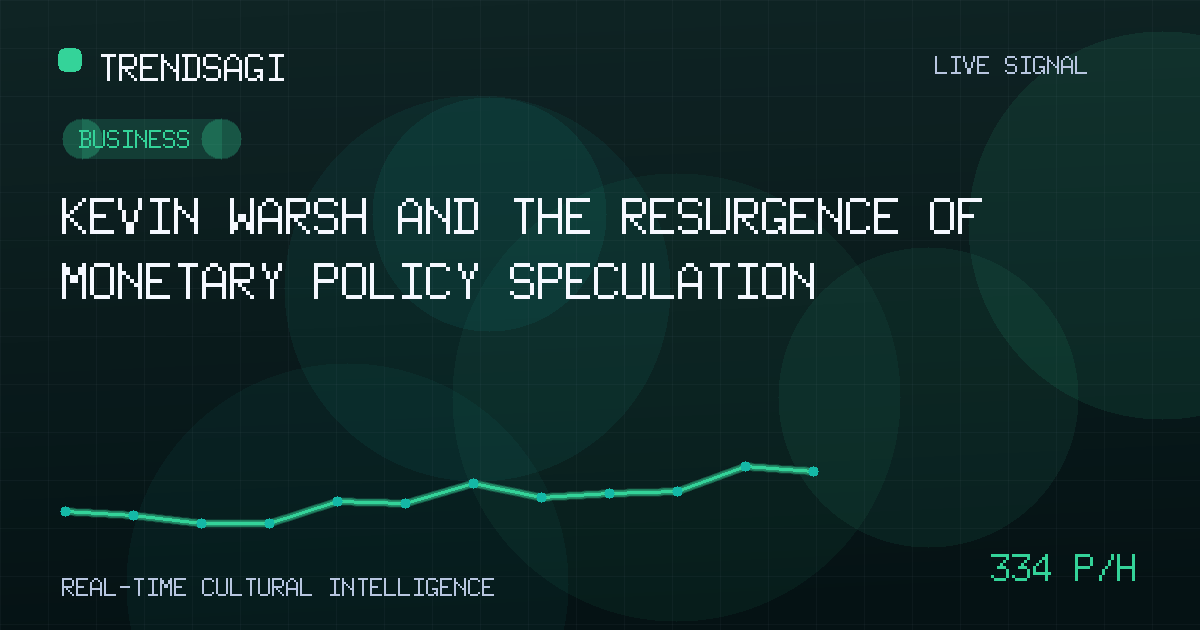
At the time of observation on 2026-09-17T01:41:30Z, the topic reached a measured snapshot rate of 334.0 posts/hour. This activity was captured within a 905-second window, reflecting a snapshot volume of 428 posts. The intensity of this conversation suggests a focused reaction from market participants and policy analysts rather than a broad consumer trend.
| Observation Time | Measured Posts/Hour | Snapshot Volume |
|---|---|---|
| 2026-09-17T01:41:30Z | 334.0 | 428 |
Why this topic may be moving
While the specific catalyst for this spike—such as an official nomination or a specific op-ed—cannot be definitively isolated from the raw signal alone, the historical context of Kevin Warsh’s name in the "Business" category points toward three likely scenarios. First, Warsh is a perennial favorite for the role of Federal Reserve Chair or Secretary of the Treasury during periods of administrative transition or policy pivots. Given the 2026 timeframe, discussions may be centered on the upcoming expiration of central bank terms or a perceived need for a "regime change" in monetary strategy.
Second, Warsh is an influential Fellow at the Hoover Institution and a frequent contributor to major financial publications like the Wall Street Journal. A measured rate of 334.0 posts/hour often follows a substantive public appearance where a figure of Warsh's stature challenges the status quo on interest rates or fiscal spending. His critiques tend to resonate with institutional investors who are wary of inflationary pressures or the long-term consequences of unconventional monetary policy.
Finally, the surge may be driven by algorithmic trading responses to political rumors. In high-frequency environments, the mention of "Warsh" often serves as a proxy for "tighter money." If rumors surfaced regarding his return to a policy-making role, it would trigger a cascade of discussion among bond traders and macro strategists preparing for a shift away from dovish interventions.
"The market tends to view Kevin Warsh not just as a policy expert, but as a symbolic counterweight to the prevailing trend of central bank expansion. His name surfacing usually coincides with a broader debate on whether the era of low-interest rates has finally met its match in fiscal reality."
Why it matters
For institutional investors and corporate leadership, the "Warsh" signal is a leading indicator of potential volatility in the fixed-income and currency markets. Because Warsh is associated with a more disciplined, market-oriented approach to central banking, his rising prominence in the news cycle can lead to a repricing of interest rate expectations. If the business community believes Warsh is gaining influence, we may see an immediate strengthening of the dollar and an upward move in Treasury yields.
Beyond immediate market moves, this signal matters for long-term strategic planning. A "Warshian" approach to the economy typically involves a reduction in the Federal Reserve's footprint in the mortgage-backed securities market and a more predictable, rule-based approach to rate hikes. For banks and mortgage lenders, this shift could signal an end to the era of hyper-liquidity, necessitating a change in how they manage their balance sheets and lending portfolios.
Furthermore, this trend highlights the ongoing tension between political administrations and the independence of the Federal Reserve. Warsh has often advocated for a central bank that stays within narrow bounds. If his views are gaining traction, it suggests that the business community is increasingly concerned about the blurring lines between fiscal policy (government spending) and monetary policy (money printing).
What to watch next
To determine if this spike in interest will translate into a sustained market trend or a formal policy shift, observers should monitor several key indicators:
- Congressional Calendars: Check for any upcoming hearings or informal briefings by the Senate Banking Committee that might include Warsh as a witness or mention him as a potential nominee.
- The "WSJ" Connection: Historically, Warsh uses major editorial pages to signal his policy stances. A new column or long-form interview would confirm the source of the recent social and business volume.
- Yield Curve Response: Watch the spread between 2-year and 10-year Treasuries. If the "Warsh" signal is credible, the market will likely begin pricing in a steeper path for rate hikes, leading to a shift in the curve.
- Official Denials: In the world of high-level appointments, a lack of a denial from the White House or Treasury department often serves as a soft confirmation that a candidate is under serious consideration.
Methodology and limitations
This report is based on a measured snapshot rate of 334.0 posts/hour, derived from 428 observed posts over a 905-second window on September 17, 2026. This data represents a specific moment in time and should be treated as a snapshot of velocity rather than a total count of all global conversations.
The signal establishes that the name "Warsh" is being discussed with high frequency in a business context, but it cannot verify the intent of every individual post. While historical patterns strongly link this name to Kevin Warsh and monetary policy, there is always a possibility of data noise if the name is shared by another public figure or a private entity experiencing a separate crisis. Analysts should use this signal as a prompt for deeper investigation into official financial news outlets and government registers to confirm the underlying catalyst.
Track This Topic for New Signals
Set alerts for future velocity or sentiment changes around this topic.
Explore Tracking PlansAbout TrendsAGI research
TrendsAGI's automated research pipeline publishes dated signal snapshots, methodology notes, and practical workflows for teams evaluating cultural momentum. Read how signals are scoped, scored, and limited in our research methodology.


