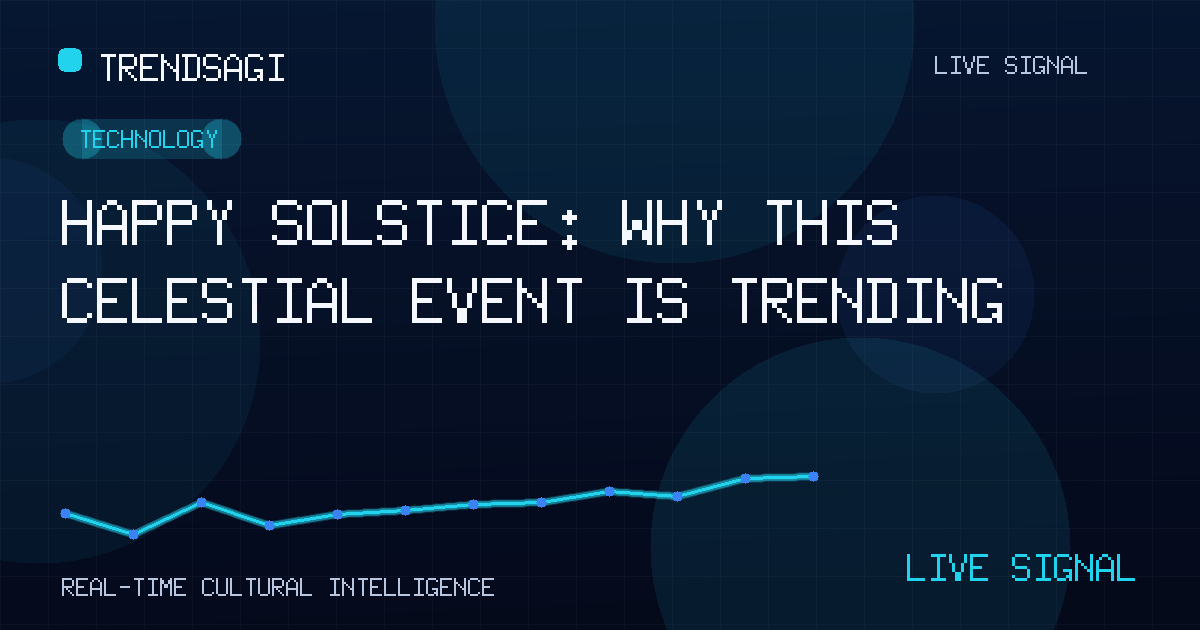
Happy Solstice: Why This Celestial Event Is Trending
The summer solstice is trending with 16,100 mentions and 1,419.5 posts/hour as people worldwide celebrate the longest day of the year with traditions, photos, a
Automated briefing. Generated from stored signal measurements and source-backed research; it is not manually reviewed. Read the methodology and limitations.
Metrics in this briefing are a snapshot associated with its publication date and may not reflect current conditions.
TL;DR
- The summer solstice is trending with 16,100 mentions and 1,419.5 posts/hour
- People are celebrating the longest day of the year in the Northern Hemisphere
- Social media is filled with solstice traditions, sunrise photos, and astronomical facts
- Google searches for "summer solstice 2025" have spiked dramatically
- Many cultures mark this day with festivals, rituals, and outdoor gatherings
The Celestial Event Capturing Global Attention
The summer solstice has taken over social media feeds worldwide. With 16,100 mentions and a velocity of 1,419.5 posts per hour, this astronomical phenomenon has become a trending topic across multiple platforms.
Today marks the official beginning of summer in the Northern Hemisphere. The Earth's axial tilt positions the North Pole at its maximum angle toward the sun, creating the longest period of daylight for the year.
Why People Are Celebrating
Social media users are sharing photos of early sunrises and extended golden hour lighting. Many are documenting their solstice traditions, from sunrise yoga sessions to evening bonfires.
Cultural celebrations are particularly prominent today. Stonehenge gatherings, Swedish Midsummer festivals, and various pagan rituals are being documented and shared online. The hashtag #HappySolstice has become a digital meeting place for celebrants worldwide.
The Science Behind the Trend
Astronomical curiosity drives much of the online conversation. People are sharing facts about the Earth's 23. 5-degree axial tilt and how it creates this seasonal phenomenon.
Google Trends data shows a significant spike in searches for "summer solstice 2025," "longest day of the year," and "when is the solstice." Educational content about the astronomical mechanics is performing particularly well on platforms like TikTok and Instagram.
The summer solstice represents humanity's oldest connection to celestial cycles, marking time through the sun's journey across our sky.
Global Variations in Celebration
While Northern Hemisphere countries celebrate the start of summer, Southern Hemisphere nations are marking their winter solstice. This creates an interesting duality in global conversations, with users sharing contrasting seasonal experiences.
Time zone differences mean the trending topic has maintained momentum for over 24 hours as different regions experience their solstice moment. From Alaska's midnight sun to Australia's shortest day, the global conversation continues to evolve.
Why This Matters Now
The solstice trend reflects our collective desire to connect with natural cycles in an increasingly digital world. As people seek meaning and connection, these astronomical milestones provide a universal reference point that transcends cultural boundaries.
Social media has transformed how we experience and share these ancient observations. What was once marked by local communities is now a global celebration, with millions sharing their experiences in real-time across digital platforms.
Track This Topic for New Signals
Set alerts for future velocity or sentiment changes around this topic.
Explore Tracking PlansAbout TrendsAGI research
TrendsAGI's automated research pipeline publishes dated signal snapshots, methodology notes, and practical workflows for teams evaluating cultural momentum. Read how signals are scoped, scored, and limited in our research methodology.