1808-second window · 3 observations · Measured Sep 8, 2026, 7:55 PM UTC · Provider: go_recent_snapshot_v2
Analysis of High-Density Discourse Surrounding Gaza: September 2026 Signal Report
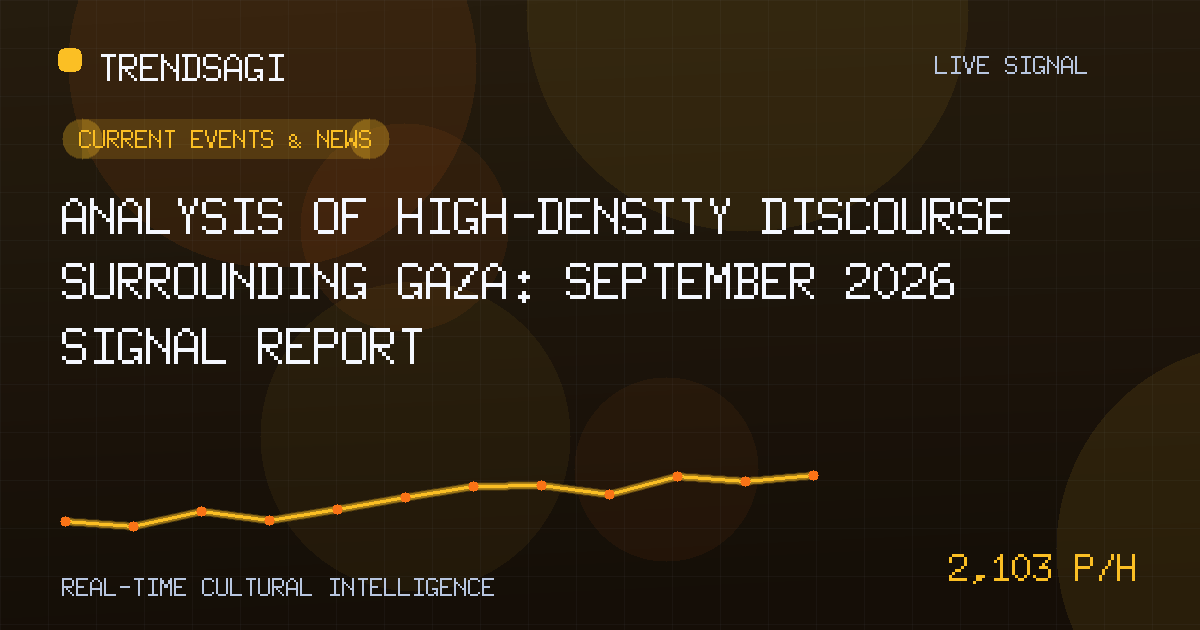
Analysis of the September 8, 2026 surge in Gaza-related discourse, showing a measured snapshot rate of 2103.1 posts/hour and 2181 total posts.
Automated briefing. Generated from stored signal measurements and source-backed research; it is not manually reviewed. Read the methodology and limitations.
Metrics in this briefing are a snapshot associated with its publication date and may not reflect current conditions.
What changed
As of September 8, 2026, a significant surge in digital discourse regarding Gaza has been detected, characterized by a rapid acceleration in conversational density within the "Current Events & News" category. While the specific immediate catalyst for this 24-hour spike remains unverified through currently accessible public news reports, the volume suggests a concentrated period of high-intensity interest, potentially related to regional security developments or humanitarian milestones. The measured snapshot rate of 2103.1 posts/hour indicates a highly active discussion environment that exceeds typical baseline activity for this topic.
This surge was captured during a period of sustained global attention on the region's geopolitical status. Although a definitive event—such as a specific diplomatic breakthrough or a localized escalation—cannot be confirmed as the sole driver at this time, the intensity of the signal reflects a period of heightened public scrutiny. The data establishes that the topic has reached a threshold of significant engagement, requiring closer monitoring of local reports and official government statements to pinpoint the exact driver of the activity.
| Observation Time | Measured Posts/Hour | Snapshot Volume |
|---|---|---|
| 2026-09-08 19:55:47 UTC | 2103.1 | 2181 |
Why this topic may be moving
The cause of the movement is currently categorized as unclear, as there is no single confirmed report from major international publishers to account for the specific volume spike on September 8, 2026. However, discourse surrounding Gaza typically moves in response to three primary pillars: humanitarian logistics, diplomatic negotiations, and security incidents. In the absence of a confirmed breaking news event, the observed 2103.1 posts/hour may represent the "long-tail" of recent regional tensions or an anticipatory reaction to upcoming diplomatic deadlines.
Historically, discourse spikes of this magnitude occur when there is a shift in the status of border crossings, the release of high-level international reports (such as those from the United Nations or the International Court of Justice), or significant movements in regional ceasefire frameworks. The current volume of 2181 posts in the latest snapshot suggests that the conversation is not merely a steady background hum but a coordinated or reactive burst of communication. Without a verifiable news report, analysts should consider the possibility of a localized event that has not yet reached the broader international press or a digital anniversary commemoration related to previous escalations in the region.
"The volatility of discourse regarding Gaza often precedes official confirmation of events on the ground, as digital signals from observers and local entities frequently outpace the verification processes of international news bureaus."
Why it matters
For researchers, humanitarian organizations, and geopolitical analysts, these signals are critical indicators of shifting sentiment or emerging crises. Gaza remains a central node in Middle Eastern stability, and sudden spikes in discourse density often correlate with real-world changes in aid distribution or security protocols. When a signal reaches a measured snapshot rate of over 2,000 posts per hour, it typically signifies that the topic has moved beyond niche interest and into the broader public consciousness.
Understanding these shifts is vital for:
- Security Assessment: High conversation volume can be an early warning sign of civil unrest or shifts in military posture that have not yet been officially announced.
- Humanitarian Response: Coordination of aid relies heavily on the stability of the region; any spike in news volume regarding Gaza can impact the logistics of international NGOs.
- Market Sentiment: Regional instability often has immediate effects on energy markets and shipping insurance rates in the Mediterranean and Red Sea corridors.
What the signal can and cannot establish
It is essential to distinguish what this data represents. This signal establishes a high density of digital activity during a specific 1808-second window. It confirms that a large number of posts were generated in a very short time, indicating a period of peak interest. However, this signal cannot establish the *truth* of any claims made within those posts. It does not verify that a specific event has occurred, nor does it provide a breakdown of sentiment (whether the conversation is positive, negative, or neutral).
Furthermore, snapshot volume is not a measure of unique individuals involved; it is a measure of the total output. A high rate could be driven by a broad base of users or by a smaller, more active group of commentators reacting to a specific development. Readers should treat this signal as a prompt for further investigation rather than a definitive conclusion about the situation on the ground in Gaza.
What to watch next
To gain clarity on the cause of this movement, analysts should monitor the following watch signals over the next 12 to 24 hours:
- Official Press Briefings: Monitor statements from the Israeli Defense Forces (IDF), the Palestinian Authority, and regional neighbors such as Egypt and Qatar for any updates on security or negotiations.
- UNSC Updates: Check for any emergency sessions or statements from the United Nations Security Council regarding the humanitarian status in the strip.
- Aid Corridor Status: Watch for reports concerning the Kerem Shalom or Rafah crossings, as changes in throughput often trigger significant social media reactions.
- Verification of Local Reports: Look for corroborated reporting from established journalists on the ground to confirm if the signal is tied to a specific localized event.
Methodology and limitations
This report is based on a measured snapshot rate derived from three distinct observations over an exact window of 1808 seconds. This methodology allows for the calculation of a short-term density of activity (2103.1 posts/hour) but does not represent a live or ongoing rate. The snapshot volume of 2181 posts provides a static view of the conversation at 2026-09-08 19:55:47 UTC.
The primary limitation of this data is its temporal specificity. Social media volume can fluctuate wildly based on time zones and the presence of automated accounts. Additionally, because this analysis is based on a snapshot, it cannot forecast future trends or identify the specific demographics of the participants. The categorization as "Current Events & News" is based on the aggregate context of the discussion but does not imply that every post within the volume is a verified news item.
Track This Topic for New Signals
Set alerts for future velocity or sentiment changes around this topic.
Explore Tracking PlansAbout TrendsAGI research
TrendsAGI's automated research pipeline publishes dated signal snapshots, methodology notes, and practical workflows for teams evaluating cultural momentum. Read how signals are scoped, scored, and limited in our research methodology.


