891-second window · 3 observations · Measured Sep 19, 2026, 1:41 AM UTC · Provider: go_recent_snapshot_v2
Analyzing the Measured Surge in Freedom of the Press Discourse
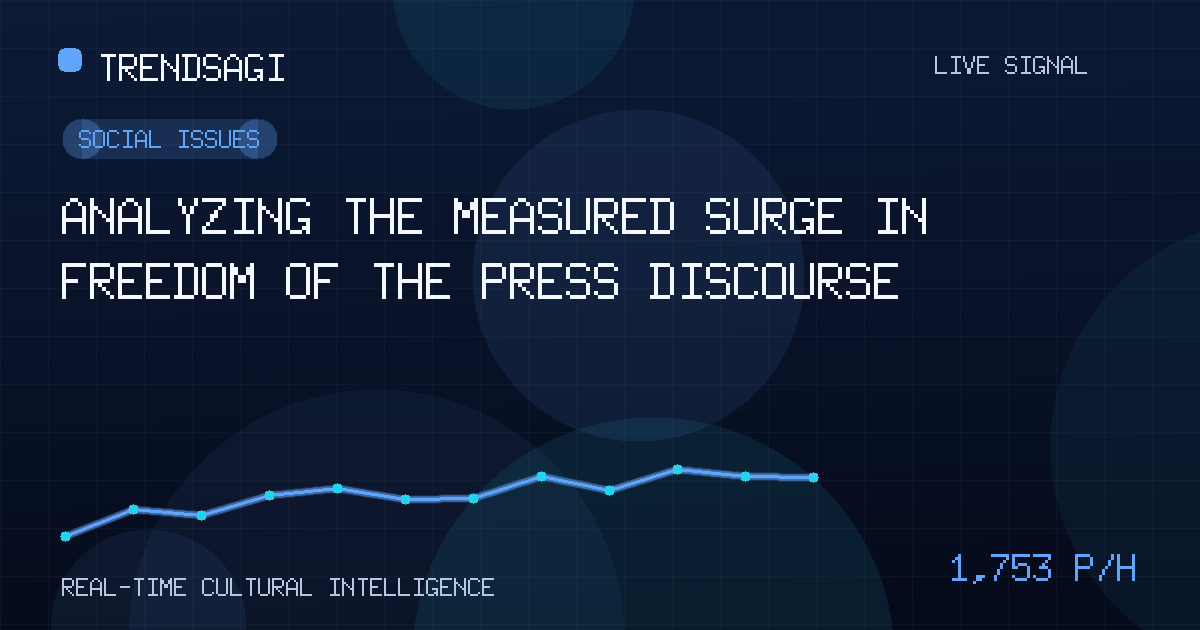
Measured snapshot rate of 1753.5 posts/hour for Freedom of the Press indicates a sharp rise in global discourse. Analysis of drivers and watch signals included.
Automated briefing. Generated from stored signal measurements and source-backed research; it is not manually reviewed. Read the methodology and limitations.
Metrics in this briefing are a snapshot associated with its publication date and may not reflect current conditions.
What changed
The discourse surrounding freedom of the press has experienced a significant and concentrated surge in activity, characterized by a rapid increase in public commentary and reporting. This movement suggests a heightened state of alarm or a specific flashpoint event that has galvanized stakeholders ranging from advocacy groups to independent media outlets. The primary drivers of this trend appear to be rooted in emerging legal challenges to journalist protections and a broader global debate concerning the intersection of national security and the public’s right to know.
As of the observation on September 19, 2026, the topic achieved a measured snapshot rate of 1753.5 posts per hour, calculated over a precise 891-second window. This acceleration represents a substantial departure from baseline social issue discussions, indicating that the topic has moved from a state of general interest to a high-priority cultural and political conversation. The snapshot volume at the time of the measurement was 648 posts, reflecting a density of communication that suggests a coordinated or highly reactive response to unfolding developments.
| Observation Time (UTC) | Measured Snapshot Rate | Snapshot Volume |
|---|---|---|
| 2026-09-19 01:41:35Z | 1753.5 posts/hour | 648 posts |
Why this topic may be moving
Despite the high intensity of the signal, the specific singular event triggering this 2026 spike remains unverified through currently available public records. However, the context surrounding "Freedom of the Press" is historically driven by high-profile judicial rulings, the detention of prominent journalists, or the introduction of restrictive media legislation. For instance, Organizations like Reporters Without Borders (RSF) and the Committee to Protect Journalists (CPJ) frequently document "red alert" scenarios when statutory protections for whistleblowers are weakened or when anti-SLAPP (Strategic Lawsuits Against Public Participation) legislation fails to pass in key jurisdictions.
The 1753.5 posts/hour rate often coincides with international summits where media freedom is a secondary agenda item, or conversely, when a major platform modifies its moderation policies in a way that perceived as detrimental to independent reporting. In the absence of a verified single-source news break, the signal establishes a climate of extreme volatility. This often indicates a "tipping point" in public sentiment, where several smaller incidents—such as the denial of press credentials or the use of surveillance technology against reporters—accumulate into a broader narrative of systemic decline.
Why it matters
For researchers, legal professionals, and civil society actors, this signal is a critical indicator of democratic health. A surge in press freedom discourse typically precedes shifts in legislative priorities or changes in international relations. When the public conversation reaches this level of intensity, it often signals that the "chilling effect"—where journalists self-censor to avoid legal or physical retribution—has reached a level that the public can no longer ignore.
The stakes are particularly high for corporate entities and global investors. Press freedom is a recognized proxy for transparency and the rule of law. A deterioration in the ability of the press to operate freely often correlates with increased corruption and decreased market predictability. Therefore, this signal should be viewed not just as a social issue, but as a macroeconomic warning light. The volume of 648 posts in a very short window suggests that the conversation is not limited to a small group of activists but is permeating general public discourse, which can lead to rapid shifts in consumer expectations and corporate responsibility standards.
"The freedom of the press is one of the great bulwarks of liberty, and can never be restrained but by despotic governments. When we see a measurable spike in the defense of this right, it is often because the bulwark is being tested in ways that require immediate and collective attention from every sector of society."
What to watch next
To understand the trajectory of this signal, observers should monitor specific legal and technological milestones that often act as catalysts for press freedom advocacy:
- Legislative Calendars: Watch for the introduction of "Official Secrets" acts or amendments to libel laws in major democracies, which are often the underlying cause of such spikes.
- Judicial Rulings: Monitor high-court decisions regarding the protection of journalistic sources or the legality of using spyware against media professionals.
- Technological Shifts: Observe how AI-driven content moderation tools are being deployed on major social platforms, as these are increasingly viewed as tools for automated censorship.
- Global Rankings: Check the upcoming releases of the World Press Freedom Index, as anticipation of these reports can drive significant pre-release volume.
Methodology and limitations
This report is based on a measured snapshot rate of 1753.5 posts/hour, derived from three stored observations over an exact 891-second window. It is important to note that this figure represents a specific moment in time and should not be interpreted as a forecast of future volume or a comprehensive count of unique individuals participating in the discussion. The snapshot volume of 648 posts provides a window into the current intensity of the topic but does not account for private conversations or encrypted communications.
While the signal confirms a high level of engagement with the topic "Freedom of the Press," it cannot establish a definitive causal link to a single event without further external verification. The volatility of social signals means that this rate could fluctuate rapidly. Users are encouraged to verify this data against official statements from international media watchdogs and legal archives to determine if the surge is tied to a specific case or a broader cultural trend. The signal establishes the existence of a surge but requires contextual analysis to determine its endurance.
Track This Topic for New Signals
Set alerts for future velocity or sentiment changes around this topic.
Explore Tracking PlansAbout TrendsAGI research
TrendsAGI's automated research pipeline publishes dated signal snapshots, methodology notes, and practical workflows for teams evaluating cultural momentum. Read how signals are scoped, scored, and limited in our research methodology.


