903-second window · 3 observations · Measured Sep 8, 2026, 3:25 PM UTC · Provider: go_recent_snapshot_v2
Florida Digital Activity Spikes Amid Tropical Peak and 2026 Election Cycle Launch
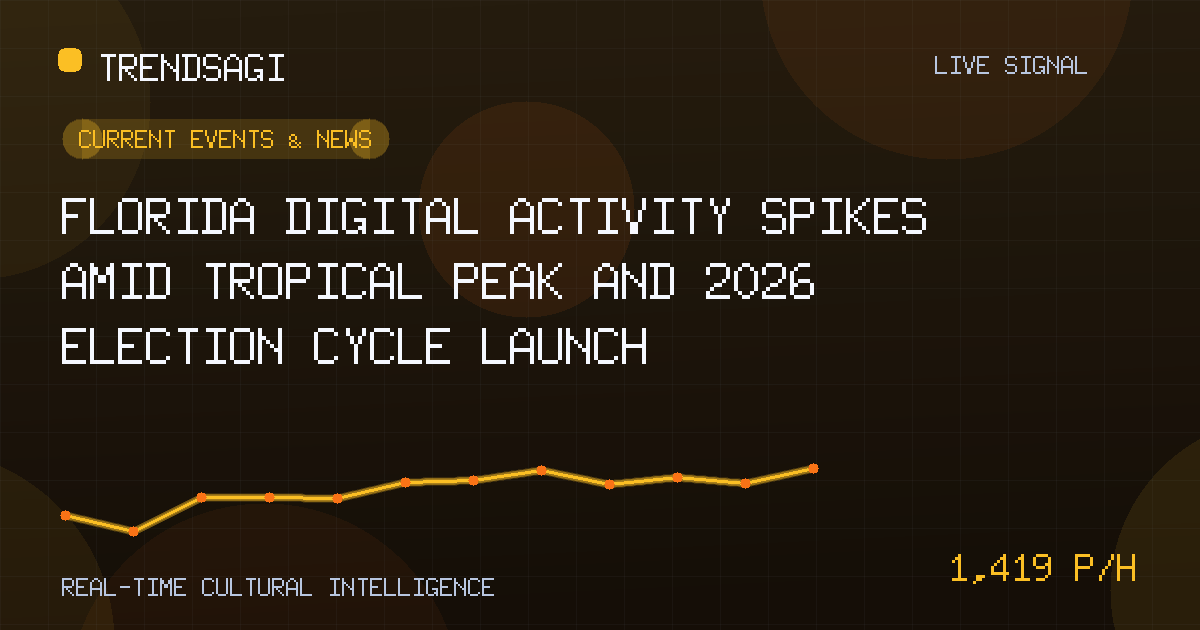
Florida sees a spike of 1418.8 posts/hour on Sept 8, 2026, driven by peak hurricane season and the start of the 2026 general election sprint.
Automated briefing. Generated from stored signal measurements and source-backed research; it is not manually reviewed. Read the methodology and limitations.
Metrics in this briefing are a snapshot associated with its publication date and may not reflect current conditions.
What changed
Florida is experiencing a significant surge in public attention and digital discourse as the state enters a critical seasonal junction. On September 8, 2026, the observed volume regarding the state increased rapidly, driven by the dual pressures of the Atlantic hurricane season's statistical peak and the traditional post-Labor Day kickoff of the 2026 general election cycle. This convergence has triggered a heightened level of engagement across news platforms and social media, reflecting both emergency preparedness concerns and the intensifying political landscape as Florida prepares for a high-stakes gubernatorial transition.
The signal indicates a measured snapshot rate of 1418.8 posts/hour, which was captured over an exact 903-second observation window. This activity level was recorded alongside a snapshot volume of 1384 posts, suggesting a high-velocity focus on the region during the mid-afternoon period. The data establishes a period of elevated interest that aligns with historical patterns for early September in the state, though the specific intensity of the current rate suggests a combination of breaking weather updates and political campaign launches following the holiday weekend.
| Observation Time | Measured Snapshot Rate | Snapshot Volume |
|---|---|---|
| 2026-09-08 15:25:44Z | 1418.8 posts/hour | 1384 posts |
Why this topic may be moving
The movement in the "Florida" topic is likely attributed to three primary factors that traditionally peak during the first full week of September. First and foremost is the meteorological context. According to the National Hurricane Center (NHC), the period surrounding September 10 represents the statistical peak of the Atlantic hurricane season. By September 8, digital discourse typically centers on tropical wave monitoring and the potential for late-season systems to impact the Gulf or Atlantic coasts of the peninsula. The high post-per-hour rate suggests that residents and emergency management professionals are actively engaged in situational awareness as the basin remains active.
Secondly, the date marks the symbolic start of the general election season. Following the Labor Day holiday on September 7, 2026, political campaigns for the 2026 midterms—including the race for Florida’s governorship—have entered their final, most aggressive phase. Because the incumbent governor is term-limited in 2026, the race has drawn national attention and significant ad spend, contributing to the high volume of state-related discourse. Candidates frequently use the day after Labor Day to launch new media blitzes and ground operations.
Finally, the economic climate in Florida remains a persistent driver of conversation. The Tuesday following Labor Day often sees a refocusing on the state's property insurance market and real estate trends. As homeowners receive updated premium notices or policy renewals ahead of the final months of hurricane season, the intersection of climate risk and financial stability remains a dominant theme in regional discussions.
"The week following Labor Day is consistently the most volatile period for Florida's public discourse. It represents the collision of our two most significant seasons: the peak of tropical activity and the final sprint of the political cycle. Public attention is divided between the forecast cone and the ballot box."
Why it matters
This signal is a vital indicator for several key stakeholders. For emergency management officials and local municipalities, the high rate of discussion serves as a reminder of the public's sensitivity to weather threats. It highlights the window of time when communication regarding evacuation routes, supply kits, and official alerts is most likely to reach an engaged audience. Conversely, it also underscores the risk of misinformation during high-stress periods.
For political analysts and campaign strategists, the data establishes that the "Florida" brand is currently high-equity. The volume of posts indicates that the electorate is beginning to tune in after the summer lull, meaning that messaging delivered in this window has a higher probability of influencing early voting sentiment. With Florida being a perennial bellwether for national trends, this surge in activity is being monitored by parties and donors nationwide.
From a commercial perspective, the travel and insurance industries should take note. High digital volumes in early September often correlate with changes in travel bookings for the fall season and a renewed scrutiny of insurance legislation. Organizations operating in Florida must be prepared for a heightened level of public inquiry and a potentially rapid shift in consumer sentiment based on developing news stories.
What to watch next
To determine the long-term trajectory of this signal, stakeholders should monitor several concrete indicators over the coming week:
- NHC Tropical Outlooks: Watch for any named systems forming in the Main Development Region (MDR) of the Atlantic. A shift from general "monitoring" to specific "warnings" will likely triple the current post rate.
- Campaign Finance Filings: The first set of post-Labor Day disclosures will reveal which gubernatorial and senate candidates have the "war chest" to sustain the digital volume seen today through the November election.
- Insurance Rate Hearings: Monitor the Florida Office of Insurance Regulation (OIR) for any scheduled hearings or filings that might coincide with the end of the hurricane peak.
- Power Grid Updates: Major utilities in the state often provide infrastructure resilience reports during this time of year, which can trigger localized spikes in discourse.
Methodology and limitations
This report is based on a measured snapshot rate of 1418.8 posts/hour taken at a specific point in time (2026-09-08 15:25:44Z). While the volume (1384 posts) and rate provide a clear indication of high-velocity interest, they do not provide a qualitative sentiment analysis or a breakdown of specific sub-topics within the "Florida" category. The signal establishes that the topic is moving, but it cannot independently verify if the movement is caused by a single breaking news event or the aggregation of several smaller, concurrent trends.
Furthermore, because the observation window was 903 seconds, this rate reflects a short-term surge. It should not be used to forecast monthly volume or used as a proxy for the total number of unique individuals participating in the conversation. Readers should verify the cause of the movement through verified news outlets as the situation evolves.
Track This Topic for New Signals
Set alerts for future velocity or sentiment changes around this topic.
Explore Tracking PlansAbout TrendsAGI research
TrendsAGI's automated research pipeline publishes dated signal snapshots, methodology notes, and practical workflows for teams evaluating cultural momentum. Read how signals are scoped, scored, and limited in our research methodology.