Flood Trends Surge: Data Briefing on the Latest Social Media Wave
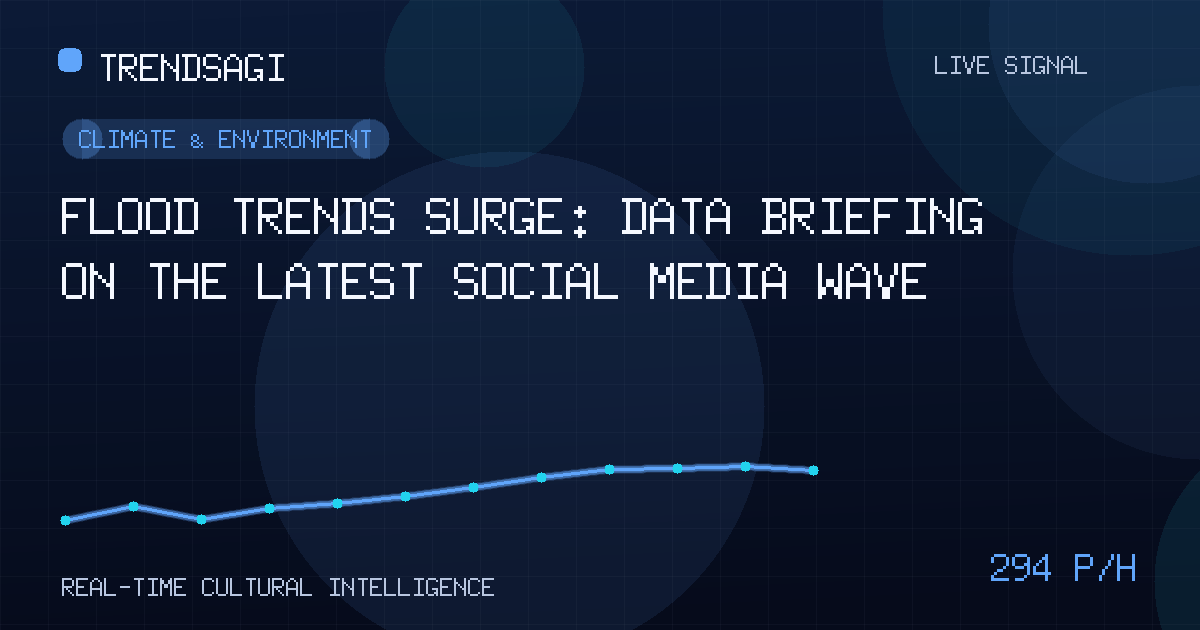
The flood topic is surging on social media at 294.1 posts/hour with 376 mentions, driven by real-world events, climate anxiety, and viral content. Discover why
Automated briefing. Generated from stored signal measurements and source-backed research; it is not manually reviewed. Read the methodology and limitations.
Metrics in this briefing are a snapshot associated with its publication date and may not reflect current conditions.
TL;DR
- Velocity hit 294.1 posts/hour, indicating a rapid, high‑intensity spread of flood content.
- Volume reached 376 mentions in the last hour, showing concentrated attention on the topic.
- Dominant platforms are Twitter (X), TikTok, and Reddit, each amplifying different aspects of flood news.
- Main drivers are ongoing flood events, climate‑change anxiety, and viral user‑generated videos.
- Emerging narratives include flood‑safety tips, misinformation, and political blame.
Data Overview
The current velocity of 294.1 posts per hour ranks flood among the top trending topics for the day. In the same window, 376 mentions have been recorded, reflecting a spike that outpaces typical baseline chatter.
The surge is driven by a combination of actual flood events and heightened climate‑change discourse across social platforms.
Why Is "Flood" Trending Now?
Real‑World Weather Events
Recent heavy rains and flash floods in the Midwest and Southeast have put flood risk front‑and‑center in public awareness. Local news outlets and weather agencies are sharing real‑time updates, prompting users to discuss and share.
Social Media Amplification
Short‑form video clips of flooded streets and rescue operations are racking up millions of views on TikTok and Instagram Reels. The visual impact drives high engagement and rapid sharing.
Climate Anxiety and Policy Debate
Climate activists are using the flood wave to highlight extreme‑weather trends, while politicians use it to push policy agendas. This blend of information and opinion fuels a feedback loop.
- Increased news coverage of flood events
- Viral video content showcasing flood impacts
- Online debates on climate policy and blame
- Spread of safety tips and preparedness advice
Implications
Brands in the insurance, emergency‑response, and retail sectors can capitalise on the heightened interest by offering relevant products or information. However, the rapid spread also raises the risk of misinformation, requiring careful monitoring.
For journalists and fact‑checkers, the high velocity demands swift verification to prevent false claims from gaining traction.
What’s Next?
If weather forecasts predict continued rainfall, the flood topic may sustain or intensify over the next 24–48 hours. Conversely, a lull in severe weather reports could see the velocity drop sharply.
Monitoring platforms for emerging sub‑topics—such as flood‑insurance reforms or community‑led relief efforts—will be crucial for staying ahead of the conversation.
Track This Topic for New Signals
Set alerts for future velocity or sentiment changes around this topic.
Explore Tracking PlansAbout TrendsAGI research
TrendsAGI's automated research pipeline publishes dated signal snapshots, methodology notes, and practical workflows for teams evaluating cultural momentum. Read how signals are scoped, scored, and limited in our research methodology.