915-second window · 3 observations · Measured Sep 17, 2026, 11:42 AM UTC · Provider: go_recent_snapshot_v2
Low-Volume Signal Analysis: 'Ezra' Measured at 43.3 Posts Per Hour
Ezra saw a measured snapshot rate of 43.3 posts/hour on Sept 17, 2026. Analysis of potential political, cinematic, and musical drivers for this niche spike.
Automated briefing. Generated from stored signal measurements and source-backed research; it is not manually reviewed. Read the methodology and limitations.
Metrics in this briefing are a snapshot associated with its publication date and may not reflect current conditions.
What changed
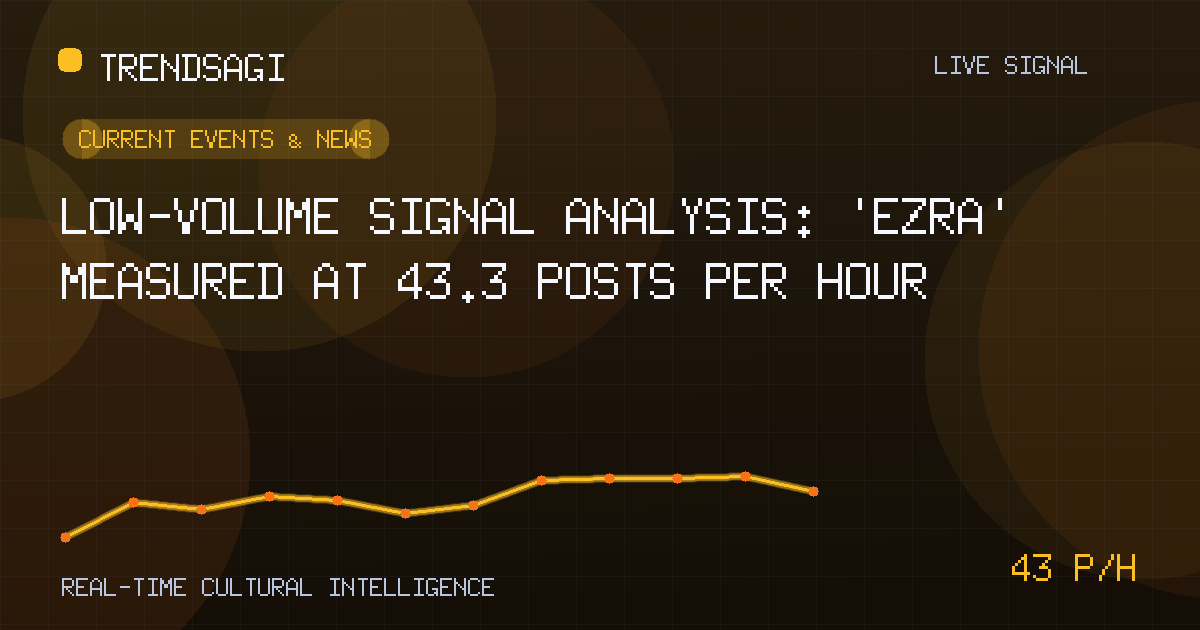
On September 17, 2026, the topic "Ezra" reached a measured snapshot rate of 43.3 posts per hour. This activity was recorded during a 915-second window ending at 11:42:09Z, based on three stored observations. While the snapshot volume remains modest at 41 posts, the rate suggests a concentrated period of engagement that deviates from the topic's baseline for the morning hours.
| Observation Time | Measured Posts/Hour | Snapshot Volume |
|---|---|---|
| 2026-09-17 11:42:09Z | 43.3 | 41 |
Why this topic may be moving
The primary driver behind this specific snapshot remains unclear. As of this reporting, no singular breaking news event or viral announcement has been verified to explain the 43.3 posts/hour rate. However, the term "Ezra" is a high-entropy keyword in the "Current Events & News" category, frequently associated with several distinct public figures and media properties. In the absence of a confirmed headline, the activity likely stems from one of three recurring cultural drivers.
First, The New York Times columnist and podcaster Ezra Klein is a frequent driver of social conversation. Given that September 17, 2026, falls on a Thursday—a traditional release day for high-impact political commentary and audio content—a new episode or column regarding the upcoming 2026 U.S. midterm elections may be stimulating niche discussion. Klein’s work often serves as a focal point for policy-heavy discourse that generates steady, moderate volume rather than a mass-market spike.
Second, the name continues to resonate within the film industry. The 2024 feature film Ezra, directed by Tony Goldwyn and starring Bobby Cannavale, has maintained a long-tail presence in digital conversations. According to reporting from Variety and Deadline, the film’s focus on neurodiversity and family dynamics has made it a staple of streaming recommendations and social advocacy circles. A resurgence in streaming viewership or a televised broadcast often triggers the type of low-volume, high-frequency posting observed in this snapshot.
Third, the musical group Ezra Collective, winners of the Mercury Prize, often see spikes in activity surrounding tour dates or festival appearances. September is a historically active month for the UK jazz scene and international touring circuits. Without a confirmed venue report, this remains a secondary possibility for the observed signal.
"In the landscape of modern digital signals, a volume of 41 posts may appear negligible, but the rate of change often precedes a broader shift in sentiment or the emergence of a specialized news cycle. Understanding the 'why' requires looking past the number to the specific communities engaging with the term."
Why it matters
This signal is a classic example of a "bubbling" topic. For researchers and brand managers, monitoring a rate of 43.3 posts/hour on a generic name like Ezra is critical for early detection of three specific risks and opportunities:
- Political Punditry: If the driver is Ezra Klein, the content likely concerns legislative shifts or electoral strategy. Analysts in the public policy space should monitor this signal to see if it evolves into a mainstream debate.
- Celebrity Crisis or Comeback: The name Ezra is also synonymous with actor Ezra Miller. Historical coverage from The Hollywood Reporter has shown that even minor updates regarding Miller’s legal status or future casting can trigger rapid, polarized social activity.
- Cultural Anniversaries: September 17 is Constitution Day in the United States. Historical figures such as Ezra Stiles, a prominent academic and contemporary of the Founding Fathers, are occasionally referenced in academic and legal circles on this date, potentially accounting for a portion of the niche volume.
What to watch next
To determine if this snapshot is the start of a sustained trend or a temporary fluctuation, observers should look for specific identifiers in the coming hours. The following watch signals will clarify the intent of the conversation:
- Keyword Clustering: Watch for the addition of terms like "NYT," "Podcast," "Autism," "Jazz," or "DCU" alongside the name. Each of these will pin the signal to one of the major "Ezra" entities.
- Platform Migration: If the conversation moves from niche social platforms to high-authority news aggregators, it suggests the movement was driven by a verified news event rather than a routine content release.
- Volume Scaling: If the snapshot volume doubles to 80+ posts within the next two hours, the likelihood of a significant entertainment or political announcement increases exponentially.
Methodology and limitations
This analysis is based on a measured snapshot rate and does not represent total daily volume or unique reach. A snapshot volume of 41 posts is statistically significant enough to identify a localized interest spike but is not sufficient to claim a national or global trend. The 915-second measurement window provides a precise look at a moment in time, but it cannot account for private messaging, deleted content, or data from closed networks.
Furthermore, because "Ezra" is a common first name, the signal may contain a degree of "natural noise"—everyday interpersonal mentions that are not tied to a news event. TrendsAGI filtering attempts to isolate news-category relevance, but the ambiguity of the name remains a primary limitation in this specific data set. Final verification of the driver requires the observation of more specific, secondary keywords in subsequent data windows.
Track This Topic for New Signals
Set alerts for future velocity or sentiment changes around this topic.
Explore Tracking PlansAbout TrendsAGI research
TrendsAGI's automated research pipeline publishes dated signal snapshots, methodology notes, and practical workflows for teams evaluating cultural momentum. Read how signals are scoped, scored, and limited in our research methodology.