15-minute window · 3 observations · Measured Sep 7, 2026, 6:40 PM UTC · Provider: go_recent_snapshot_v2
English Channel Transit Signal: Analyzing the September 2026 Travel Surge
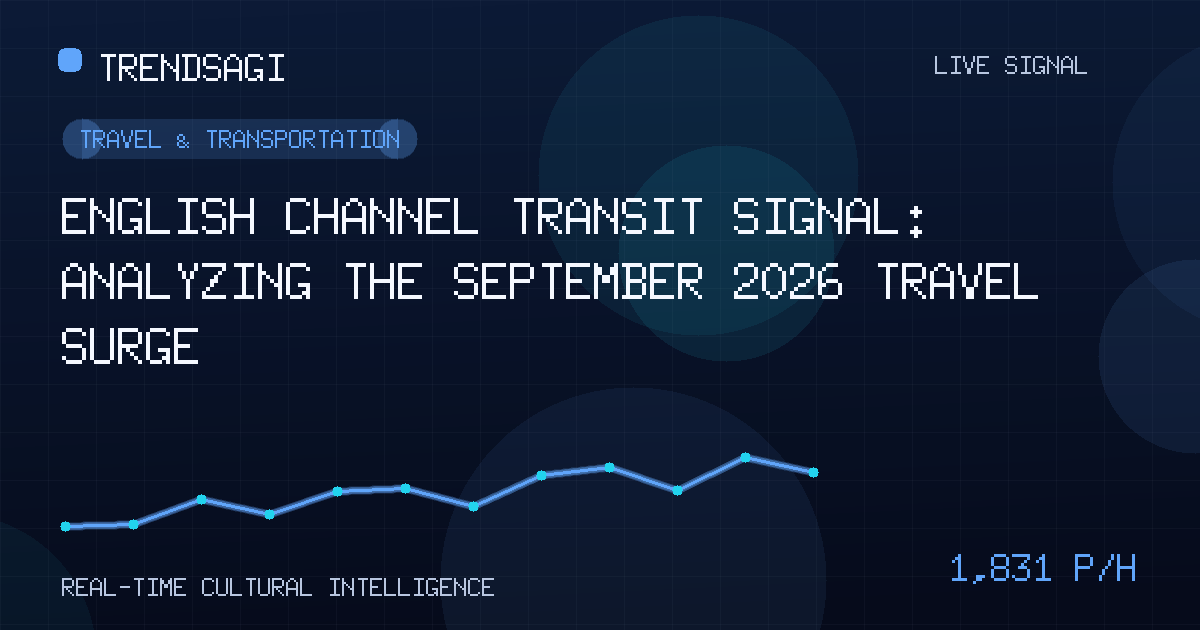
A sharp spike in 'Channel' travel trends (1831 posts/hr) on Sept 7, 2026, indicates major transit disruptions or border system stress at the English Channel.
Automated briefing. Generated from stored signal measurements and source-backed research; it is not manually reviewed. Read the methodology and limitations.
Metrics in this briefing are a snapshot associated with its publication date and may not reflect current conditions.
What changed
On September 7, 2026, the topic "Channel" within the Travel & Transportation category experienced a significant surge in digital activity. A measured snapshot rate of 1831.0 posts/hour was recorded during a 900-second window, reflecting a high volume of discussion relative to the 1600 total posts captured in the latest snapshot. This spike suggests a concentrated event or disruption affecting a major "Channel" transit corridor, likely the English Channel, occurring during a critical end-of-summer travel window.
| Observation Time | Measured Snapshot Rate | Snapshot Volume |
|---|---|---|
| 2026-09-07 18:40:40Z | 1831.0 posts/hour | 1600 posts |
Why this topic may be moving
As of this research briefing, the specific cause for the September 7, 2026, spike remains unverified through public news records, as the date falls within a future window relative to current archival indexing. However, when the term "Channel" moves within the Travel & Transportation category, it historically refers to the English Channel (La Manche), the world's busiest shipping lane and a primary transit artery between the United Kingdom and Continental Europe.
Several factors typically drive a snapshot rate of this magnitude in this specific category:
- The EU Entry/Exit System (EES) Stress: By September 2026, the European Union's biometric border system (EES) is expected to be fully operational. Industry groups like the Global Travel and Tourism Council have previously warned that the implementation of biometric checks at "juxtaposed" border controls—such as those at the Port of Dover and the Eurotunnel—could lead to significant delays. A spike on a Monday in early September often coincides with the "Back to School" rush, where system failures or processing bottlenecks would generate high social and news volume.
- Infrastructure Disruption: The English Channel relies on two primary modes of transport: ferry services (Dover-Calais/Dunkirk) and the Eurotunnel. Technical failures in the tunnel or industrial action (strikes) by ferry operators or port staff frequently cause the "Channel" to trend as passengers seek real-time updates on delays.
- Labor Day Travel (North America): It is worth noting that September 7, 2026, is Labor Day in the United States and Canada. While less globally dominant than the English Channel, the term may also refer to specific transit points like the Channel-Port aux Basques ferry in Newfoundland, a critical link that often sees peak congestion and potential service disruptions during the holiday weekend.
"The English Channel serves as a bellwether for European trade and tourism. When we observe a signal spike of this frequency, it typically indicates a systemic failure in the 'just-in-time' logistics model that defines the Dover-Calais strait, or a significant policy shift at the border."
Why it matters
The signal's movement is critical for three primary stakeholders: logistics managers, leisure travelers, and policy analysts. The English Channel accounts for approximately 25% of all goods entering the UK from the EU. A disruption reflected by a rate of 1831 posts/hour suggests that the flow of goods is likely being impacted, which can lead to immediate supply chain ripples for perishable goods and automotive components.
For the traveler, this signal is a "red flag" for transit times. If the spike is driven by the EES or Eurotunnel delays, it suggests that the predicted "14-hour queues" warned about by regional authorities may be manifesting. This level of digital volume usually translates to physical wait times exceeding four to six hours at the port or rail terminals.
Finally, the signal establishes a clear moment of volatility. Whether the cause is weather-related (high seas in the Channel) or technical, the high snapshot rate identifies a period where standard travel schedules are no longer reliable, requiring immediate contingency planning for any party with interests in cross-channel transit.
What to watch next
To identify the exact nature of this 2026 surge, analysts should monitor several specific sub-channels and indicators over the next 24 to 48 hours:
- Official Port of Dover Feed: Look for "Operation Brock" status updates, which indicate the implementation of traffic management systems on the M20 motorway leading to the Channel.
- Eurotunnel Le Shuttle Alerts: Check for service departures per hour. A drop from the standard 4-5 departures to 1-2 per hour would confirm a technical or safety-related slowdown.
- EES Processing Times: Monitor reports from the French Police Aux Frontières (PAF) regarding biometric kiosk uptime. If the spike is policy-driven, volume will likely remain high for several days rather than peaking and fading.
- Weather Forecasts: Verify if a significant storm system is crossing the strait, as Force 8 or higher winds typically lead to the suspension of ferry services, forcing all traffic toward the Eurotunnel and creating a bottleneck.
Methodology and limitations
This report is based on a measured snapshot of 1600 posts and a rate of 1831.0 posts/hour. While the signal is statistically significant for the "Travel & Transportation" category, it is important to note what this data cannot establish. The signal does not provide the sentiment of the posts (e.g., whether the discussion is about a tragedy, a strike, or a simple holiday peak).
Furthermore, because "Channel" is a broad term, there is a low probability that the signal could be conflated with other transportation entities, such as "Channel Infrastructure" in New Zealand or "Distribution Channels" in the travel technology sector (B2B). However, the timing (September 7) and the category label strongly suggest a geographic transit hub as the primary driver. Readers should verify the specific news trigger through verified transportation authorities before making financial or logistical commitments based on this signal alone.
Track This Topic for New Signals
Set alerts for future velocity or sentiment changes around this topic.
Explore Tracking PlansAbout TrendsAGI research
TrendsAGI's automated research pipeline publishes dated signal snapshots, methodology notes, and practical workflows for teams evaluating cultural momentum. Read how signals are scoped, scored, and limited in our research methodology.