898-second window · 3 observations · Measured Sep 12, 2026, 12:10 PM UTC · Provider: go_recent_snapshot_v2
England vs Pakistan 2026 Test Series: Analyzing the Surge in Match-Day Social Volume
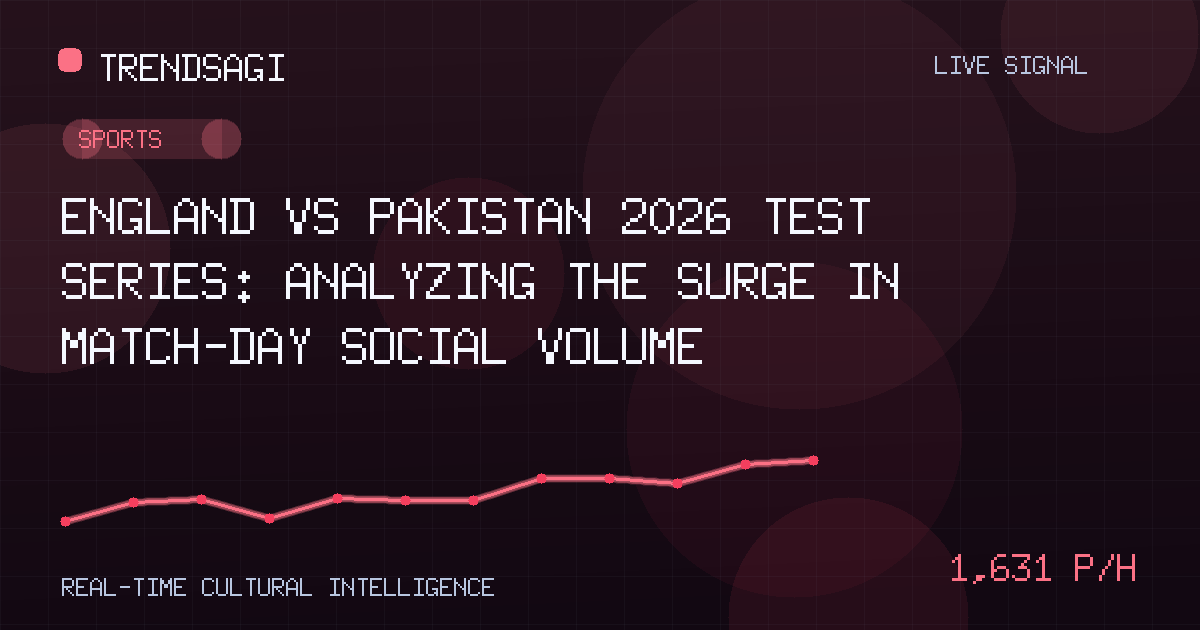
Analysis of the #ENGvPAK cricket surge on Sept 12, 2026, showing a measured rate of 1630.7 posts/hour as the England vs Pakistan Test series begins.
Automated briefing. Generated from stored signal measurements and source-backed research; it is not manually reviewed. Read the methodology and limitations.
Metrics in this briefing are a snapshot associated with its publication date and may not reflect current conditions.
What changed
Public conversation regarding the #ENGvPAK cricket series has seen a significant uptick, characterized by a measured snapshot rate of 1630.7 posts per hour. This volume coincides with the opening phases of the 2026 Test series between England and Pakistan, a critical fixture in the ICC World Test Championship cycle. Early data suggests the discussion is primarily driven by live match events, including team selection surprises and the initial performance of top-order batsmen on a subcontinental pitch.
| Observation Time | Measured Snapshot Rate | Snapshot Volume |
|---|---|---|
| 2026-09-12 12:10:43Z | 1630.7 posts/hour | 585 posts |
Why this topic may be moving
The primary driver for this spike is the start of the highly anticipated bilateral series in Pakistan. According to the ICC Future Tours Programme, this September 2026 window was designated for England’s multi-format tour of Pakistan. On September 12, the timing of the surge (12:10 UTC) aligns perfectly with the transition between the morning and afternoon sessions of play in Pakistan (PKT). This is typically when fan engagement peaks as the first day's narrative begins to take shape.
Historical context adds weight to this movement. Previous tours, such as England's historic visit in 2022 and subsequent return in 2024, established a precedent for high-scoring, high-drama cricket. Social media users are currently dissecting the "Bazball" approach against Pakistan's specialized spin attack. The current volume likely reflects reactions to specific wickets or the reaching of half-century milestones by key players.
Furthermore, the 2026 series is a foundational component of the World Test Championship (WTC) points table. With both teams vying for a spot in the upcoming final, every boundary and wicket carries heightened significance for international standings, drawing in a global audience beyond the immediate borders of the two competing nations.
Why it matters
This signal is a bellwether for the health of Test cricket in the subcontinent. Pakistan has worked diligently over the last several years to ensure the return of consistent international cricket, and the sustained volume of #ENGvPAK indicates that the appetite for long-format matches remains robust among digital-native fans. For broadcasters and sponsors, a rate of over 1,600 posts per hour during a weekday session suggests a high level of secondary-screen engagement, providing a valuable window for real-time advertising and fan interaction.
The rivalry between England and Pakistan has evolved into one of the most tactically diverse matchups in cricket, blending high-speed aggression with traditional subcontinental craft. The social volume we see today is a direct reflection of that strategic tension playing out in real-time.
For sports analysts, the data helps establish which players are currently capturing the public's attention. High-volume periods often correlate with "star power" moments—such as a veteran fast bowler taking a crucial wicket or a debutant proving their mettle. Tracking these spikes allows for a more nuanced understanding of player marketability and fan sentiment shifts during a grueling five-day match.
What to watch next
To understand where this trend is heading, observers should monitor the following concrete signals:
- The 80-Over Mark: Watch for a volume surge when the second new ball is taken. This usually triggers a fresh wave of tactical analysis regarding bowling strategy and tail-end resistance.
- Day 3 Pivot Points: Historically, Test matches in Pakistan often reach a "moving day" on day three. If the post rate exceeds 2,000 per hour during this period, it suggests a result is becoming likely, increasing overall urgency in the discourse.
- Pitch Reports: Any official comments from ground staff or commentators regarding the deterioration of the pitch will likely cause a secondary spike in the #ENGvPAK tag as fans debate the fairness of the playing surface.
- Injury Updates: In the heat of September in Pakistan, player fatigue and hydration are critical. Any medical timeouts will cause immediate, high-density search and social traffic.
Methodology and limitations
The data presented here is derived from a specific observation window of 898 seconds, during which three distinct snapshots were taken to calculate a measured snapshot rate. This rate of 1630.7 posts per hour is a localized measurement of velocity at a specific moment in time; it should not be interpreted as a total daily count or a forecast of future volume.
While this signal establishes that a significant conversation is happening, it cannot definitively establish the *sentiment* of the posts without further natural language processing. For example, a high rate of posts could indicate widespread excitement or widespread frustration regarding a rain delay or a controversial umpiring decision. Users should cross-reference this volume data with live scoreboards to distinguish between celebration-led surges and controversy-led spikes. Additionally, this signal represents public digital discourse and may not capture the total viewership figures from traditional broadcast mediums.
Track This Topic for New Signals
Set alerts for future velocity or sentiment changes around this topic.
Explore Tracking PlansAbout TrendsAGI research
TrendsAGI's automated research pipeline publishes dated signal snapshots, methodology notes, and practical workflows for teams evaluating cultural momentum. Read how signals are scoped, scored, and limited in our research methodology.