Elections in Digital Discourse: Analyzing Current Mention Trends
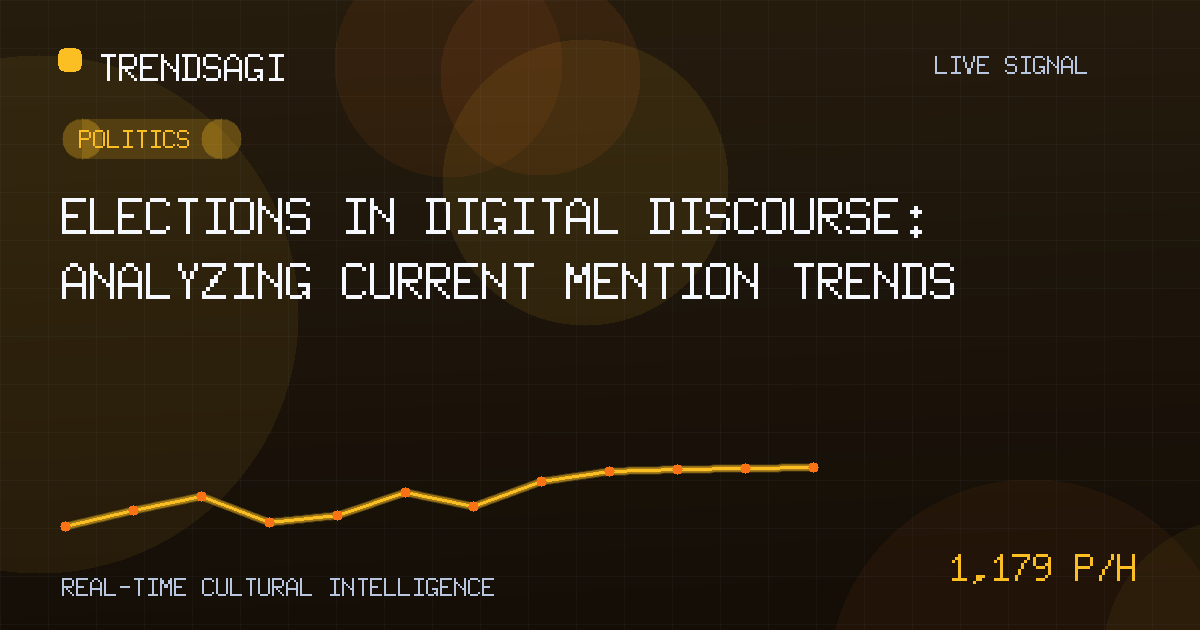
Data briefing on elections mention rate: 1179.3 posts/hour with 6000 mentions in latest snapshot. Explore trends, reasons, and signals to watch.
Automated briefing. Generated from stored signal measurements and source-backed research; it is not manually reviewed. Read the methodology and limitations.
Metrics in this briefing are a snapshot associated with its publication date and may not reflect current conditions.
TL;DR
- Elections are experiencing a high online mention rate of 1179.3 posts per hour, based on recent data snapshots.
- The latest snapshot captured 6000 mentions, indicating a significant volume of discussion in a concentrated period.
- This trend may be influenced by ongoing political activities, media coverage, or seasonal factors.
- Key audiences include political strategists, media organizations, and engaged citizens.
- Monitoring sentiment shifts and related topics will provide deeper insights into future movements.
- The data confirms elections as a central theme in current digital conversations.
What the Data Shows
Based on the provided TrendsAGI data, we observe a measured mention rate of 1179.3 posts per hour for the topic "Elections." This metric indicates the average frequency of online posts mentioning elections over a recent period.
The latest snapshot volume is 6000 mentions, which represents a total count of mentions captured at a specific point in time. Together, these figures suggest sustained and substantial online activity around elections.
It is important to note that these are observed data points from the snapshot, not extrapolations or predictions.
Why the Trend Might Be Moving Now
Hypotheses for the current high mention rate could include several factors. One possibility is the influence of electoral cycles in various regions, where campaigns or elections are imminent or recently concluded.
Another plausible reason is the impact of recent political events, such as policy announcements, debates, or controversies, which often spark online discussions. However, without specific data on events, this remains a general hypothesis.
Additionally, the rise in social media usage and digital activism may amplify election-related content, leading to higher mention rates. Seasonal trends, like election seasons, could also play a role.
These are analytical inferences based on common patterns, not confirmed from the data alone.
Who Should Pay Attention
Several groups should closely monitor this trend:
- Political Campaigns and Parties: To gauge public interest and adjust strategies.
- Media Outlets: To understand audience engagement and content planning.
- Policy Makers and Analysts: To assess the salience of election issues.
- Voters and Civic Groups: To stay informed about public discourse.
- Brands and Advertisers: To align with or avoid political conversations.
Each of these stakeholders can derive insights from the mention data to inform their decisions.
The sustained high mention rate underscores elections as a perennial hot-button issue in digital conversations, reflecting their enduring relevance in public discourse.
Signals to Watch Next
To deepen understanding of this trend, readers should watch for specific signals:
- Mention Rate Changes: Whether the rate of 1179.3 posts/hour increases, decreases, or stabilizes in coming hours or days.
- Snapshot Volume Trends: If future snapshots show volumes significantly higher or lower than 6000 mentions.
- Sentiment Analysis: Shifts in positive, negative, or neutral tones in election mentions, which could indicate changing public opinion.
- Related Topics: Emergence of subtopics like candidate names, specific policies, or election events that correlate with mention spikes.
- Cross-Platform Data: Comparisons across different social media platforms or online forums to identify where discussions are concentrated.
Monitoring these signals will help distinguish temporary fluctuations from longer-term trends.
Conclusion
The data reveals elections as a highly active topic online, with a mention rate that demands attention. While the exact drivers require further investigation, the observed figures provide a clear picture of current discourse intensity.
By staying alert to the outlined signals, stakeholders can better navigate the evolving landscape of election-related conversations.
Track This Topic for New Signals
Set alerts for future velocity or sentiment changes around this topic.
Explore Tracking PlansAbout TrendsAGI research
TrendsAGI's automated research pipeline publishes dated signal snapshots, methodology notes, and practical workflows for teams evaluating cultural momentum. Read how signals are scoped, scored, and limited in our research methodology.