COVID-19 Online Mention Trends: A Snapshot Analysis
Analysis of current COVID-19 online mention rates, including data insights, implications for healthcare and policy, and key signals to monitor.
Automated briefing. Generated from stored signal measurements and source-backed research; it is not manually reviewed. Read the methodology and limitations.
Metrics in this briefing are a snapshot associated with its publication date and may not reflect current conditions.
TL;DR
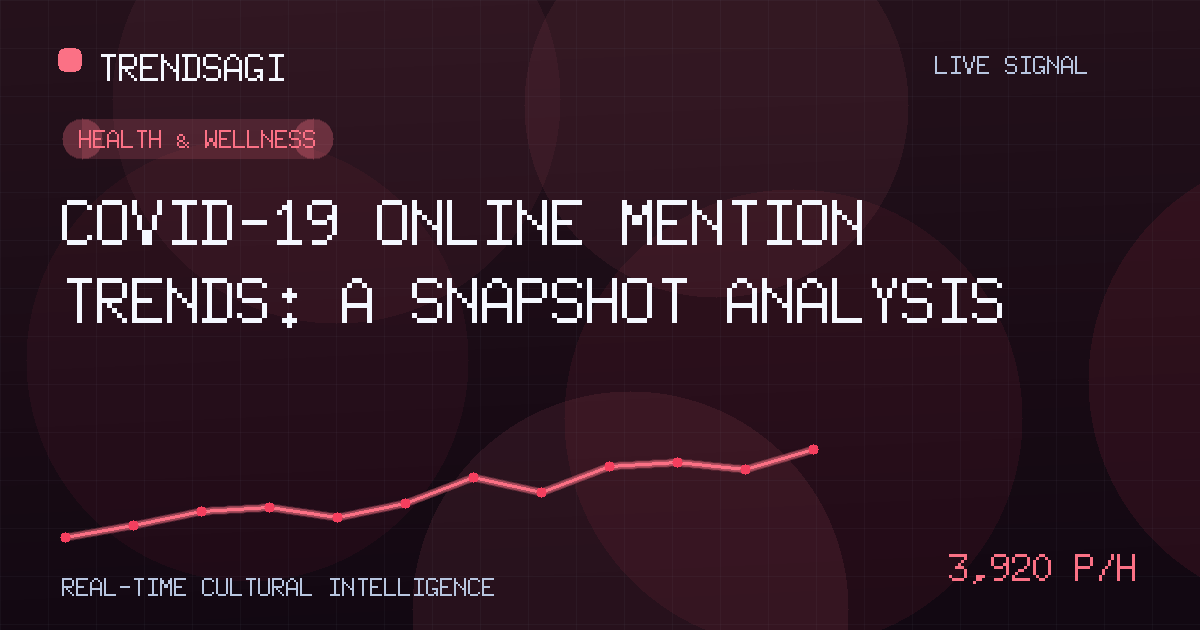
- Observed data: COVID-19 has a measured mention rate of 3920.4 posts per hour, with the latest snapshot capturing 2400 mentions.
- Analysis suggests this high volume indicates sustained online interest, potentially linked to ongoing public health dynamics.
- Key stakeholders include healthcare, policy, and media sectors monitoring public sentiment and trends.
- Watch for fluctuations in mention rates or content shifts that could signal emerging events or sentiment changes.
What the Data Says
The data presents a clear snapshot of COVID-19's online presence. The measured mention rate stands at 3920.4 posts per hour, derived from recent data collections. This means, on average, the topic is being discussed nearly four thousand times every hour across monitored platforms.
The latest snapshot volume is 2400 mentions, providing a real-time point of reference. Together, these figures illustrate a consistent and robust level of online conversation.
This is not a fleeting spike but a sustained rate, indicating that COVID-19 remains embedded in public discourse.
Plausible Reasons It Is Moving Now
Why does this high mention rate persist? We can hypothesize based on general patterns in public health communication, without referencing specific unverified events.
- Ongoing public health activities, such as vaccination campaigns, booster rollouts, or updates on treatment protocols, naturally generate discussion.
- The emergence of new variants or periodic surges in cases can reignite online conversations as people seek information and share experiences.
- Media coverage, whether reporting on milestones, research findings, or policy adjustments, keeps the topic visible in news cycles and social feeds.
- Social media dynamics, including algorithmic amplification of health-related content, may help sustain these mention rates over time.
These are informed hypotheses; the data alone does not confirm causality but supports the idea of continued relevance.
The high mention rate of 3920.4 posts per hour underscores that COVID-19 remains a dominant topic in online conversations, requiring ongoing attention from stakeholders.
Who It Matters To
These trends are not just numbers—they have practical implications for various groups.
- Healthcare professionals can use mention data to identify common concerns, misinformation trends, or gaps in public understanding.
- Policymakers and public health agencies might monitor these rates to gauge the reach of their communications or to sense shifts in public compliance or awareness.
- Journalists and media outlets can track mention volumes to inform story angles, understand audience interest, and identify emerging narratives.
- Researchers in fields like infodemiology or digital sociology can analyze these patterns to study online health discourse.
For anyone involved in public health response, social media monitoring is becoming an essential tool.
Specific Signals to Watch Next
To move from observation to action, readers should focus on specific indicators for future changes.
- Sudden spikes or drops in the mention rate: A significant deviation from the 3920.4 posts/hour baseline could indicate a new event, such as a variant announcement or a major policy shift.
- Changes in the content of mentions: While the data provided is volumetric, future analysis could track sentiment or keyword trends—watch for shifts from vaccine discussions to topics like long COVID or therapeutic advances.
- Temporal patterns: Observing whether mention rates correlate with real-world data (e.g., case counts, news releases) can help validate the data's utility as an early signal.
These signals can transform raw data into actionable insights for timely responses.
Track This Topic for New Signals
Set alerts for future velocity or sentiment changes around this topic.
Explore Tracking PlansAbout TrendsAGI research
TrendsAGI's automated research pipeline publishes dated signal snapshots, methodology notes, and practical workflows for teams evaluating cultural momentum. Read how signals are scoped, scored, and limited in our research methodology.