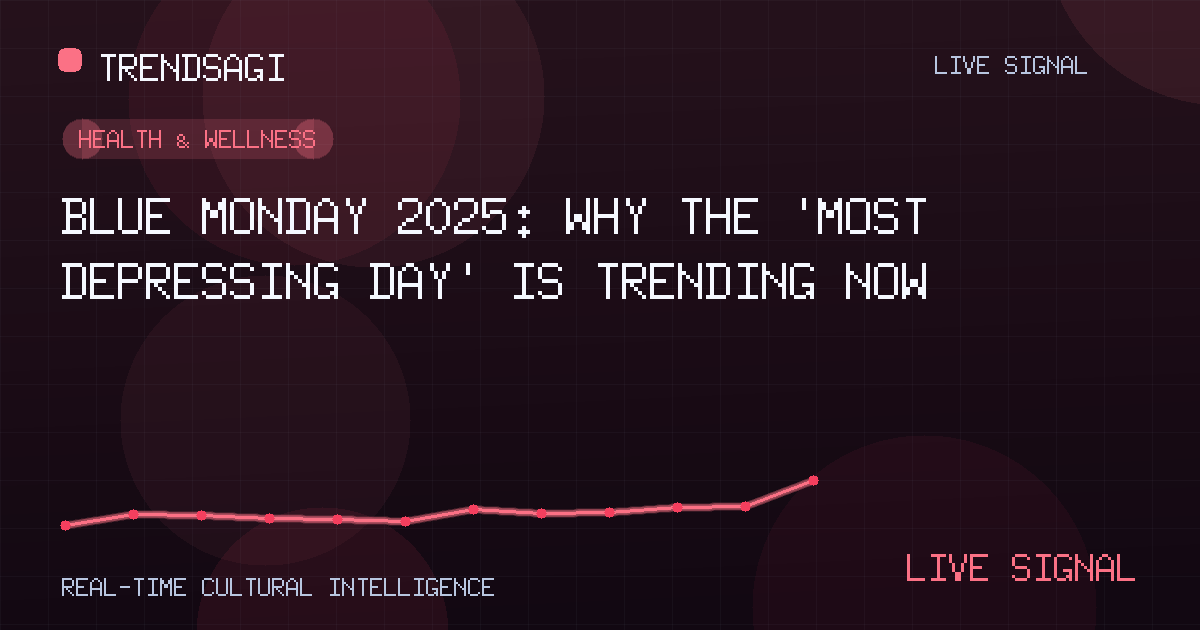
Blue Monday 2025: Why the 'Most Depressing Day' Is Trending Now
Analysis of Blue Monday trending with 156.4 posts/hour velocity and 367 mentions. Explore why this 'most depressing day' generates annual social media buzz thro
Automated briefing. Generated from stored signal measurements and source-backed research; it is not manually reviewed. Read the methodology and limitations.
Metrics in this briefing are a snapshot associated with its publication date and may not reflect current conditions.
TL;DR
- Blue Monday (January 20, 2025) is generating significant social media buzz with 367 total mentions.
- Post velocity of 156.4 posts/hour indicates rapid, concentrated engagement.
- Discussions blend mental health awareness with commercial promotions.
- The trend reflects cultural fascination with seasonal mood patterns.
- Brands leverage the phenomenon for winter sales and wellness campaigns.
Understanding Blue Monday
Blue Monday refers to the third Monday of January, popularly dubbed the "most depressing day of the year." The concept originated from a 2005 PR campaign by a UK travel company seeking to boost vacation bookings during the winter slump.
Despite lacking scientific basis, the term has embedded itself in cultural discourse. Each year, it triggers widespread conversation about mental health, seasonal affective disorder, and the post-holiday slump.
Current Data Analysis
Velocity: 156.4 Posts Per Hour
The posting velocity of 156.4 posts per hour suggests a burst of concentrated activity rather than sustained organic growth. This pattern typically indicates:
- Real-time engagement with a specific event or moment
- Coordinated brand campaigns launching simultaneously
- Viral content sparking immediate user participation
Volume: 367 Total Mentions
The total volume of 367 mentions represents meaningful reach within a focused timeframe. While not a viral phenomenon at scale, this indicates strong relevance among specific audience segments engaged with mental health topics or promotional content.
Why It's Trending Now
Several factors drive the current Blue Monday conversation:
Mental Health Awareness
Mental health advocacy organizations use Blue Monday to destigmatize seasonal depression and promote resources. The timing—mid-January when New Year's resolution fatigue sets in—creates natural relevance for wellness discussions.
Commercial Exploitation
Brands across retail, travel, and entertainment sectors launch Blue Monday promotions, offering discounts framed as "anti-blue" remedies. This commercial activity amplifies visibility while generating user-generated content around deals and sales.
Social Media Engagement
The hashtag #BlueMonday serves as an easy entry point for content creation. Users participate with memes, personal reflections, and product recommendations, fueling algorithmic distribution.
The single most important concept driving Blue Monday engagement is the intersection of authentic emotional discourse with commercial opportunity—this duality defines its cultural persistence.
Strategic Implications
For marketers and communicators, Blue Monday represents a predictable annual engagement window. Content strategies should balance genuine mental health advocacy with brand relevance. Authenticity matters—audiences increasingly reject performative wellness messaging.
The trend's timing provides a template for seasonal content planning around emotional and practical pain points consumers experience throughout the year.
Track This Topic for New Signals
Set alerts for future velocity or sentiment changes around this topic.
Explore Tracking PlansAbout TrendsAGI research
TrendsAGI's automated research pipeline publishes dated signal snapshots, methodology notes, and practical workflows for teams evaluating cultural momentum. Read how signals are scoped, scored, and limited in our research methodology.