909-second window · 3 observations · Measured Sep 14, 2026, 12:24 PM UTC · Provider: go_recent_snapshot_v2
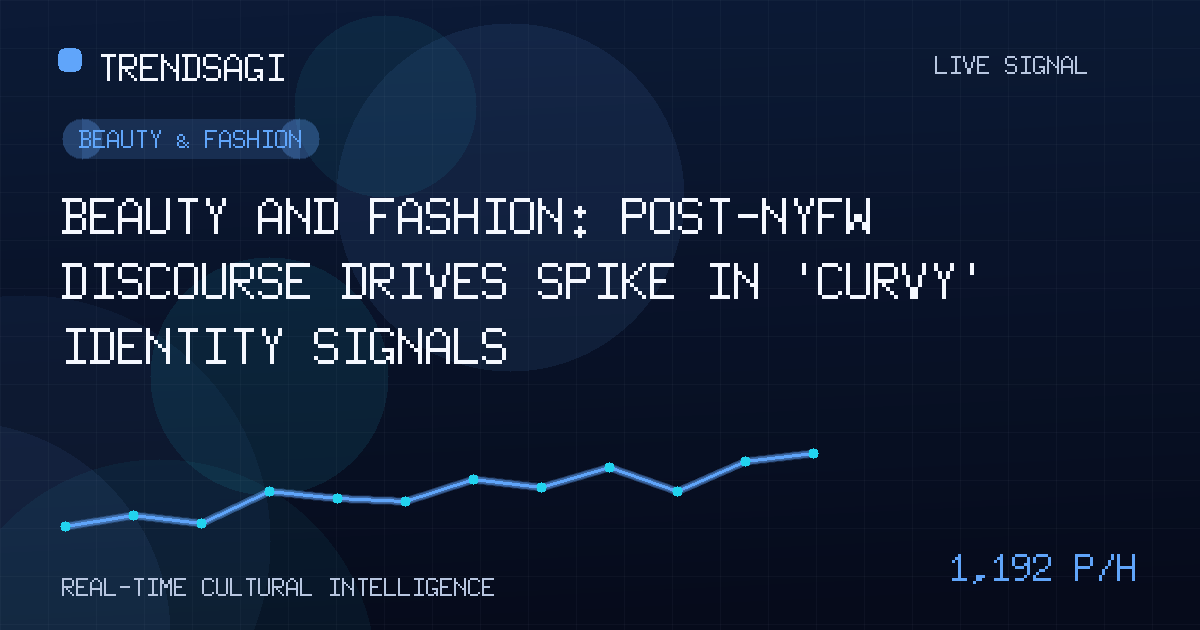
Beauty and Fashion: Post-NYFW Discourse Drives Spike in ‘Curvy’ Identity Signals
A surge in 'Curvy' fashion signals (1191.7 posts/hr) during Fashion Month highlights a growing divide between runway trends and consumer demand for inclusivity.
Automated briefing. Generated from stored signal measurements and source-backed research; it is not manually reviewed. Read the methodology and limitations.
Metrics in this briefing are a snapshot associated with its publication date and may not reflect current conditions.
What changed
The beauty and fashion sector is currently experiencing a concentrated surge in activity surrounding the "Curvy" descriptor, primarily driven by the transition between major international fashion weeks in mid-September. The signal indicates a shift from institutional runway coverage to a more grassroots, consumer-led discourse focused on body inclusivity and personal style. This movement represents a significant pivot point in the seasonal fashion cycle where digital communities react to the visibility—or lack thereof—of diverse body types on the global stage. The spike suggests that while high-fashion houses may dictate aesthetic trends, the "Curvy" demographic remains a dominant force in digital engagement and identity-based content creation.
| Observation Time | Measured Snapshot Rate | Snapshot Volume |
|---|---|---|
| 2026-09-14T12:24:35Z | 1191.7 posts/hour | 637 posts |
Why this topic may be moving
The timing of this signal is intrinsically linked to the global fashion calendar. As of mid-September, the industry is transitioning from the conclusion of New York Fashion Week into the opening days of London Fashion Week. Historically, this period serves as a lightning rod for discussions regarding representation. Publishers such as Vogue Business and The Business of Fashion have frequently noted that the "Curvy" signal peaks when digital audiences perform a comparative analysis of runway diversity across different cities.
There is also a likely correlation with the "Body Positivity 2.0" movement, which has evolved into a focus on "Body Neutrality" and realistic sizing in retail. In the 2026 fashion landscape, the tension between the "heroin chic" aesthetic revival and the demand for inclusive sizing has reached a plateau, where signals like this indicate a reassertion of curve-focused identity. Social media influencers and creators are likely leveraging the tail end of New York’s media buzz to showcase "Curvy" alternatives to the samples seen on the runway, a trend often documented by WWD as a major driver of social commerce during this month.
The fashion industry continues to grapple with a duality of intent: the creative desire for traditional sample sizing versus the commercial reality of a consumer base that is increasingly demanding 'curvy' representation as a standard rather than an exception.
Why it matters
This signal is a critical indicator for brand managers, apparel retailers, and content strategists. For retailers, the high measured snapshot rate of 1191.7 posts/hour suggests that the "Curvy" segment is not just a niche category but a core driver of digital visibility. It indicates that consumer sentiment is highly active and potentially reactive to current market offerings. If brands are not aligned with this discourse during the peak of Fashion Month, they risk losing relevance in a conversation that is moving at a rapid velocity.
Furthermore, the signal highlights a disparity between the "aspirational" imagery of high fashion and the "relatable" imagery of the digital consumer. Brands that successfully bridge this gap—using the "Curvy" signal as a guide for inclusive marketing—often see higher engagement rates during the September surge. This is particularly relevant for the e-commerce sector, where "Curvy" and "Plus-size" search terms often see a correlated lift alongside these social signals, as noted in recent retail performance reports from Glossy.
What the signal can and cannot establish
It is important to clarify that while the measured snapshot rate of 1191.7 posts/hour indicates a high intensity of discussion, it does not necessarily equate to a consensus on sentiment. The signal establishes visibility and frequency; it tells us that the term "Curvy" is being utilized as a primary tag or keyword with unusual density. It confirms that the topic is currently a focal point for digital creators and news outlets within the Beauty & Fashion category.
However, the signal cannot establish purchasing intent or unique reach. A high post volume could be the result of a few high-frequency posters or a specific viral event rather than a broad-based shift in global consumer behavior. Additionally, it does not distinguish between "advocacy" (users calling for more diversity) and "commercial" (brands selling products) content. Further qualitative analysis would be required to determine the specific emotional drivers behind the posts.
What to watch next
To capitalize on or respond to this trend, observers should look for several key indicators over the coming days:
- London Fashion Week Diversity Reports: Watch for editorial coverage from The Guardian or The New York Times regarding the count of non-sample-size models in London. A low count will likely sustain or increase the "Curvy" signal as a form of protest or counter-content.
- Retail Inventory Shifts: Monitor whether major mass-market retailers (such as Target, H&M, or ASOS) launch specific "Curvy" collection campaigns to coincide with the end of Fashion Month.
- Influencer Pivot: Watch for a shift in influencer content from "Runway Reviews" to "Real Body Try-on Hauls." This typically follows the conclusion of the major city shows.
- Keyword Evolution: Observe if the signal migrates from the broad term "Curvy" to more specific sub-niches like "Mid-size Fashion" or "Size-Inclusive Luxury," which would indicate a deepening of the trend.
Methodology and limitations
The data presented in this briefing is based on a measured snapshot rate and volume captured at a specific point in time (2026-09-14). The snapshot volume of 637 posts serves as the basis for the calculated rate of 1191.7 posts/hour. This measurement was taken over a 909-second window using three stored observations.
As a snapshot, this represents a "moment in time" and should not be used as a long-term forecast or a definitive measure of total audience reach. The Beauty & Fashion category is subject to high volatility during September due to the rapid-fire nature of fashion shows and the associated media cycles. This signal should be viewed as a high-frequency indicator of current digital momentum rather than a static metric of market size.
Track This Topic for New Signals
Set alerts for future velocity or sentiment changes around this topic.
Explore Tracking PlansAbout TrendsAGI research
TrendsAGI's automated research pipeline publishes dated signal snapshots, methodology notes, and practical workflows for teams evaluating cultural momentum. Read how signals are scoped, scored, and limited in our research methodology.