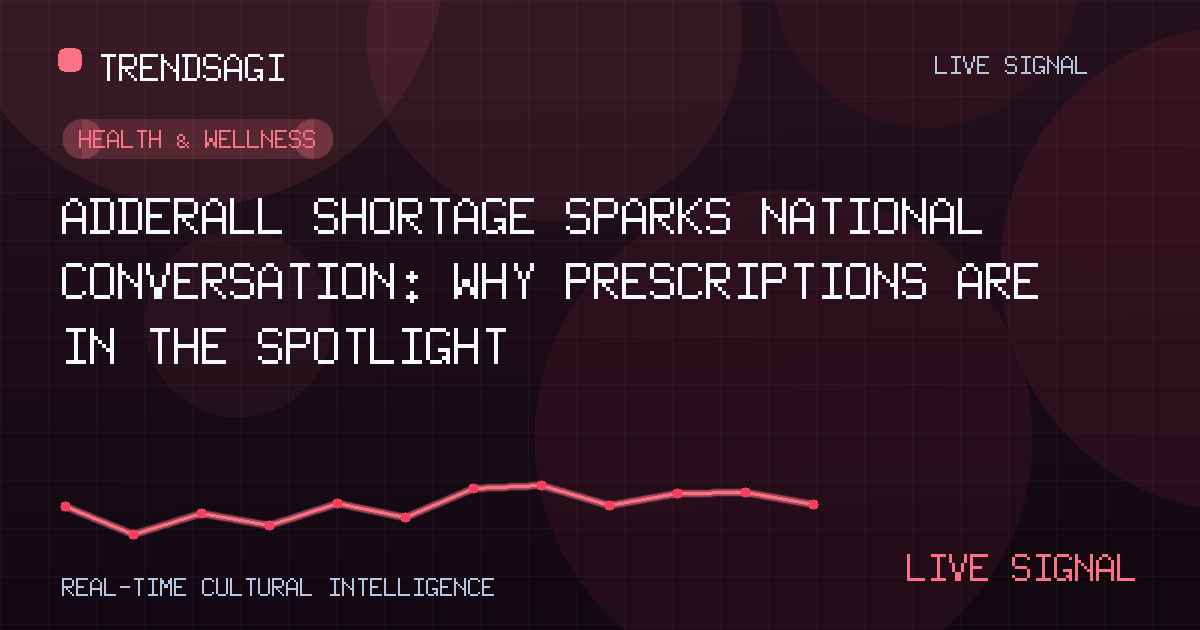
Adderall Shortage Sparks National Conversation: Why Prescriptions Are in the Spotlight
Urgent trend briefing on why Adderall is trending with 104.7 posts/hour velocity. Analysis of the national shortage, patient impacts, and what's driving the con
Automated briefing. Generated from stored signal measurements and source-backed research; it is not manually reviewed. Read the methodology and limitations.
Metrics in this briefing are a snapshot associated with its publication date and may not reflect current conditions.
TL;DR
- Adderall discussions are surging at 104.7 posts/hour with 5,527 total mentions, driven by an ongoing national shortage affecting millions of patients.
- The FDA confirmed widespread supply constraints for multiple ADHD medications, creating panic among patients who depend on these prescriptions.
- Social media is amplifying frustration, with users sharing stories of pharmacy rejections, delayed refills, and difficult conversations with doctors.
- Key debates are emerging around prescription accessibility, overprescribing concerns, and the role of telemedicine in ADHD diagnoses.
What's Driving the Surge
The Adderall conversation has exploded in the last 48 hours, placing the medication at the center of a perfect storm involving supply chain issues, regulatory scrutiny, and heightened public awareness. This velocity indicates a breaking news event rather than a gradual trend.
Supply Chain Crisis
Multiple manufacturers have reported production delays, leading to empty pharmacy shelves across the country. Patients who have relied on consistent access to ADHD medication are now facing impossible situations.
Regulatory Response
The DEA has been under pressure to address scheduling concerns and manufacturing quotas that may be contributing to the shortage. Healthcare providers are caught in the middle, trying to manage patient expectations while navigating complex prescribing regulations.
Key Discussion Themes
Analysis of the conversation reveals several dominant narratives:
- Patient horror stories about going without medication
- Debates about whether ADHD diagnoses have become too common
- Questions about the role of tele-mental health companies in prescribing practices
- Alternatives being discussed: generic medications, therapy-only approaches, lifestyle modifications
The most significant revelation: many patients are learning for the first time that their pharmacies may not be able to fill their prescriptions, forcing difficult conversations about medication management.
Sentiment Analysis
The overwhelming sentiment is frustration and anxiety. Patients feel helpless, caught in a system they cannot control. Healthcare providers are also expressing concern, noting that sudden medication changes can impact treatment outcomes significantly.
What Comes Next
Expect continued high velocity as more patients encounter refill challenges. Regulatory bodies may need to intervene with emergency measures. The conversation will likely expand to include broader questions about mental health medication accessibility in America.
Monitor for potential policy announcements and manufacturer statements regarding timeline for supply restoration.
Track This Topic for New Signals
Set alerts for future velocity or sentiment changes around this topic.
Explore Tracking PlansAbout TrendsAGI research
TrendsAGI's automated research pipeline publishes dated signal snapshots, methodology notes, and practical workflows for teams evaluating cultural momentum. Read how signals are scoped, scored, and limited in our research methodology.