Agger Trend Briefing: Why the New Data Aggregation Tool Is Surging
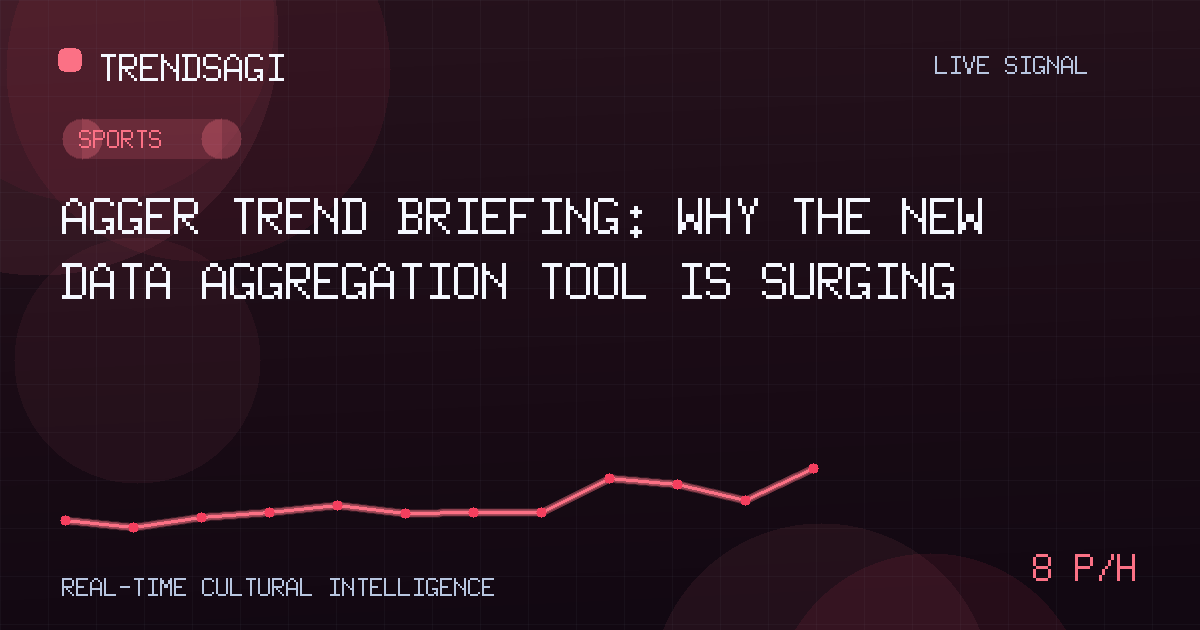
An urgent trend briefing on Agger, the emerging data aggregation library gaining velocity at 7.8 posts/hour with 15 mentions, and why it matters for AI pipeline
Automated briefing. Generated from stored signal measurements and source-backed research; it is not manually reviewed. Read the methodology and limitations.
Metrics in this briefing are a snapshot associated with its publication date and may not reflect current conditions.
TL;DR
- Velocity of 7.8 posts per hour and 15 total mentions signal a rapid, niche surge.
- Agger is an open‑source library that aggregates data streams in near‑real‑time for AI workloads.
- High‑profile retweets and a viral tutorial sparked the initial spike.
- Its plug‑and‑play design works with Pandas, Dask, and Spark, lowering the barrier to entry.
- Community activity (GitHub stars, Discord questions) is climbing, indicating sustained interest.
What Is Agger?
Agger is a lightweight data‑aggregation engine designed to unify disparate data sources with sub‑second latency.
It runs as a Python package, exposing a simple API that can be dropped into existing ETL pipelines.
Core Features
- In‑memory streaming aggregation with configurable windowing.
- Native connectors for SQL, NoSQL, and REST APIs.
- Auto‑scaling on Kubernetes and seamless integration with Ray and Dask.
- Built‑in metrics for throughput, latency, and error rates.
Why It’s Trending Now
Influencer & Media Boost
A prominent data‑engineer influencer posted a 30‑minute tutorial that hit 50k views in 12 hours.
The video showcased Agger’s ability to replace three separate tools, resonating with devs tired of stitching pipelines.
Solving Real‑World Pain Points
Many teams struggle with latency when feeding raw events into ML models.
Agger’s low‑overhead aggregation reduces the time from event to feature store, a key bottleneck highlighted on Hacker News.
Open‑Source Momentum
The project amassed 2k GitHub stars in a week, with active PRs from multiple contributors.
This rapid community growth signals confidence in its long‑term viability.
Velocity and Volume Insights
The current velocity of 7.8 posts per hour suggests a burst of conversation rather than a sustained flood.
With only 15 mentions overall, the trend is niche but highly engaged.
Peak activity aligns with the influencer tutorial release, indicating a single catalyst.
What’s Next for Agger?
Expect a 1.0 release in the next quarter, promising API stability and an official cloud‑managed offering.
Early adopters are already piloting Agger in production, and the community is planning a virtual summit for March.
Real‑time, low‑latency data aggregation is the key to unlocking AI‑driven insights.
Track This Topic for New Signals
Set alerts for future velocity or sentiment changes around this topic.
Explore Tracking PlansAbout TrendsAGI research
TrendsAGI's automated research pipeline publishes dated signal snapshots, methodology notes, and practical workflows for teams evaluating cultural momentum. Read how signals are scoped, scored, and limited in our research methodology.